
S&S Paving & Construction Services
Earthwork Construction Services in Phoenix, AZ
Precision grading, excavation, and site preparation for Arizona’s most demanding residential and commercial developments.
Expert Earthwork Services in Arizona
S&S Paving’s Earthwork division brings decades of expertise to every grading, excavation, and site preparation project across Arizona. Our fleet of modern CAT equipment and experienced operators ensure your site is prepared to exact specifications — on time and on budget.
From large-scale commercial developments and highway corridors to residential subdivisions and municipal infrastructure, we have the capacity and experience to handle projects of any size. Our earthwork operations are the critical first step that sets the foundation for every successful construction project.
Ready to Get Started?
Contact our team today for a free consultation and estimate on your earthwork project.
All Services
Scope of Work
Earthwork, Excavation and Site Preparation Services
Mass Grading
Large-scale cut-and-fill operations that establish engineered elevations, drainage patterns and construction-ready grades.
Excavation
Excavation for foundations, footings, retention basins, utilities, roadways and underground infrastructure.
Compaction
Moisture conditioning, placement and compaction of fill material to meet project density and engineering requirements.
Drainage Solutions
Construction of retention basins, swales, channels and drainage features that manage stormwater across the site.
Utility Trenching
Trenching and backfill support for water, sewer, electrical, gas and underground utility installation.
Subgrade Prep
Preparation, grading and stabilization of the surface beneath asphalt, concrete, foundations and other improvements.
Why Proper Earthwork and Grading Matter
Look, we’re going to be direct about this because we’ve seen it play out too many times.
Bad earthwork is typically the cheapest thing on a project when it’s bid and the most expensive thing on a project when it fails. A grading operation that’s off-elevation by a few inches doesn’t show its cost on a budget sheet immediately. It shows up in increased base material quantities, in drainage failures after the first hard rain, in foundation issues that develop over years, and in pavement failures that require resurfacing years ahead of schedule.
In Phoenix specifically, drainage failure is not a slow or subtle problem. When the monsoon season delivers a major rainfall event, a site with inadequate drainage can sustain significant damage quickly. Standing water, erosion, and sediment transport happen fast. A site graded correctly for drainage handles those events without incident. A site graded to approximate tolerances finds its weak points under that kind of stress.
There’s also a regulatory dimension that doesn’t get talked about enough. Maricopa County’s Dust Control Rule 310 requires dust control permits for any earthwork disturbing 0.1 acres or more. Non-compliance carries real penalties and can halt a project. Working with a contractor who understands and operates within these requirements protects your project and your timeline.
Choosing earthwork based primarily on lowest bid is a decision we see owners make and later regret. The cost difference between a quality earthwork operation and a marginal one is often small as a percentage of total project value. The cost of fixing problems created by marginal earthwork is almost always larger.
Our Process
Our Earthwork Construction Process
01
Plan Review and Site Assessment
Review plans, quantities, elevations, access, drainage and existing conditions.
02
Earthwork Planning and Scheduling
Determine sequencing, equipment requirements, material movement and coordination with other trades.
03
Excavation, Grading and Fill Placement
Perform cut-and-fill, excavation, placement and grading operations.
04
Final Grading & QC
Final grades are verified against plans, compaction tests are completed, and the site is ready for the next phase.
05
Final Grading and Project Handoff
Confirm elevations and prepare the site for utilities, concrete, paving or vertical construction.
Why General Contractors and Developers Choose S&S
The S&S Advantage
GPS-Guided Equipment
Trimble GPS technology ensures precise grading to within fractions of an inch.
Safety-First Culture
Zero-incident commitment with OSHA-compliant operations on every job site.
On-Time Delivery
Proven track record of meeting project milestones and keeping downstream trades on schedule.
Licensed & Bonded
Fully licensed Arizona contractor with all required bonds and insurance coverage.
Decades of Earthwork Experience Across the Phoenix Metro
S&S Paving and Construction has been delivering quality, reliability, and innovation in paving and construction across Phoenix, Arizona for over four decades. Over that time, we’ve built an earthwork operation that supports everything from large commercial developments and municipal infrastructure projects to residential subdivisions and industrial site preparations throughout the metro area.
We’re a fully licensed Arizona contractor with all required bonds and insurance coverage. Every one of our earthwork operations runs OSHA-compliant safety protocols on every job site. That’s not something we say to sound impressive. It’s the standard we hold ourselves to because shortcuts in earthwork don’t just affect the current project. They affect everything built on top of it for the next fifty years.
Our team has worked with commercial developers, general contractors, municipalities, industrial facility owners, and private landowners across the Valley. Customers tell us they value two things above everything else: that we keep projects on schedule and that we communicate clearly when conditions require a plan adjustment. In our experience, the projects that run smoothly aren’t always the ones with the simplest site conditions. They’re the ones where the earthwork contractor is honest about what they’re finding and proactive about solving it before it becomes a downstream problem for concrete, utilities, or paving crews.
We handle the full spectrum of earthwork services, including mass grading, precision excavation, subgrade preparation, drainage system installation, utility trenching, building pad construction, and cut and fill operations. We bring these services together under one contractor, which matters more than it might seem on paper. When your earthwork team also handles your paving and construction management, the communication chain is shorter and the result is tighter.
Get Started Today
Let's Build Your Earthwork Project
Contact our experienced team for a free, no-obligation estimate. We’re ready to bring your project to life.
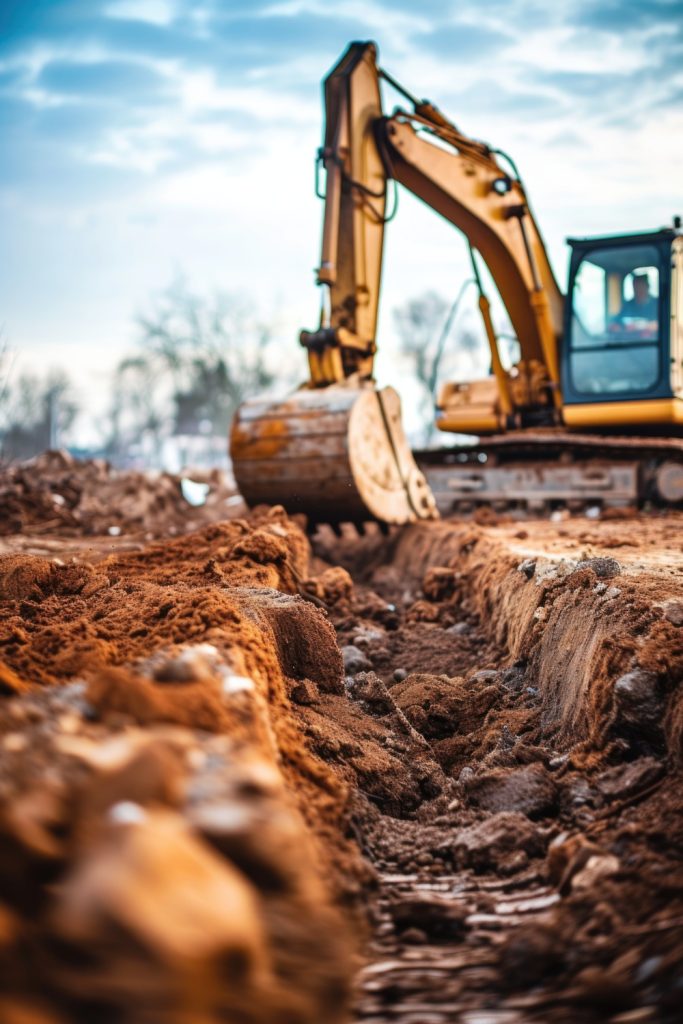
Earthwork In Arizona
Committed to Offering High-Quality Earthwork Solutions
- Uneven Terrain
- Poor Drainage
- Excavation and Leveling
Safety First
Quality Materials
Trusted Service
People-Focused
We are here to help. Our experienced team ensures that your construction projects are carried out with precision and environmental responsibility, delivering top-notch results while prioritizing sustainability.
What Our Earthwork Construction Clients Say
5.0 / 5.0
Based on Google Review
Phoenix, AZ: Why Local Earthwork Expertise Is Non-Negotiable
Phoenix is one of the fastest-growing metropolitan areas in the country, and its construction environment reflects that. New commercial, industrial, and residential development is happening across the Valley, from the outer edges of the metro in areas like Surprise, Peoria, and Queen Creek, to infill development and redevelopment in Midtown Phoenix, Tempe, and Chandler.
The soil conditions vary meaningfully across this geography. Central Phoenix and Scottsdale areas often encounter caliche at relatively shallow depths. West Phoenix and Avondale areas can have higher concentrations of alkali soils, particularly in historically irrigated agricultural land. Areas near the Salt River and other alluvial corridors involve different fill conditions and flood management requirements. South Mountain and Ahwatukee areas deal with gravelly desert soils that drain well but require specific compaction approaches.
None of this is theoretical. These are real conditions that affect real project budgets and timelines. A contractor who’s worked across these areas has encountered these variables and developed strategies for them. A contractor importing generic earthwork methods from another region hasn’t.
Beyond soil, Phoenix earthwork contractors must operate within Maricopa County’s air quality framework. The Phoenix metro is designated as a PM-10 nonattainment area, meaning the region exceeds federal standards for fine particulate matter. Earthwork generates fugitive dust. Maricopa County Rule 310 establishes the dust control requirements every earthwork project must follow. We operate in full compliance with these requirements because it’s the law, because it’s the right thing to do for air quality, and because non-compliance is a project stoppage risk you don’t need.
Driving Directions to Our Phoenix Paving Office
Visiting S&S Paving & Construction to discuss an earthwork project? Our office is located at 4636 E University Dr, Phoenix, AZ 85034. From SR-143, take the University Drive exit and follow E University Drive toward 4636 E University Dr.
Frequently Asked Questions About Earthwork Services in Phoenix, AZ
What do earthwork contractors handle on a commercial project?
Earthwork contractors prepare sites before paving, concrete, utilities, or vertical construction begins. Work may include clearing, excavation, cut-and-fill grading, pad preparation, compaction, trenching, drainage shaping, and material import or export. The final scope depends on the civil plans, soil report, and project sequence.
What is the difference between earthwork, excavation, grading, and sitework?
Well, the terms overlap. Excavation means removing soil or rock. Grading reshapes land to planned elevations and slopes. Earthwork includes excavation, fill placement, and compaction. Sitework is broader and may also include utilities, drainage, paving preparation, and coordination with other trades.
When should an earthwork contractor become involved?
Ideally, involve the contractor during preconstruction. Early review of grading plans, soil reports, access, haul routes, and cut-and-fill quantities can reveal cost or scheduling issues. It also helps coordinate earthwork with underground utilities, concrete, paving, and required inspections.
What affects the cost of earthwork in Phoenix?
Well, it depends on excavation depth, soil conditions, cut-and-fill balance, compaction requirements, access, hauling, disposal, and dust control. Hard caliche, unsuitable soil, unknown utilities, or large amounts of imported fill can raise costs. Accurate plans and soil information make estimating more reliable.
Do Phoenix earthwork projects need grading and drainage permits?
Many projects do. The City of Phoenix reviews grading and drainage plans for residential and nonresidential construction through its civil plan review process. Permit responsibility varies by contract, so the owner, engineer, general contractor, and earthwork contractor should confirm approvals before work starts.
How does caliche affect excavation in Phoenix?
Caliche is cemented soil commonly encountered in the Phoenix area. Some layers are manageable, while heavily cemented material can slow excavation and require different equipment or methods. A geotechnical report, test pits, and local experience can help reduce surprises before mass grading begins.
How is soil compaction verified?
Soil is usually compacted in controlled lifts at suitable moisture levels and checked against project specifications. A qualified testing agency may perform field density tests and document the results. Proper compaction helps create a stable subgrade for pads, pavement, concrete, and utilities.
Can drainage be handled as part of earthwork?
Yes, when it is included in the approved plans and scope. Earthwork crews can shape slopes, swales, pads, and drainage paths and prepare areas for storm-drain structures. Drainage design, however, should follow the project’s civil plans rather than informal field decisions.
What dust-control rules apply to Phoenix earthmoving?
Maricopa County Rule 310 applies to dust-generating activities, including construction and earthmoving. Sites disturbing at least 0.10 acre generally require a dust-control permit. Controls may include watering, stabilizing disturbed soil, limiting trackout, and following the approved dust-control plan.
How long does a commercial earthwork project take?
Well, it depends on site size, earthwork volume, soil conditions, weather, inspections, hauling, and trade coordination. Small scopes may take days, while mass grading and complex sitework may take weeks or longer. A dependable schedule follows plan review and a site assessment.
