


Foundation cracks are common in most homes, and not all of them are serious problems. Many small cracks can be fixed with simple DIY methods that are affordable and take just a few hours. However, some cracks need professional repair to prevent major damage.
This guide will teach you how to identify different types of foundation cracks, choose the right repair materials, seal cracks step by step, and know when to call an expert. Whether you’re dealing with a hairline crack or a larger issue, you’ll learn exactly what to do.
Understanding Foundation Cracks
Not all foundation cracks are the same. Some are harmless, while others can be big problems.
Types of Foundation Cracks
Hairline Cracks are very thin cracks, usually less than 1/8 inch wide. They look like tiny lines on your foundation wall. Most hairline cracks happen when concrete dries and shrinks. They’re usually not dangerous, but they can let water and bugs into your basement.
Vertical Cracks run straight up and down on your foundation wall. They happen when your house settles into the ground. Most vertical cracks are not serious problems, but you should watch them to make sure they don’t get bigger.
Horizontal Cracks are the most serious type. They run sideways across your foundation wall. Horizontal cracks mean that water and soil outside are pushing hard against your foundation. If you see these cracks, call a professional right away.
Diagonal Cracks run at an angle on your foundation. They often show up near the corners of your house. Diagonal cracks can mean one part of your foundation is sinking while another part stays in place.
What Causes Foundation Cracks?
Understanding why cracks happen can help you prevent more cracks in the future.
Settling and Soil Movement
All houses settle over time. When your house sits on the ground, the weight pushes down on the soil below. If the soil moves or shrinks, cracks can form. This is normal, especially in new homes during the first year.
Water Pressure
When too much water gets into the soil around your foundation, it creates pressure called hydrostatic pressure. This pressure pushes against your foundation walls and can cause cracks. Heavy rain, melting snow, and poor drainage all add to this problem.
Freeze-Thaw Cycles
In cold weather, water gets into tiny holes in your concrete. When this water freezes, it expands and makes the holes bigger. Over time, this creates cracks.
When You Can Fix Cracks Yourself
You can fix some foundation cracks on your own if they meet these conditions:
- The crack is less than 1/4 inch wide
- The crack is not getting bigger
- The crack is vertical or diagonal, not horizontal
- You don’t see other signs of foundation problems like doors that stick or floors that slope
If your crack meets these conditions, you can try a DIY repair. But if you’re not sure, it’s always better to ask a professional for help.
Materials You Need for Sealing Foundation Cracks
Epoxy Injection
Epoxy is a very strong material that bonds to concrete. It’s best for dry cracks that need structural strength. Epoxy fills the crack completely and makes it as strong as the original concrete. You can buy epoxy injection kits at most hardware stores.
Best For: Structural repairs, dry cracks, wide cracks (more than 1/8 inch)
Polyurethane Foam
Polyurethane is a flexible foam that expands when you inject it into a crack. It can expand up to 20 times its original size. This makes it great for filling cracks completely, even if they’re wet.
Best For: Wet or damp cracks, waterproofing, hairline cracks
Hydraulic Cement
Hydraulic cement is a quick-setting material that you pack into cracks. It works even when water is flowing through the crack. However, it’s not as permanent as epoxy or polyurethane.
Best For: Quick temporary fixes, surface repairs, large gaps
Concrete Caulk
Concrete caulk is the easiest option to use. You just squeeze it into the crack like a regular caulk. It works for small surface cracks but won’t help with bigger problems.
Best For: Very small cracks, surface sealing, non-structural repairs
How to Seal Foundation Cracks Step by Step
Here’s how to seal a foundation crack using the injection method, which works best for most cracks.
Clean the Crack
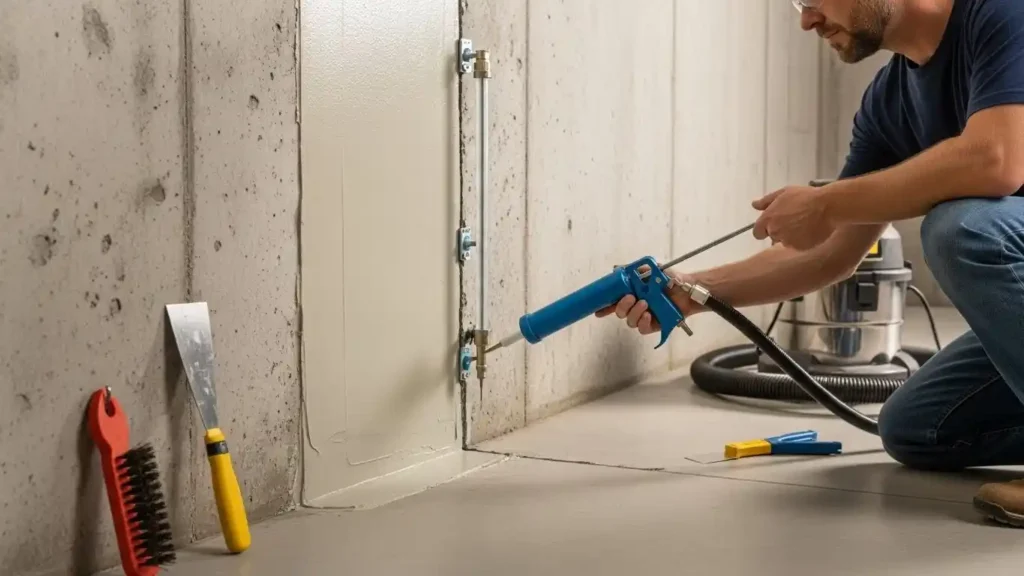
Use a wire brush to scrub the crack and remove any loose concrete, dirt, or old filler. This is very important because the repair material needs a clean surface to stick properly. After brushing, use a shop vacuum to suck out all the dust and debris.
Dry the Crack
If the crack is damp, try to dry it with a blow dryer or heat gun. Wait 15 minutes to see if moisture comes back. If the crack stays dry, you can continue. If water keeps coming back, you’ll need to use polyurethane foam instead of epoxy.
Install Injection Ports
Injection ports are small plastic pieces that you attach over the crack. Space them about 6 to 8 inches apart along the entire length of the crack. Use the epoxy paste that comes with your kit to glue the ports in place. Let the paste dry completely before moving to the next step.
Seal the Crack Surface
Apply a bead of epoxy paste or surface sealer along the entire crack between the ports. Smooth it with a putty knife to create a 1/4 inch thick ribbon over the crack. This surface seal keeps the injection material from leaking out. Let this seal cure for the time recommended on your product instructions, usually a few hours.
Mix and Inject the Repair Material
If you’re using epoxy, mix the two parts together according to the package directions. Load the mixture into a caulking gun. Starting at the lowest injection port, slowly inject the material. You’ll know it’s full when material starts coming out of the next port above. Move to that port and repeat until you’ve filled the entire crack from bottom to top.
Let It Cure
Let the repair material cure completely. Epoxy usually takes 24 hours to several days to fully cure. Polyurethane cures much faster, often in just a few hours. Don’t touch or disturb the repair during this time.
Remove the Ports and Finish
Once everything is cured, you can cut off the injection ports with a hacksaw. If you want a smoother look, you can patch over the cut ports with concrete patch.
Why Professional Repair Is Sometimes Better
While DIY kits can save money, professional repairs offer important benefits. Professionals use industrial-grade materials that are stronger and last longer than store-bought kits. A professional can find the root cause of your cracks. Just sealing a crack won’t help if the problem keeps happening.
Most professional foundation repair companies offer warranties on their work. If the crack comes back, they’ll fix it again for free. Professionals also use high-pressure injection equipment that pushes repair materials deep into cracks and through the entire thickness of your foundation wall.
Preventing Future Foundation Cracks
After you seal your cracks, take these steps to prevent new ones:
- Improve Drainage – Make sure water flows away from your foundation. Your yard should slope away from your house. Clean your gutters regularly and extend downspouts at least 6 feet away from your foundation.
- Water Your Foundation – In very dry weather, especially during droughts, water the soil around your foundation. This keeps the soil from shrinking and pulling away from your foundation.
- Fix Plumbing Leaks – Leaking pipes can saturate the soil around your foundation. Fix any plumbing problems as soon as you notice them.
- Trim Trees and Bushes – Keep large trees and bushes at least 10 feet away from your foundation. Their roots can damage your foundation and suck moisture from the soil.
Understanding Repair Costs
A basic DIY crack repair kit is relatively inexpensive and usually includes everything you need to repair multiple feet of cracks. These kits are available at most hardware stores and home improvement centers.
Professional foundation crack repair for minor cracks typically costs a few hundred dollars. More serious foundation problems can cost several thousand dollars. The exact cost depends on how many cracks you have, how wide they are, and whether waterproofing is needed.
Common Mistakes to Avoid
- Using Only Surface Sealers – Many people just fill the crack with caulk or cement from the surface. This might look good, but it doesn’t seal the entire crack. Water can still get through.
- Ignoring the Root Cause – Sealing a crack won’t help if you don’t fix what caused it. If water drainage is the problem, you need to improve drainage.
- Working Too Fast – Foundation crack repair takes time. If you rush through the steps or don’t let materials cure properly, your repair will fail.
- Choosing the Wrong Material – Using epoxy on a wet crack won’t work because epoxy needs a dry surface. Match your material to your specific situation.
When to Call a Professional
Some foundation problems are too serious for DIY repairs. Call a foundation repair specialist if you notice:
- Cracks wider than 1/4 inch
- Cracks that keep growing over time
- Horizontal cracks on your foundation walls
- Multiple cracks in the same area
- Water actively leaking through cracks
- Doors or windows that won’t close properly
- Floors that slope or feel uneven
- Walls that lean or bow inward
These signs might mean your foundation has structural problems that need expert repair.
Conclusion
Sealing foundation cracks is an important part of home maintenance. Small cracks that you catch early are usually easy and cheap to fix. The key is knowing which cracks you can handle yourself and which ones need professional help.
Remember to clean and prepare the crack properly before sealing, choose the right material for your specific type of crack, and follow all product instructions carefully. Watch for signs that indicate bigger problems and improve drainage to prevent future cracks.
Taking care of foundation cracks quickly protects your home from water damage, pest problems, and more serious structural issues. Whether you do it yourself or hire a professional, sealing those cracks is worth the time and money to keep your home safe and dry.
Frequently Asked Questions
What type of foundation cracks can I fix myself?
You can repair small cracks that are less than 1/4 inch wide, not growing, and are vertical or diagonal. These cracks are usually caused by normal settling. If the crack is horizontal, wide, or getting bigger, call a professional.
What is the best material for sealing foundation cracks?
The best material depends on the type of crack. Epoxy is good for dry cracks because it becomes very strong once it hardens. Polyurethane foam is better for wet or leaking cracks because it expands and fills the gap. Hydraulic cement is helpful when you need a quick or temporary fix, but it is not always the strongest option. Concrete caulk is only useful for very small surface cracks that do not go deep.
How do I know if a foundation crack is serious?
A crack may be serious if it is wider than 1/4 inch, running horizontally, keeps growing, or comes with other problems like sticking doors, sloping floors, or water leakage. In these cases, you should call a foundation expert right away.
Can sealing a crack stop water from coming into my basement?
Yes if you use the right material. Polyurethane foam works well for wet cracks because it expands and blocks water. However, if water pressure around your home is high, you also need to fix drainage, or new cracks may form later.
How can I prevent new foundation cracks in the future?
You can prevent new cracks by improving yard drainage, cleaning gutters, extending downspouts, fixing plumbing leaks, watering soil during dry months, and keeping large trees away from the foundation. These steps reduce soil movement and water pressure.