


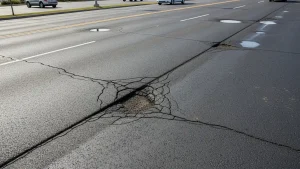
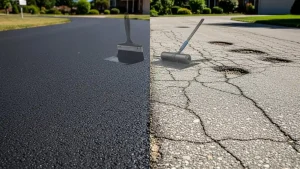

Asphalt in Phoenix typically lasts around 12 to 18 years with proper installation and maintenance, although its actual lifespan can vary. Extreme summer heat, heavy traffic, poor drainage, and monsoon storms can all affect how long the pavement stays in good condition.
Understanding asphalt lifespan in Phoenix, Arizona, helps commercial property owners and property managers plan maintenance, identify early damage, and avoid costly repairs. The lifespan of a parking lot or roadway depends on how well it was built and how it is maintained over time.
What is the Average Lifespan of Asphalt in Phoenix?
Asphalt pavement in Phoenix may last around 12 to 18 years, but this is a general estimate rather than a fixed replacement schedule. Some well-built surfaces last longer, while pavement exposed to heavy truck traffic or poor drainage may wear out sooner. Phoenix’s desert climate creates additional challenges. High summer temperatures can soften asphalt, especially under repeated heavy loads. Over time, sunlight and weather exposure can also cause the surface to become brittle and more likely to crack.
The quality of installation also makes a major difference. A stable foundation, proper pavement thickness, and good drainage help asphalt withstand daily traffic and changing weather conditions. For commercial parking lots and roadways, regular inspections can help determine whether the pavement needs minor repairs, resurfacing, or replacement before more serious problems develop.
Phoenix Weather Impact on Asphalt Road Lifespan
Phoenix weather plays an important role in how quickly asphalt pavement ages. Extreme heat, strong sunlight, and seasonal monsoon storms can all contribute to surface wear and structural damage.
Extreme Summer Heat
Asphalt pavement, also known as asphalt concrete, can become much hotter than the surrounding air. According to the U.S. Environmental Protection Agency, an Arizona study found that conventional paving materials reached surface temperatures as high as 152°F at midday. High pavement temperatures can soften the asphalt binder, making surfaces more vulnerable to rutting and deformation under heavy vehicle loads.
UV Exposure and Oxidation
Phoenix receives strong sunlight throughout much of the year. Prolonged exposure to UV rays and oxygen gradually changes the asphalt binder, causing the surface to harden and become less flexible. As the asphalt ages, small cracks may develop. Without timely maintenance, these cracks can allow water to enter the pavement.
Monsoon Rain and Water Damage
Phoenix’s monsoon season brings periods of intense rainfall. Water can enter existing cracks, reach the supporting layers, and weaken the pavement foundation. Poor drainage can make these problems worse, especially in commercial parking lots and roadways where water collects in low areas. Repairing cracks and addressing drainage issues can help limit further damage.
How to Extend Asphalt Lifespan in Phoenix
Proper asphalt care can help slow surface deterioration and reduce the risk of expensive repairs. For commercial parking lots, roadways, and other paved areas in Phoenix, a maintenance plan should reflect the pavement’s condition, age, and traffic levels.
Regular Seal Coating
Seal coating helps protect suitable asphalt surfaces from sunlight, oxidation, and everyday wear. Some properties may benefit from seal coating every two to four years, depending on their condition and usage. However, the timing should be based on an inspection rather than a fixed schedule.
Timely Crack Repairs
Small cracks can allow rainwater to reach the pavement’s supporting layers. Sealing suitable cracks early can help limit water entry and prevent further deterioration.
Proper Drainage
Standing water increases the risk of pavement damage. Keeping drainage paths clear and correcting low spots can help protect asphalt during Phoenix’s monsoon storms.
Routine Inspections and Maintenance
Inspect asphalt regularly for potholes, cracks, rutting, and areas where water collects. High-traffic commercial properties may need more frequent inspections, especially after major storms. When asphalt develops widespread surface wear but still has a stable foundation, resurfacing may help extend its useful life. More serious structural damage may require reconstruction or replacement.
Factors Affecting Asphalt Lifespan in Phoenix
Several specific factors influence how long your asphalt will last in the Phoenix area:
Traffic Load and Type: Heavy commercial traffic, delivery trucks, and frequent vehicle movement all reduce asphalt lifespan. Residential driveways typically last longer than busy parking lots or commercial drives.
Installation Quality: The foundation and installation process significantly impact longevity. Proper base preparation, adequate thickness, and quality materials are essential for Phoenix conditions.
Drainage: Poor drainage is particularly problematic in Phoenix because monsoon rains can be intense and sudden. Water pooling on asphalt accelerates deterioration and can cause serious structural damage.
Maintenance Schedule: Regular maintenance is the single most important factor in extending asphalt life in Phoenix. Properties with consistent professional care often see significantly longer lifespans.
Ground Conditions: Phoenix’s caliche hardpan and shifting soils can affect asphalt performance. Proper soil preparation and base stabilization are crucial for long-term success.
Where Does Asphalt Wear Out First on Commercial Properties in Phoenix?
Not every part of a commercial parking lot or roadway wears out at the same rate. Some areas handle heavier vehicles, frequent stopping, and sharp turns, which can cause faster deterioration than areas used mainly for regular parking.
Entrances, Exits, and Turning Areas
Vehicles frequently brake, accelerate, and turn near parking lot entrances and exits. These movements place added stress on the asphalt surface and can contribute to rutting, shifting, and uneven pavement over time. Busy access lanes may show damage earlier than parking spaces that receive lighter traffic.
Loading Docks and Dumpster Areas
Loading docks, delivery routes, and dumpster areas often experience repeated heavy truck traffic. Large vehicles place more pressure on the pavement, especially when stopping or turning in the same location. These areas may need a stronger pavement design or additional structural support to handle the expected loads.
Why These Areas Need Special Attention
A parking lot may have sections that remain in good condition while heavily used areas show early signs of failure. Identifying these locations helps property managers plan targeted improvements instead of treating every part of the pavement the same way.
How Is the Remaining Lifespan of Asphalt Evaluated?
Knowing when asphalt was installed is useful, but its age alone cannot tell you how many years of service remain. A pavement condition assessment helps determine whether the surface is still performing well or developing problems that may shorten its lifespan.
During an evaluation, a paving professional looks at several conditions:
- Crack patterns: Whether cracks are isolated, spreading, or forming connected patterns that may indicate deeper problems.
- Surface deformation: Rutting, depressions, or uneven areas that suggest repeated loading or possible structural weakness.
- Previous repairs: Locations where cracks or potholes keep returning despite earlier repairs.
- Drainage conditions: Areas where water collects or enters damaged pavement.
- Traffic patterns: Whether the pavement handles passenger vehicles, delivery trucks, or other heavy equipment.
If surface observations do not explain the damage, additional testing may be needed to evaluate the pavement’s supporting layers. The findings help determine whether preventive maintenance, localized repairs, resurfacing, or reconstruction is appropriate. Although an inspection cannot guarantee an exact remaining lifespan, it provides a better basis for planning future pavement work.
When Should Asphalt Be Repaired or Replaced in Phoenix?
Asphalt in Phoenix does not always need complete replacement when it starts showing signs of wear. Small cracks, minor surface damage, and isolated potholes can often be repaired before they become larger problems.
However, widespread cracking, deep ruts, recurring potholes, and areas where water collects may indicate more serious pavement damage. These problems can become worse during Phoenix’s extreme summer heat and monsoon storms.
If the pavement’s foundation is still stable, resurfacing or an asphalt overlay may extend its useful life. When the underlying base has failed or damage covers a large area, full replacement may be the better long-term option. A professional pavement inspection can help determine which approach is suitable for your property’s condition and traffic needs.
Conclusion
The key to getting the most value from asphalt is knowing when maintenance is enough and when more extensive work is needed. Waiting until pavement becomes severely damaged can limit repair options and increase costs. For Phoenix property owners, making decisions based on the pavement’s actual condition is more useful than relying on its age alone.
Get Professional Asphalt Services in Phoenix
Not sure whether your commercial pavement needs repairs or replacement? S & S Paving & Construction can help you evaluate your options. We provide seal coating, asphalt repairs, and asphalt installation for commercial properties in Phoenix. Call (602) 437-0818 today to discuss your pavement needs and request an estimate.
Frequently Asked Questions
Does faded asphalt always need replacement?
No. Faded or gray asphalt often indicates surface aging and oxidation rather than structural failure. If the pavement is still stable, maintenance may be enough. Crumbling surfaces, deep cracks, or recurring potholes require closer inspection.
Can asphalt repairs be completed during Phoenix summers?
Yes, certain asphalt repairs can be completed during summer. However, extreme surface temperatures can affect some treatments. Contractors must consider weather conditions, pavement temperature, and the materials being used before scheduling work.
How long should vehicles stay off newly repaired asphalt?
The waiting period depends on the repair method, materials, weather, and expected vehicle loads. Some repairs allow traffic relatively quickly, while others require longer curing times. Follow your contractor’s instructions before reopening the pavement.
Can a commercial parking lot remain open during asphalt repairs?
In some cases, contractors can complete repairs in stages, allowing unaffected areas to remain accessible. This depends on the parking lot layout, repair requirements, and safety conditions. Planning the work can help reduce disruptions to customers and employees.
Does resurfacing a parking lot require new pavement markings?
Usually, yes. A new asphalt surface covers existing parking lines, directional arrows, and other markings. Once the resurfaced pavement is ready, the parking lot may need restriping to restore traffic flow and designated parking spaces.
