
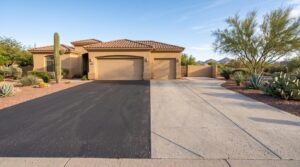
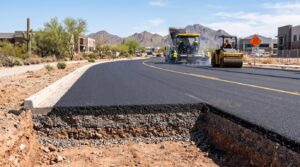
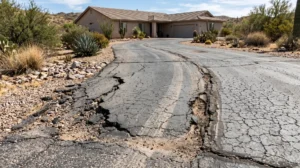
Asphalt overlay is a common resurfacing method, placing a new layer over existing pavement for quick results and lower upfront costs. While it delivers a smoother surface, better aesthetics, and minimal disruption, the short-term benefits often come at a steep long-term price—especially for property owners in Phoenix, AZ, where pavement stress from heat and traffic is constant.
Unfortunately, overlays frequently mask underlying problems rather than fix them, leading to recurring issues like cracking, potholes, and drainage failures. They add weight without improving structural support, accelerating deterioration and requiring more frequent repairs—which ultimately cost more than a proper replacement.
Understanding Asphalt Overlay
Before diving into the disadvantages, it’s important to understand what asphalt overlay actually is and why it’s often chosen. Knowing how this process works helps you see the difference between short-term improvement and long-term performance. Without this context, many pavement issues can be misunderstood or overlooked.
What an Asphalt Overlay Involves
An asphalt overlay is basically putting a new layer of asphalt on top of your old pavement. The workers clean your existing surface, patch up any really bad spots, and then pour fresh asphalt right over everything. This new layer is usually one to three inches thick. It’s like putting a new blanket over an old, lumpy mattress. Sure, it looks better on top, but those lumps are still there underneath.
How Asphalt Overlay Differs from Pavement Replacement
Here’s the big difference. When you do a full replacement, workers tear out all the old asphalt down to the dirt and rocks underneath. They can fix problems with drainage, replace damaged base materials, and build everything fresh from the ground up. With an overlay, they leave everything as is. All the problems hiding under your old pavement? They’re still there. They’re just covered up now.
Key Structural Disadvantages of Asphalt Overlay
The biggest problems with asphalt overlay come from what happens beneath the surface. While the new layer may look smooth and strong, the underlying structure often tells a different story. These hidden issues are usually what lead to early failure.
Existing Base Failures Remain Uncorrected
Remember that lumpy mattress comparison? Here’s why it matters. If the base layers under your old pavement are damaged, weak, or broken down, the overlay doesn’t fix that at all. It’s like building a house on a cracked foundation. The base is what holds everything up. When it’s bad, your new surface won’t last long no matter how nice it looks.
No Improvement in Pavement Load Capacity
Let’s say your parking lot was already struggling with heavy delivery trucks. Adding a thin layer on top doesn’t make it stronger. The pavement can’t suddenly handle more weight just because you added a couple inches of new asphalt. If it was maxed out before, it’s still maxed out now. You haven’t solved the problem.
Limited Structural Reinforcement
Here’s another issue: the new layer doesn’t always stick perfectly to the old one. Sometimes they don’t bond together well, which means they act like two separate layers instead of one strong pavement. When that happens, the overlay can actually peel away or crack even faster than you’d expect.
Cracking and Surface Performance Issues
One of the most common frustrations with asphalt overlay is how quickly surface problems return. Cracks and defects that seem “fixed” often reappear sooner than expected. This ongoing deterioration affects both appearance and safety.
Reflective Cracking from Underlying Pavement
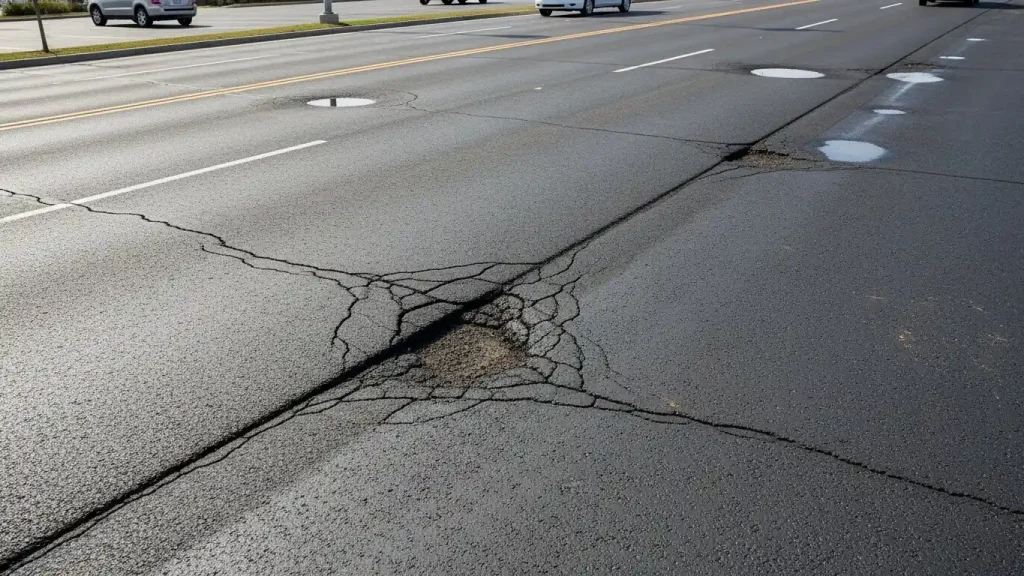
This is the number one complaint people have. See those cracks in your old pavement? They’re going to show up again in your new overlay. It’s called reflective cracking, and it happens because the movement and stress in the old pavement pushes up through the new layer. Think of it like trying to hide a crack in your phone screen with a sticker. The crack is still there, and eventually you’ll see it through the sticker. Most overlays start showing these cracks within one to three years.
Recurring Surface Defects Over Time
It’s not just cracks either. Potholes, dips, and ruts in the old pavement create weak spots in the overlay. These areas fail over and over again. You patch them, they break again. You patch them again, they break again. It becomes this endless cycle of repairs that never really fixes anything.
Reduced Resistance to Heavy Traffic Stress
Heavy traffic and weak base layers don’t mix well. If you’ve got trucks, buses, or lots of cars constantly driving over your overlay, it’s going to wear out fast. The pavement can develop ruts where vehicles always drive. It might even start pushing and shoving in areas where traffic stops and turns a lot.
Drainage and Moisture-Related Disadvantages
Water is one of the most destructive forces in pavement performance. Unfortunately, asphalt overlay can trap moisture instead of eliminating it. Over time, this leads to weakening of the pavement structure and accelerated damage.
Water Entrapment Beneath the Overlay
Here’s what happens: water gets into cracks in your old pavement (because water always finds a way in). But now you’ve sealed the top with new asphalt, so the water can’t escape. It just sits there, trapped between the layers. That trapped water breaks down the base materials and makes everything weaker. In winter, it freezes and expands, causing even more damage.
Changes in Surface Elevation Affect Drainage
When you add two or three inches of new asphalt, you’re raising the height of your pavement. That might not sound like a big deal, but it can mess up how water drains. Water might start pooling where it didn’t before. It could flow toward your building instead of away from it. Your storm drains might not work right anymore because the pavement is now higher than they are.
Increased Risk of Moisture-Related Damage
All that trapped water causes serious problems. In cold weather, the freeze-thaw cycle destroys pavement from the inside out. The water freezes, expands, cracks things apart, then melts and shifts everything around. Over and over, all winter long. By spring, you might have major damage that needs expensive repairs.
Lifespan Limitations of Asphalt Overlay
Although overlay may seem like a quick solution, its lifespan is significantly shorter than full pavement replacement. Wear and tear show up faster, especially under regular traffic. This shortened service life increases long-term costs and maintenance needs.
Shorter Service Life Than Full Replacement
A brand new pavement done right can last 20 to 30 years. An overlay? You’re looking at 7 to 12 years if you’re lucky. That’s a huge difference. It means you’ll be dealing with major pavement work way more often. And each time you need work done, it costs money and creates hassle.
Faster Deterioration in High-Traffic Areas
The places that get used the most wear out the fastest. Your driveway entrance, the main lanes in a parking lot, areas where trucks load and unload—these spots might only last three to five years before they need repair. So while some parts of your overlay look okay, other parts are already falling apart.
Greater Risk of Premature Failure
Because overlay doesn’t fix underlying problems, there’s always a risk that something major fails sooner than expected. Maybe the base gives out. Maybe drainage problems cause a sudden collapse. These surprise failures are expensive, disruptive, and sometimes even dangerous.
Maintenance and Repair Challenges
Maintaining an asphalt overlay requires more frequent attention than many property owners expect. Small problems tend to return repeatedly instead of being permanently resolved. Over time, this leads to rising repair expenses and ongoing inconvenience.
More Frequent Crack Sealing Requirements
Remember that reflective cracking we talked about? You’ll need to seal those cracks constantly to keep water out. We’re talking every one to two years instead of every three to five years with normal pavement. That’s more service calls, more money spent, and more time dealing with pavement issues.
Rising Maintenance Costs Over Time
Here’s the frustrating pattern: at first, you’re just sealing cracks. Then you’re patching holes. Then you’re patching bigger areas. The problems keep getting worse and the repairs keep getting more expensive. Before you know it, you’re spending almost as much each year on maintenance as you saved by doing an overlay in the first place.
Difficulty Addressing Deep Structural Issues
When something goes really wrong with an overlay, fixing it is complicated. You can’t just patch the surface—you have to dig through the overlay and into the old pavement underneath. That creates more seams, more joints, and more places for future problems to develop. It’s like trying to fix a two-layer cake that’s collapsing.
Situations Where Asphalt Overlay Is Not Recommended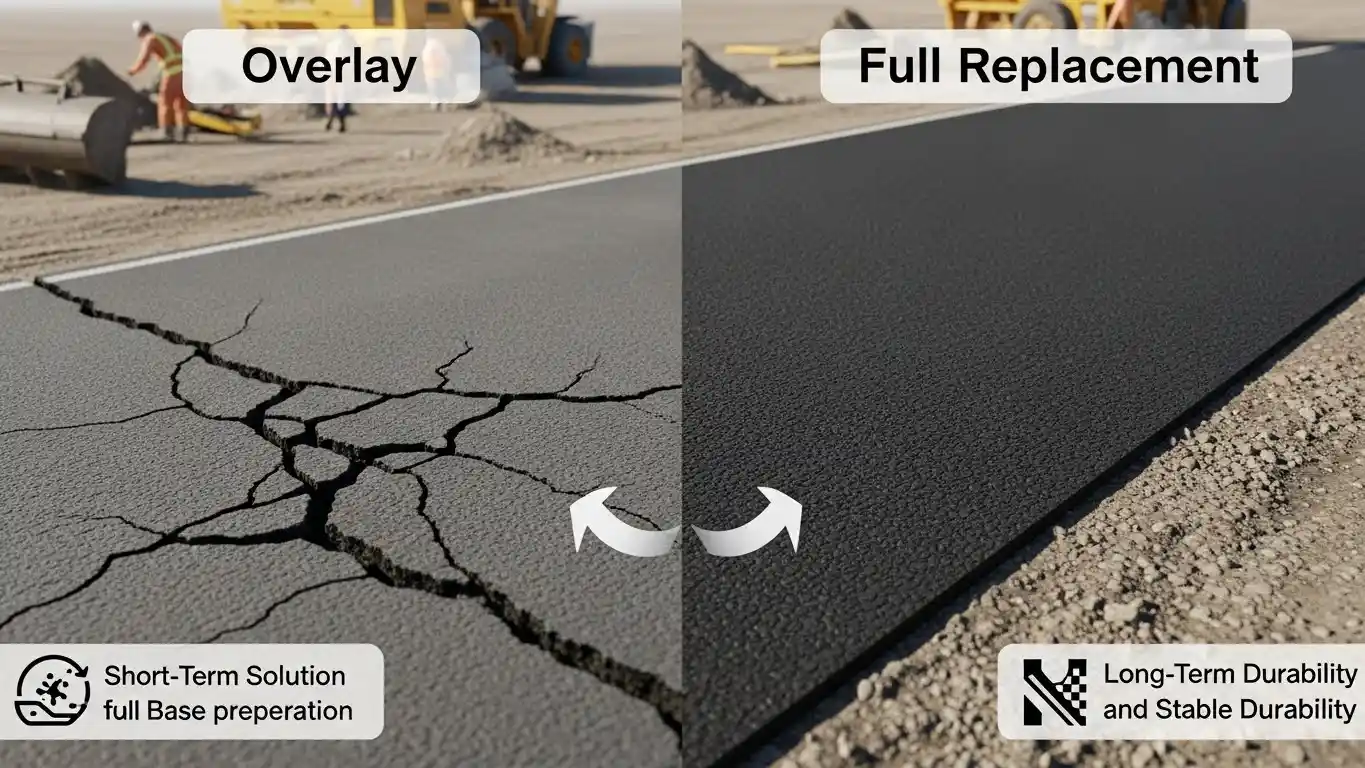
Not all pavements are suitable candidates for overlay. In some cases, existing damage is simply too severe to be covered up. Applying overlay in these situations often results in wasted money and faster failure.
Pavement with Structural or Base Damage
If your pavement has widespread cracking that looks like alligator skin, or if there are areas that have sunk down, or if you see pumping (where water and mud come up through cracks), the overlay won’t work. These are signs that the base has failed. Covering them up with new asphalt is throwing money away.
Severe Cracking and Surface Deformation
When your pavement has deep ruts from years of traffic, or major cracks everywhere, or sections that have really broken down, it’s past the point of overlay. The damage is too severe. You need to start fresh. Overlay here is like putting a bandaid on a broken bone—it’s not going to help.
Sites with Poor Drainage Conditions
If water already pools on your pavement or if the ground stays soggy, overlay will make things worse, not better. The elevation change will mess up drainage even more. These sites need proper drainage solutions first, which means you need to do full reconstruction anyway.
Cost Disadvantages in the Long Term
While asphalt overlay saves money upfront, it often costs more over time. Repeated repairs and early replacement add up quickly. When viewed as a long-term investment, overlay is rarely the most economical option.
Temporary Savings Versus Long-Term Investment
Sure, you saved money today. But over 20 years, an overlay usually costs more. You’ll pay for the overlay, then constant maintenance, then patches and repairs, and finally you’ll still need to do full replacement. Add it all up, and you’ve spent more than if you’d just done replacement from the start.
Higher Cumulative Repair Expenses
All those crack sealing visits, patching jobs, and drainage repairs can really add up. Over time, the extra costs can become substantial, far exceeding what you originally spent on the overlay. In comparison, a properly replaced pavement would have required almost no maintenance during the same period.
Early Need for Full Pavement Replacement
Most overlays eventually fail to the point where full replacement becomes unavoidable. And when that day comes, you’ve got to pay for the replacement you were trying to avoid, plus you’ve already spent money on the overlay that didn’t last. That’s the worst case scenario—paying twice.
Environmental and Site-Specific Concerns
Asphalt overlay can also create environmental and site-related challenges. Changes in drainage and repeated material use reduce overall sustainability. Compared to reconstruction, overlay offers fewer opportunities for long-term environmental improvement.
Increased Material Use from Repeated Overlays
Some people do overlay after overlay, putting new layers on top of old ones every few years. This uses up more asphalt material without getting better performance. And when you finally do full replacement, all those layers become waste that has to be removed and disposed of. It’s not an efficient use of resources.
Stormwater Runoff and Pooling Issues
When overlay changes the drainage patterns, it can create problems with stormwater management. Water might run off faster, creating erosion. Or it might pool up, creating mosquito breeding grounds or water quality issues. These environmental problems can affect more than just your property.
Limited Sustainability Compared to Reconstruction
Modern pavement replacement can include green features like better drainage systems, recycled materials, or even permeable pavement options. Overlay can’t do any of that because it leaves everything underneath untouched. If you care about sustainability and long-term environmental responsibility, overlay is a missed opportunity.
Importance of Professional Pavement Assessment
Choosing the right pavement solution requires more than surface-level inspection. A professional assessment reveals structural issues that are not visible to the eye. This evaluation is critical for avoiding costly mistakes.
Identifying Hidden Pavement Failures
Pavement engineers have tools that can see what’s happening underneath your surface. They use techniques like ground-penetrating radar and core sampling to find problems you can’t see. These hidden issues determine whether overlay will work or fail. Without this assessment, you’re basically guessing.
Determining Overlay Suitability
Even if your pavement looks okay on top, a professional considers everything: how much traffic you have, your climate, drainage conditions, and what you need from your pavement long-term. They can tell you honestly whether overlay makes sense for your specific situation or whether you’re wasting your money.
Choosing the Right Pavement Solution
There are actually more options than just overlay or full replacement. Professionals know about alternatives like partial reconstruction, recycling existing materials, or rebuilding just the damaged sections. They can design a solution that fits your budget while still giving you pavement that lasts. That expert advice is worth paying for.
Potential Benefits of Asphalt Overlay
Although this guide focuses on the disadvantages of asphalt overlay, it’s important to note that this method does offer a few practical benefits in the right situations. Asphalt overlay is often chosen because it costs less upfront than full pavement replacement and can be completed quickly, reducing downtime for driveways, parking lots, and roadways. It also improves surface appearance and smoothness in the short term, making worn pavement look newer without extensive demolition.
Get Expert Advice Before Choosing Asphalt Overlay
However, these short-term advantages don’t always mean asphalt overlay is the best long-term solution—especially if underlying structural or drainage issues exist. Before committing to an overlay, it’s critical to have your pavement professionally evaluated. A qualified asphalt contractor in Phoenix, AZ can determine whether an overlay will perform well or if full replacement will save you money over time. Schedule a professional pavement assessment today to avoid costly repairs and make the right decision for your property.
Conclusion
Asphalt overlay might look like an easy answer to your pavement problems, but now you know the truth. It’s got serious disadvantages that can cost you more money and create bigger headaches in the long run. The shorter lifespan, constant maintenance, cracking issues, and drainage problems often make it a poor investment. Before you choose an overlay just because it’s cheaper upfront, talk to a professional and consider what you’ll really be paying over the next 10 or 20 years—especially in demanding environments like Phoenix, AZ.
Frequently Asked Questions
How long does an asphalt overlay typically last?
An asphalt overlay usually lasts 8–15 years, depending on traffic, underlying pavement condition, and maintenance. It has a shorter lifespan compared to a full pavement replacement.
What are the main disadvantages of asphalt overlay?
The primary disadvantages include reflective cracking, underlying structural issues remaining untreated, water and drainage problems, shorter lifespan, and higher long-term maintenance costs.
Can asphalt overlay fix all pavement problems?
No. Asphalt overlay only addresses surface-level issues. Deep base failures, severe cracks, or structural damage require full pavement replacement for a durable solution.
How much does an asphalt overlay cost compared to full replacement?
Asphalt overlay is cheaper upfront, but over time, recurring repairs and maintenance may make it more expensive than full replacement for severely damaged pavement.
When is a professional assessment necessary before overlay?
A professional pavement evaluation is recommended whenever there is significant cracking, water damage, or base instability, to determine if overlay is suitable or if replacement is the better option.
