
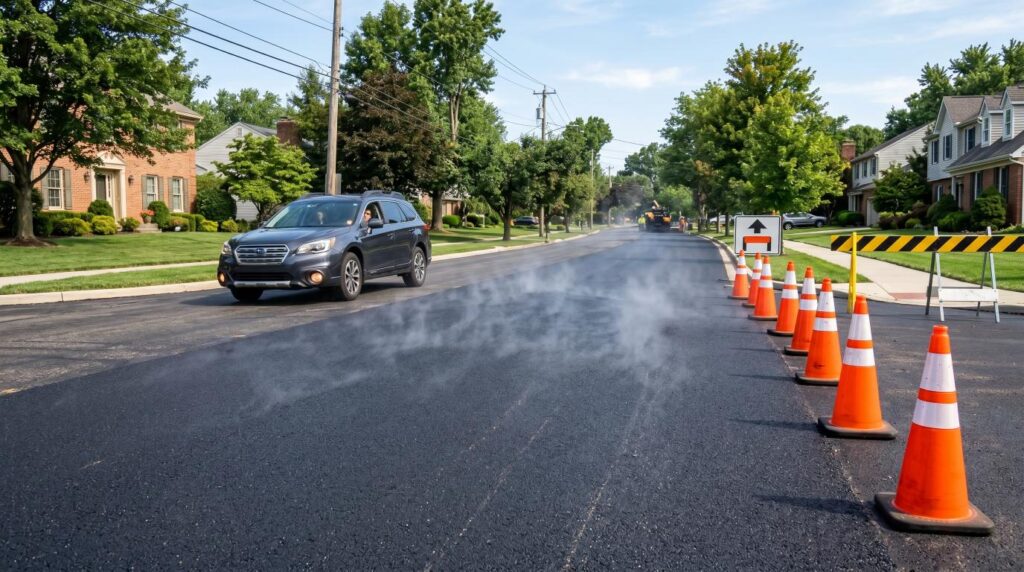
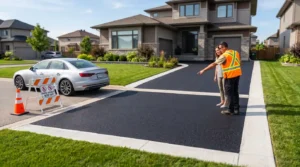
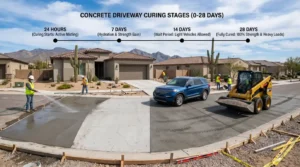

A new asphalt road may look smooth and nice, so it can be tempting to drive on it. But before you do, it is important to know the risks of driving on fresh asphalt. It takes about 24 to 72 hours before driving on new asphalt so it can cool and harden. The surface may look ready, but what is happening underneath tells a completely different story. Even if it looks solid after a few hours, it can still be soft for 24 to 48 hours.
If you drive on it too early, your tires can leave marks and damage the road. This can also make the asphalt weaker. Whether you are in Phoenix, Chandler, Avondale, or anywhere across the Phoenix metro area, our team can give you the right curing timeline for your specific project and local conditions.
What Is Fresh Asphalt?
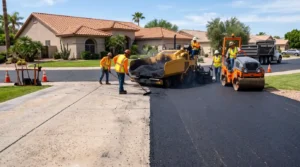
Fresh asphalt is a hot mixture of aggregates like sand and gravel bound together with a petroleum-based material called bitumen or asphalt cement. Fresh asphalt is a combination of aggregates and bitumen which has been spread and compacted to form a smooth, durable road surface. New asphalt is usually hot and soft right after its application, which is why it needs time to cool and harden.
Can You Drive on Fresh Asphalt Road?
Fresh asphalt needs time to harden and cure before it can safely handle vehicle weight. Driving too soon can cause ruts, tire marks, and permanent surface damage, all of which shorten your pavement’s lifespan. Just because the surface feels firm when you tap it with your foot does not mean it is ready for a two-thousand-pound vehicle.
The top layer cools and hardens faster than the layers beneath it. You might step on fresh asphalt and feel nothing give, but park a car on it for a few hours and come back to find four perfect tire impressions pressed into the surface.
 How Long Does Fresh Asphalt Take to Dry or Cure?
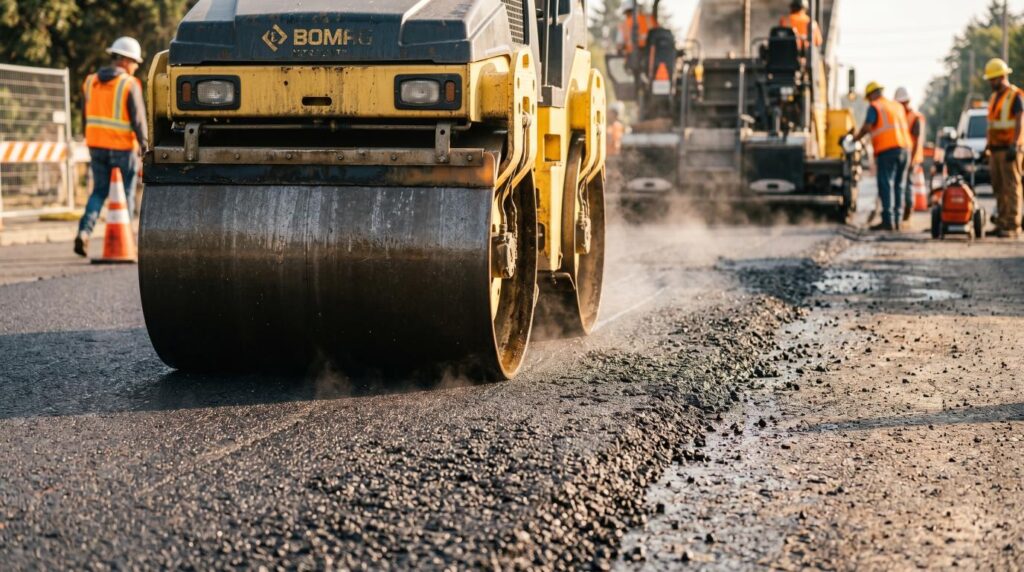
Asphalt takes six to twelve months to fully cure and remains a little more susceptible to damage for that time. However, it takes 48 to 72 hours to dry enough for foot and vehicle traffic. Drying refers to the surface cooling down to the point where it can hold light weight without leaving marks. Curing is a much longer chemical process where the asphalt hardens from the inside out through oxidation.
Asphalt goes through two types of change during this period. A physical change where asphalt cools from its hot installation temperature to the surrounding air, hardening as it settles. And a chemical change where asphalt cement oxidizes over time, which strengthens the surface further.
Factors That Affect Asphalt Curing Time
Several things affect how quickly asphalt hardens after installation. Weather is the biggest one. Hot and dry conditions speed up the curing process while cold, humid, or rainy weather slows it down significantly. The thickness of the asphalt layer also plays a role because thicker layers hold heat longer and take more time to fully set from the inside out.
The type of vehicle using the surface and the asphalt mix used during installation also matter. Heavier vehicles like trucks and vans require a longer wait because they put far more stress on the surface than a standard passenger car. Hot mix asphalt, which is the most common type used for driveways and roads, takes longer to cure than cold mix asphalt.
 What Happens If You Drive on Fresh Asphalt Too Soon?
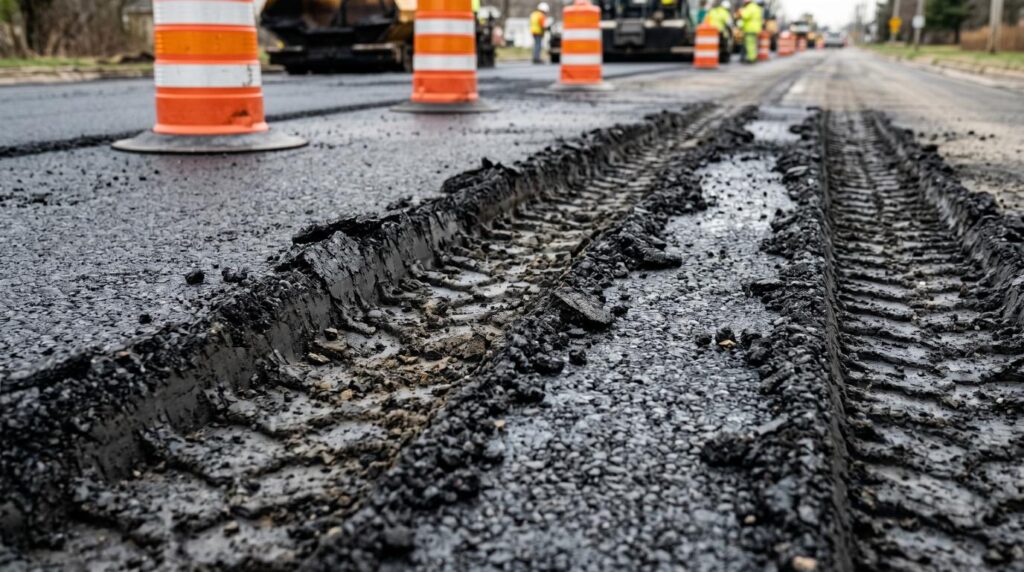
Driving on fresh asphalt before it is ready causes damage that is often permanent. The most common problems are tire marks, surface scuffs, and deep indentations pressed into the soft surface. These marks harden in place as the asphalt cures and cannot be removed without resurfacing the entire area.
Early traffic weakens the internal structure of the asphalt, making it far more likely to crack, develop ruts, and break down under normal use. A surface that should last 20 to 30 years can start falling apart in just a few years when driven on too soon. The cost of repairing or resurfacing damaged asphalt is always far greater than the cost of simply waiting the recommended time.
 Signs Asphalt Is Ready for Driving
Before you pull your car onto any freshly paved surface, look for these signs that the asphalt is actually ready.
Newly laid asphalt will have a shiny reflective surface. As it cures, this shine fades and the surface starts to look more matte. Also, a lack of tire tracks or ruts is a good indication that the asphalt has hardened to a point where it can support traffic from vehicles.
You can also do a simple press test. Push your thumb firmly into the surface. If it leaves an indent, the asphalt is still too soft. If the surface holds firm with no mark, it is likely ready for light traffic. Stable temperature conditions also matter. If the afternoon heat is intense, even asphalt that felt firm in the morning can soften again by midday.
Always check with your contractor before assuming the surface is ready. They know the specific mix that was used and the conditions during installation, which gives them the most accurate read on your particular timeline.
How Long to Wait Before Driving on New Asphalt?
Most new asphalt needs about 24 to 72 hours before it is safe for regular driving, depending on weather and road conditions.
Light Vehicles (Cars, Bikes)
The general recommendation is to wait at least 24 to 72 hours before allowing light foot traffic and 3 to 7 days before allowing vehicle traffic. For a standard passenger car in warm, dry weather, 72 hours is the minimum. If the weather has been cool or humid, waiting a full week is the smarter call.
Heavy Vehicles (Trucks, Vans)
If you are wondering whether you can park a heavy truck or trailer, it is recommended to wait at least 14 days before parking. Heavy vehicles put concentrated weight on a small surface area, which is exactly the kind of stress fresh asphalt cannot handle in its early stages.
Residential Driveways vs Public Roads
Residential driveways and commercial roads follow slightly different rules. Public roads are typically built with thicker layers, better compaction equipment, and engineered to handle traffic faster. A residential driveway is thinner and more sensitive to early pressure. Always follow the specific guidance from your paving contractor for residential jobs.
Why Highways Open Faster Than Driveways
You may have noticed that highways often reopen to traffic within hours of being repaved, while your contractor tells you to stay off your driveway for three days. Highway paving projects use industrial-grade compaction equipment with much higher pressure than what is used on residential jobs. Crews also work in carefully controlled conditions with precise temperature monitoring throughout the entire process.
Residential driveways use standard hot mix asphalt applied with smaller equipment under less controlled conditions. The result is a surface that needs more time to reach the same level of hardness before it can handle vehicle weight safely.
Can You Walk on Fresh Asphalt?
Walking on fresh asphalt is much safer than driving on it, but it still requires some patience. Light foot traffic may be allowed after 24 hours, but vehicle traffic should wait at least 48 to 72 hours. The key difference is weight distribution.
A person walking spreads their weight across a much larger area than a car tire pressing into a single concentrated point. That said, high heels, narrow furniture legs, and heavy equipment should still be kept off the surface until it has fully hardened. Even foot traffic that leaves impressions during the first day is a sign you need to give it more time.
 Tips to Protect Fresh Asphalt
Taking care of fresh asphalt during the curing period does not take much effort, but it makes a big difference in how the surface holds up long term.
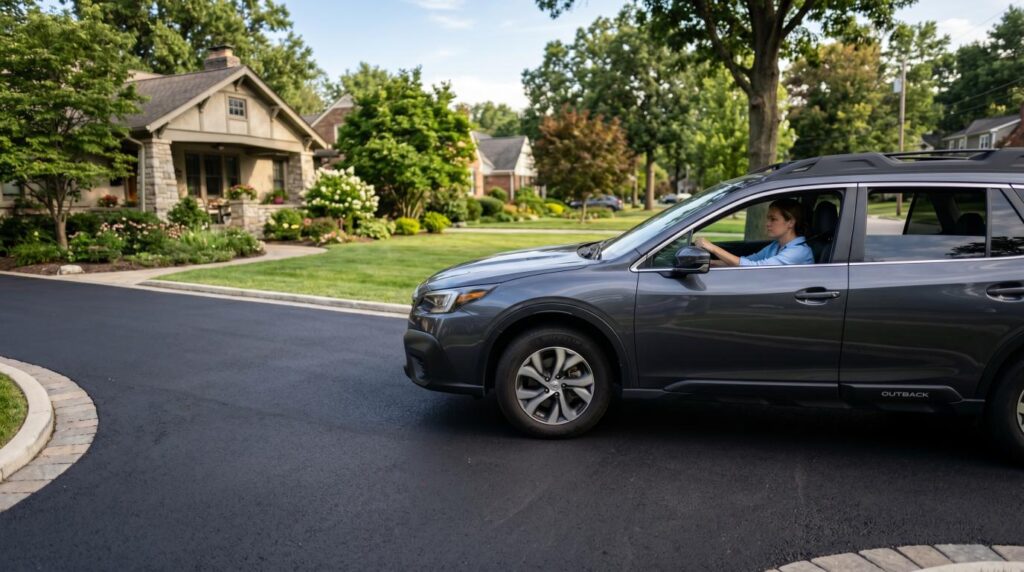
Avoid making sharp turns while your car is sitting still. Turning the steering wheel when parked puts a twisting force on the surface that can scuff and tear the asphalt during those early weeks. Always pull forward slightly before turning.
Keep your vehicle moving slowly across the surface rather than stopping and starting abruptly. Hard braking leaves marks just as easily as sharp turns do.
Avoid parking in the same spot repeatedly. Limit turning the steering wheel when the vehicle is not in motion. Refrain from placing heavy items like dumpsters on the surface.
Follow whatever specific instructions your contractor gives you. They know the conditions of your particular job better than any general guide can.
Common Mistakes People Make
The biggest mistake people make is assuming that dry means ready. Fresh asphalt can feel firm on the surface while the layers underneath are still soft and vulnerable to damage. Driving on it too early, especially at night when temperatures drop unevenly, or right after rain when moisture softens the base, causes damage that looks minor at first but becomes permanent as the asphalt finishes curing.
The other common mistake is ignoring warning signs and barriers placed by the paving crew. Construction crews put them there because they know exactly how long the surface needs before it can handle traffic. Driving around barriers to save a few minutes can result in tire marks, ruts, and structural damage that costs hundreds of dollars to repair.
Planning a Paving Project in Phoenix, AZ?
S&S Paving & Construction has been serving Phoenix and the surrounding Arizona communities since 1984. Whether you need a new asphalt driveway, a commercial parking lot, road resurfacing, or sealcoating, our team knows exactly how to get the job done right from day one. Every project comes with expert guidance on curing timelines, traffic readiness, and long-term maintenance so your asphalt investment lasts for decades. Book your appointment today and let Arizona’s most trusted paving team take care of the rest.
Conclusion
Fresh asphalt is an investment. Whether it is a residential driveway or a commercial parking lot, the money and effort that went into laying it deserves to be protected. Driving too soon turns a smart investment into an expensive repair job that could have been completely avoided.
Do not rush the process and risk voids, spills, or premature wear. Wait the recommended time. Follow your contractor’s specific guidance. Watch for the signs that the surface is actually ready. And when in doubt, give it one more day.
The patience you show in the first 72 hours protects a surface that should last you 20 to 30 years. That is a trade worth making every single time.
Frequently Asked Questions
Can tire marks go away?
Most tire marks on new asphalt are temporary and fade naturally as the surface cures and hardens. These marks are typically superficial and do not indicate damage to the pavement. Avoid sharp turns and sudden braking in the first few days to minimize visible scuffs. Deep ruts and indentations, however, are permanent and require resurfacing to fix.
What temperature is too hot for asphalt?
Asphalt softens again in extreme heat even after it has initially cured. On days above 90 degrees Fahrenheit, treat even a week-old driveway with extra care. Avoid parking in the same spot for extended periods and keep heavy vehicles off the surface during peak afternoon heat.
What if I accidentally drive on it?
If you drive on fresh asphalt before it is ready, check the surface immediately for damage. Light tire marks may fade on their own as the asphalt cures. Deeper ruts or indentations need to be addressed by your contractor before the asphalt fully hardens, because once it sets completely those marks are there permanently.
How long before sealing new asphalt?
The sealer also takes 48 to 72 hours to dry enough for people to drive on it, but will greatly increase the life of the asphalt surface as well as reduce the overall cost of future asphalt repairs. Some contractors recommend waiting up to 90 days or even six months for best results.
How long should you stay off new asphalt in hot weather like Phoenix, AZ?
In hot climates like Phoenix, fresh asphalt stays softer for longer because heat slows down the cooling process. Wait a full 72 hours minimum before driving on it and avoid parking in the same spot during the first 30 days when afternoon temperatures peak.
