
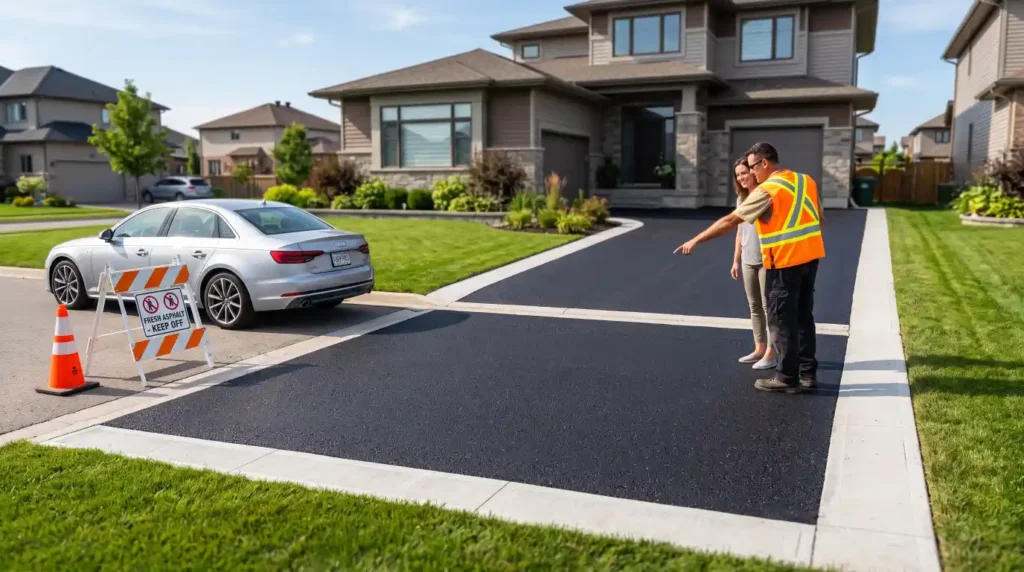
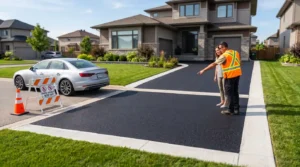
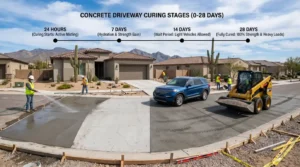

Most people can drive on new asphalt within 24 to 72 hours after it is laid. For residential driveways, wait at least 48 to 72 hours before driving on new asphalt. But that number changes depending on a few key things, including the type of asphalt, the weather outside, and how heavy your vehicle is.
In a hot climate like Phoenix, Arizona, where summer temperatures regularly push past 100 degrees, fresh asphalt stays soft longer than it would in cooler parts of the country, so the wait time matters even more. Whether you are a homeowner or a property manager in Phoenix AZ, our team is here to help you. This guide covers everything you need to know, from how long to wait before driving, walking, or parking, to what happens if you use the surface too soon.
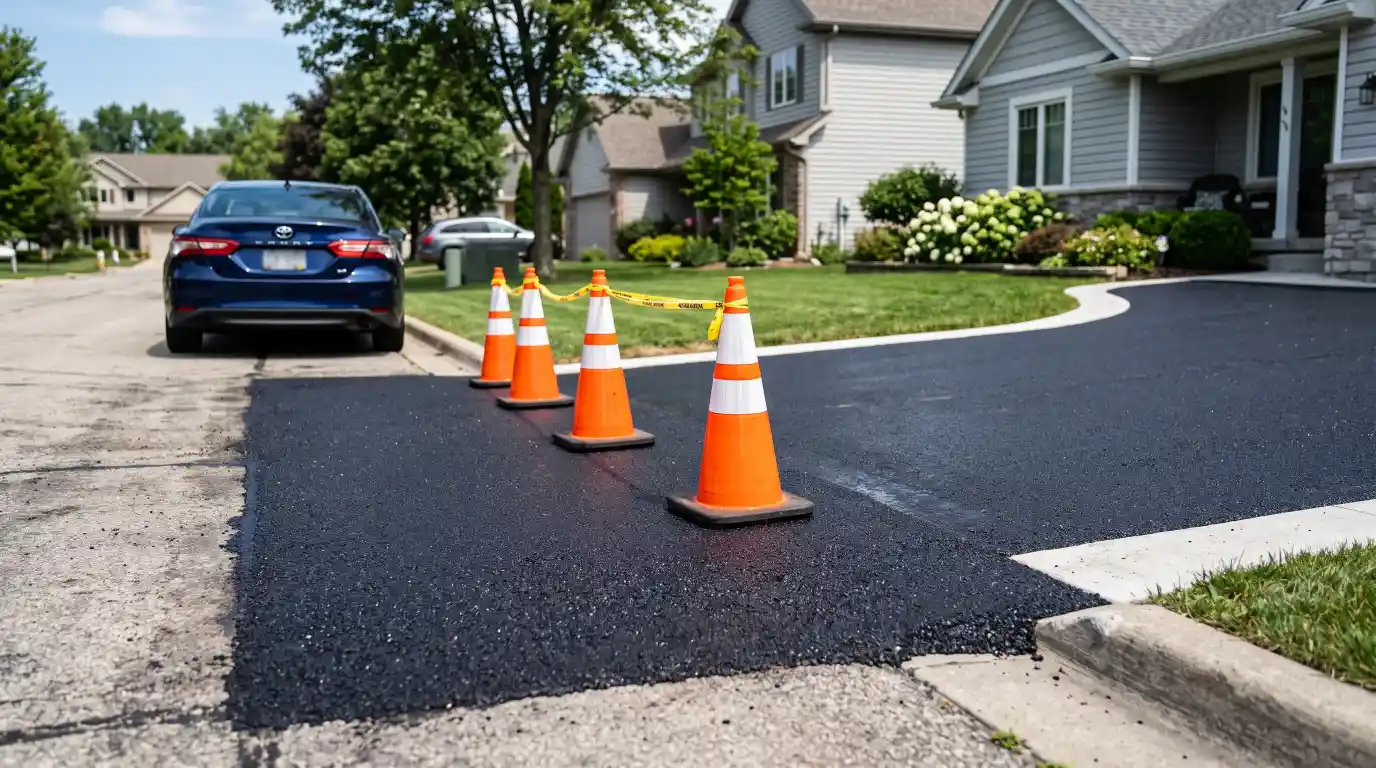
How Long Before You Can Drive on New Asphalt?
In most cases, you should wait 24 to 72 hours before driving on new asphalt with a standard passenger vehicle. Driving too soon can leave tire marks, create dents, or damage the edges of the pavement. Even after it is safe to drive on, new asphalt continues to cure for 6 to 12 months, becoming stronger over time.
For the best results, avoid parking heavy vehicles or leaving your car in the same spot for long periods during the first few weeks, and always follow your contractor’s instructions if they recommend a longer wait.
Why You Should Wait Before Driving on Fresh Asphalt
Asphalt is made from a mix of stone, sand, and a sticky black material called bitumen. It is laid while hot, usually between 275 and 325 degrees Fahrenheit. As it cools, it gets harder and stronger. But that cooling process takes time, and until it finishes, the surface stays soft enough to dent.
These two words mean different things when it comes to asphalt. Drying is when the surface cools down and loses its heat. Curing is a longer process where the oils inside the asphalt slowly harden and the mix reaches its full strength.
Drying can happen in a few hours. Curing takes months. You can drive on asphalt once it has dried enough to handle the weight, but the surface is not fully tough until it has finished curing.
How Long Does Asphalt Take to Fully Cure?
New asphalt cures gradually over several months, becoming stronger and more durable as time passes.
First 24 Hours
During the first 24 hours, the asphalt is at its most fragile. It is still releasing heat, and even light traffic can leave marks. It is best to keep all vehicles off the surface during this window.
First Week
By the end of the first week, the asphalt has cooled down and hardened enough for regular light vehicle traffic. However, it is still not at full strength. Avoid heavy vehicles, sharp turns, and parking in the same spot every day during this time.
First Month
After the first month, the asphalt is noticeably stronger. The oils inside are starting to bind more tightly, and the surface can handle normal everyday use. You may still notice some softness on very hot days, which is normal.
Six to Twelve Months (Full Cure)
It takes six months to a year for asphalt to fully cure. During this time, the oils inside the mix continue to harden and stabilize. After this point, the surface is at its strongest and most resistant to damage. This is also when sealcoating is usually recommended for the first time.
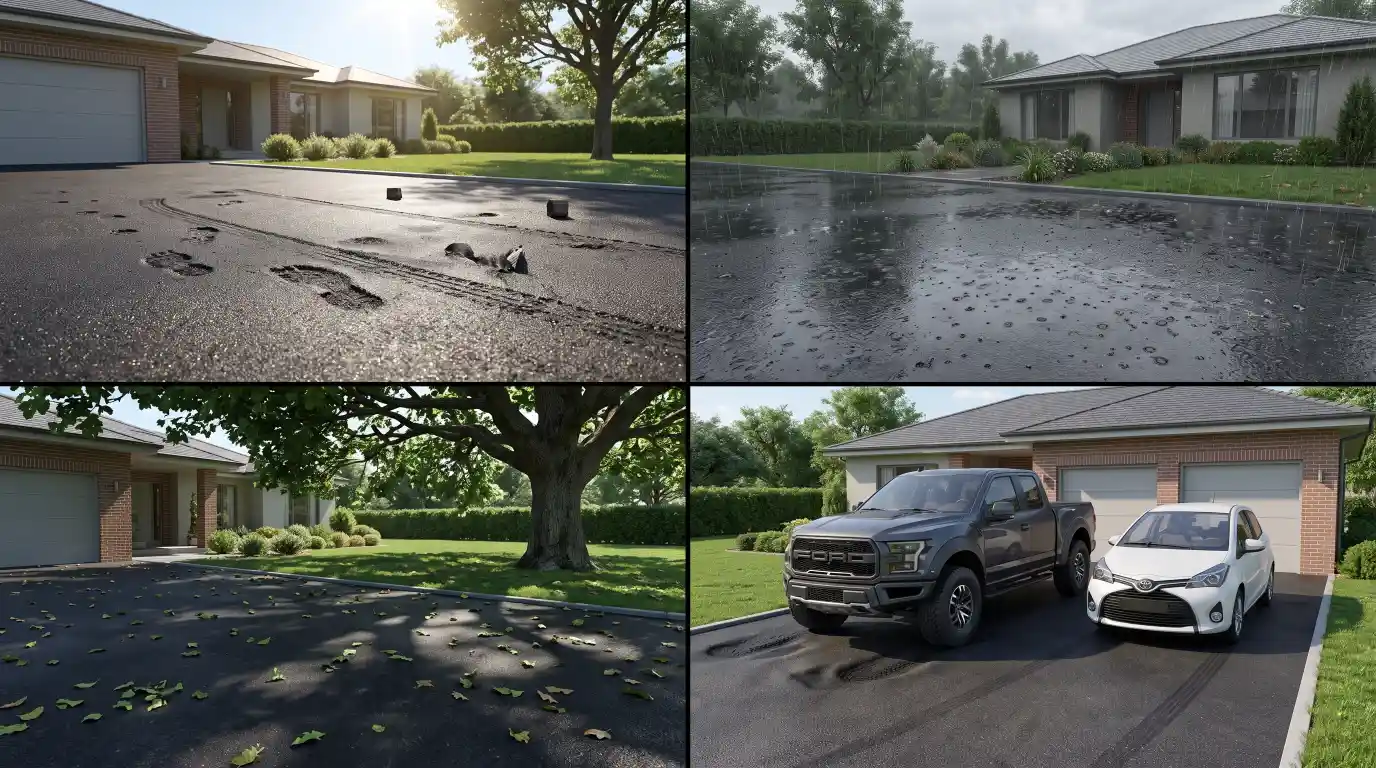
Factors That Affect How Long Before You Can Drive on Asphalt
Several factors can affect how quickly new asphalt cools, hardens, and becomes safe for driving, including temperature, humidity, rain, asphalt type, thickness, sunlight exposure, and vehicle weight.
Temperature
The air temperature plays a big role in how fast asphalt cools and cures. In cooler weather, asphalt cools faster and may seem ready sooner. In hot weather, the surface holds heat longer and stays soft. On a 90-degree day, asphalt that looks ready can still be too soft for traffic.
Humidity
High humidity slows down the cooling process. When the air is thick with moisture, heat does not escape as easily. In humid climates, you may need to add an extra day before driving on new asphalt.
Rain After Installation
Light rain after the asphalt is laid is not usually a problem. In fact, cool rainwater can help speed up the cooling process. But heavy rain in the first 24 hours can wash away the surface material or cause other damage. If it rains hard right after paving, check with your contractor before driving on the surface.
Asphalt Mix Type
Not all asphalt is the same. Different mixes have different cooling and curing times. Some mixes are designed for fast hardening, while others take longer but offer better long-term strength. Your contractor should be able to tell you which mix was used and what wait time applies.
Thickness of the Asphalt Layer
Thicker layers hold heat longer and take more time to cool. A standard driveway layer of 2 to 3 inches cools faster than a road surface that is 4 to 6 inches thick. If your driveway was paved with a thicker mix, plan to wait longer before driving on it.
Sunlight and Shade
Asphalt that sits in direct sunlight all day stays warm and soft longer than asphalt that is in the shade. If your driveway faces south and gets a lot of afternoon sun, it may stay soft longer during summer months. Shaded areas cool more quickly and firm up faster.
Vehicle Weight
The heavier the vehicle, the more force it puts on the surface. Even after the recommended wait time, heavy vehicles pose more risk than light cars. A pickup truck or SUV causes much more. An RV or delivery truck can cause serious damage if driven on new asphalt too soon.
Can You Walk on Fresh Asphalt?
You can usually walk on fresh asphalt after 2 to 4 hours, once the surface has cooled enough to feel firm underfoot. However, you should wear shoes with flat, smooth soles. High heels, cleats, and work boots with hard edges can leave marks even on asphalt that has cooled.
The wait time for walking is much shorter than for driving. A person walking puts very little pressure on the surface compared to a car. However, if the asphalt is still very hot, even foot traffic can leave marks. On a hot summer day, wait until the surface feels firm before walking on it.
Can You Park on New Asphalt?
When a car sits in the same spot for hours, the weight of the vehicle presses into the asphalt over time. On warm days or during the first few weeks after paving, this can leave permanent tire impressions. Moving your car regularly during the first month helps prevent this.
Large, heavy vehicles should not be parked on new asphalt for at least one to two weeks after paving. Even then, place plywood boards under the tires to spread the weight over a larger area. This simple step can prevent deep indentations and extend the life of your driveway.
What Happens If You Drive on Asphalt Too Soon?
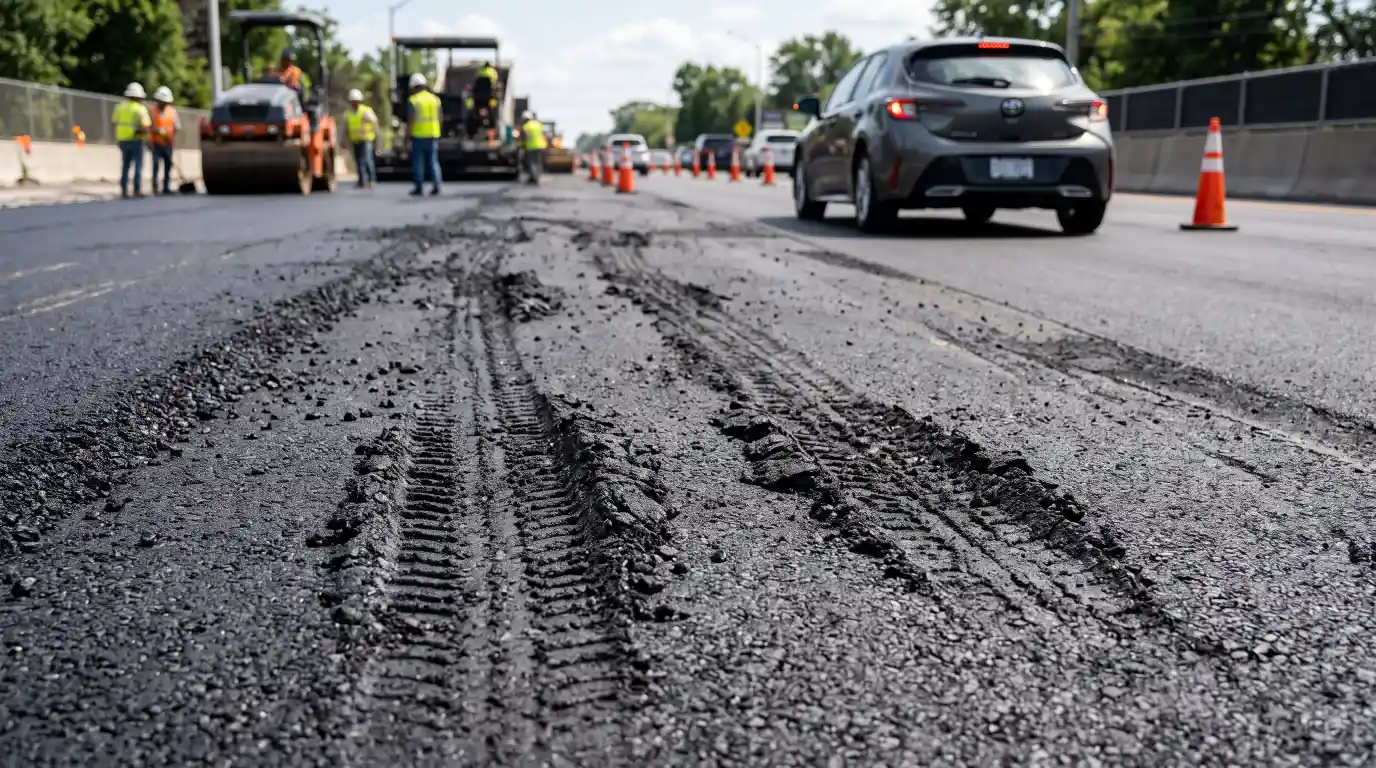
Driving on new asphalt too soon can damage the surface before it has fully hardened, leading to tire marks, dents and a shorter lifespan for your pavement.
Tire Marks Tires leave visible marks on soft asphalt. These often appear as black lines or grooves that follow the path of the tires. In mild cases, these marks may fade over time as the surface continues to harden.
Surface Ruts If a vehicle is driven repeatedly over soft asphalt, it can create ruts or channels in the surface. These ruts are more serious than tire marks and usually do not fix themselves over time.
Edge Damage The edges of a new driveway are the weakest points. Driving too close to the edge, especially with a heavy vehicle, can cause the edges to crack or crumble. Always try to stay toward the center of the driveway during the first few weeks.
Permanent Indentations Heavy vehicles, turning tires, or parked cars can leave deep impressions in new asphalt. These indentations are often permanent and can affect how water drains off the surface, which leads to bigger problems down the road.
Reduced Pavement Lifespan Damage done to asphalt during the curing period is not just cosmetic. It weakens the structure of the pavement and can lead to cracks, potholes, and surface breakdown much sooner than expected. Waiting the recommended time is one of the best things you can do to get a long life out of your new pavement.
How Weather Changes Asphalt Drying and Curing Time
Summer heat is the biggest factor that extends wait times. On days above 85 or 90 degrees, fresh asphalt stays soft well into the evening. Asphalt cools faster in cold weather, which can make it seem ready sooner. Asphalt laid in temperatures below 50 degrees Fahrenheit may take longer to reach full strength. Do not confuse quick cooling with being ready for traffic.
Mild rain after paving is generally not a problem and can even help cool the surface. But heavy rain right after installation can damage the top layer before it has set. Humidity slows down the rate at which heat leaves the surface. In areas with high humidity, add at least an extra day to the standard wait time before bringing vehicles onto new asphalt.
Mistakes That Can Damage New Asphalt
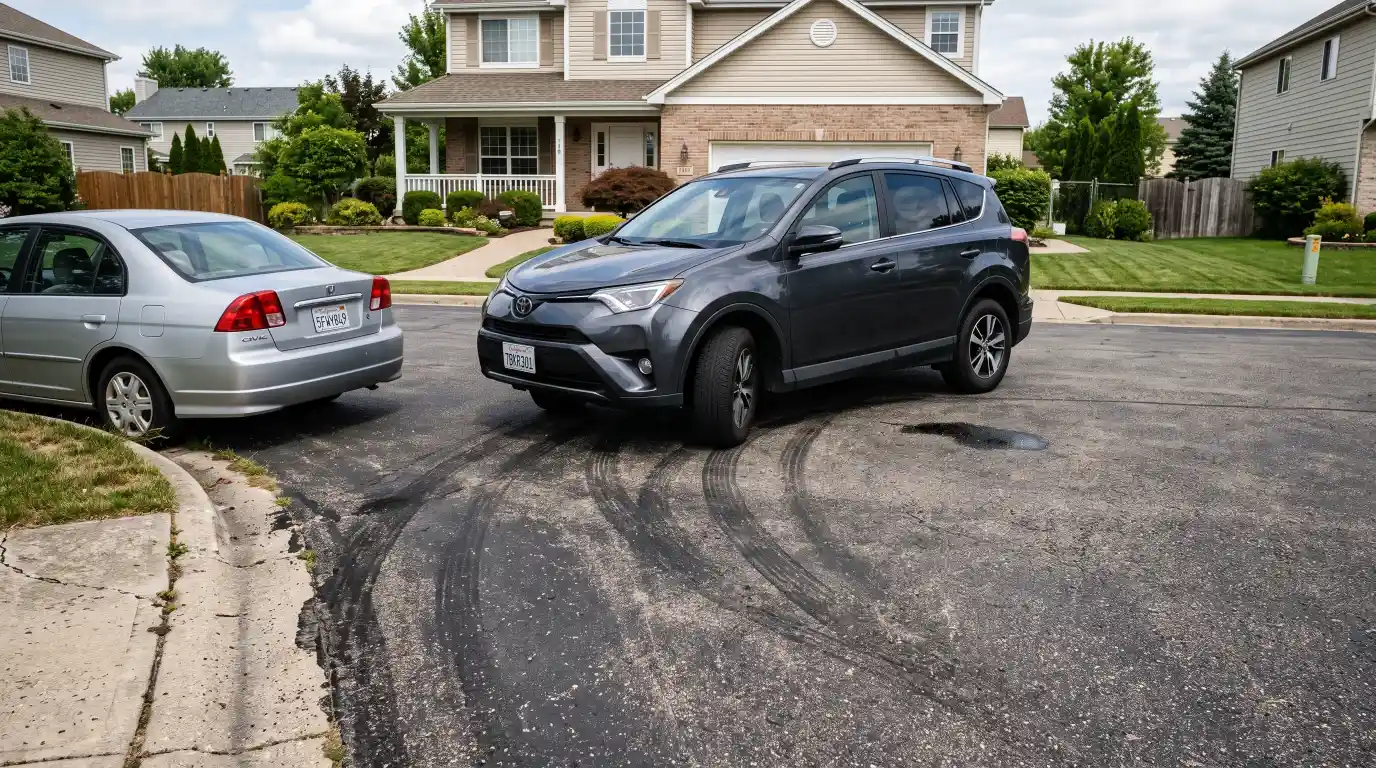
Avoiding a few common mistakes during the first weeks after installation can help protect new asphalt and keep it in good condition for years.
Parking in the Same Spot Every Day
Parking in the same place every day during the first year concentrates weight in one area. This can cause the surface to depress and crack over time. Rotating where you park helps spread the load and protect the pavement.
Turning the Steering Wheel While Stationary
Turning your steering wheel while the car is not moving, known as a stationary turn, puts a lot of twisting force on the asphalt directly under the tire. This is one of the fastest ways to leave scuff marks or cause surface damage on new pavement.
Driving Too Close to the Edges
The edges of new asphalt are not as strong as the middle. Driving close to the edge, especially with heavy vehicles, can cause edge cracking or breakage. Keep at least a foot of clearance from the edges when possible.
Fuel and Oil Spills
Gasoline and motor oil break down the bitumen in asphalt, causing it to soften and degrade. Clean up spills right away using an absorbent material like cat litter or sawdust. This is especially important during the first year when the surface is still curing.
How to Protect Your New Asphalt During the First Year
The first year is the most important time for your new asphalt. The surface is still curing and needs extra care. Rotate where you park so the weight does not press into the same spot every day. Keep heavy vehicles and equipment off the driveway as much as possible.
Clean up any oil or fuel spills right away before they soak in and weaken the surface. Fill small cracks as soon as you see them so water cannot get inside. And wait at least six months to a year before applying your first sealcoat. These simple steps can add years to the life of your pavement.
What If You Accidentally Drive on Fresh Asphalt?
If you accidentally drive on fresh asphalt, do not panic. Wait for the surface to fully cool, then walk over and check for tire marks, indentations, or scuff marks. Light marks on nearly cured asphalt often fade on their own as the surface continues to harden over the next few weeks.
But if the marks are deep, the edges look crumbled, or a heavy vehicle was involved, call your contractor right away. Some damage can be fixed with patching compounds, but severe damage may need a section to be resurfaced. The sooner you catch it, the easier and cheaper the fix will be.
Fresh Asphalt vs. Seal coated Asphalt: Different Wait Times
|
Fresh Asphalt |
Newly Seal coated Asphalt |
|
|
Initial drive time |
24 to 72 hours |
24 to 48 hours |
|
Full cure |
6 to 12 months |
30 to 60 days for full hardness |
|
Parking recommendations |
Avoid long-term parking for 1 to 2 weeks |
Avoid parking for 48 to 72 hours |
|
Maintenance |
Sealcoat after 6 to 12 months |
Reapply sealcoat every 2 to 3 years |
Need Professional Asphalt Paving in Phoenix, Arizona?
If you are planning a new driveway, parking lot, or road surface in the Phoenix area, do not leave it to chance. S&S Paving and Construction has been Phoenix Arizona’s trusted paving contractor since 1984. Contact us to get your free estimate. Our team uses the right asphalt mix for heat, installs it correctly the first time, and gives you clear guidance on wait times and care so your surface lasts for decades.
Conclusion
The short answer is to wait at least 24 to 72 hours before driving on new asphalt, and longer if the weather is hot or your vehicle is heavy. Full curing takes up to a year, so treat your new surface with care during that time.
Follow your contractor’s advice, avoid heavy traffic in the early weeks, and take small steps like rotating where you park and cleaning up spills quickly. These habits protect your investment and help your asphalt last for decades instead of just a few years. The wait is worth it.
Frequently Asked Questions
How long before you can drive on asphalt after paving?
Most driveways are ready for light vehicle traffic within 24 to 72 hours after paving. Hotter weather and heavier vehicles require a longer wait.
Can you drive on asphalt after 24 hours?
Yes, in most cases, light vehicles can drive on asphalt after 24 hours. However, if the weather is hot or the asphalt layer is thick, waiting 48 to 72 hours is a safer choice.
How long before parking on new asphalt?
Wait at least 48 to 72 hours before parking a standard car. Heavy vehicles like trucks, trailers, and RVs should wait at least one week.
How long does asphalt take to fully cure?
Full curing takes six months to one year. During this time, the oils inside the asphalt harden and the pavement reaches its maximum strength.
Does rain damage fresh asphalt?
Light rain generally does not damage fresh asphalt. Heavy rain in the first few hours after paving can cause surface damage. Always check with your contractor if heavy rain hits right after a new installation.
How soon can children play on a new asphalt driveway?
Children can safely play on a new asphalt driveway after 24 to 48 hours, once the surface has fully cooled. Make sure the surface feels firm before allowing extended playtime.
When should new asphalt be seal coated?
The first sealcoat should be applied six months to one year after the asphalt is laid. After that, reapply the sealcoat every two to three years to keep the surface protected.
