
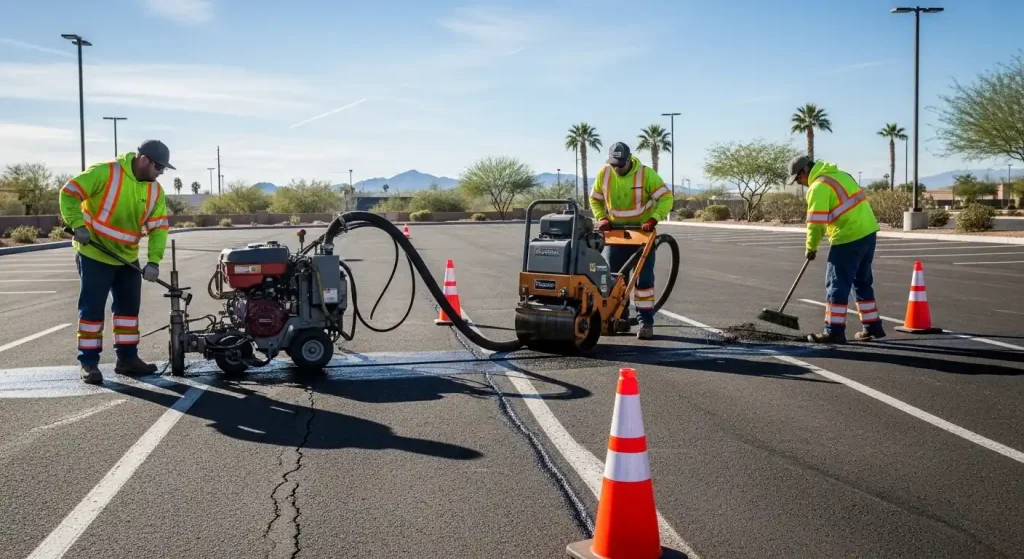


Asphalt is durable but not maintenance-free especially in Phoenix, AZ, where extreme heat and monsoon storms accelerate wear. Whether it’s a driveway, parking lot, or roadway, proper care directly impacts lifespan, safety, and repair costs. Well-maintained asphalt can last 20–30 years, while neglect can cause failure in as little as five to ten.
Poor maintenance isn’t just cosmetic cracks allow water to weaken the base, potholes create hazards, and uneven surfaces accelerate erosion and freeze-thaw damage. This guide highlights the most common asphalt mistakes, their causes, prevention strategies, and when to seek professional help, so you can protect your investment and extend the life of your pavement.
Material-Related Mistakes
Using the wrong materials can quickly shorten asphalt lifespan. Low-quality or mismatched products lead to cracks, water damage, and costly repairs. Choosing materials suited to your climate and traffic load is especially important in Phoenix, AZ, where intense heat and UV exposure can accelerate pavement deterioration.
Using Low-Quality Asphalt or Sealants
Not all asphalt products are created equal, and selecting the cheapest option often becomes the most expensive mistake over time. Low-grade asphalt mixes may have insufficient binder, making the surface brittle and prone to cracking under normal traffic.
Similarly, low-quality sealants provide minimal protection against UV degradation, water infiltration, or chemical exposure from fuels and oils. Investing in quality materials upfront extends pavement lifespan, reduces repair frequency, and lowers total costs. Always verify product specifications and request documentation from your contractor.
Applying the Wrong Product or Each Crack Type
Crack repair is not one-size-fits-all. Hairline cracks, structural cracks, and alligator cracking all require different treatment approaches. Using a flexible filler on a wide structural crack or a rigid compound on a crack with movement often results in failed repairs within months.
Assess each crack’s width, depth, and type before applying any product. Small cracks under a quarter-inch typically respond well to liquid fillers, while wider cracks require hot rubberized sealants or backer rods. Alligator cracks usually indicate base failure and need partial removal and replacement.
Choosing the Wrong Asphalt Mix for Climate, Traffic, and Load
Asphalt mixes are engineered for specific conditions. A residential driveway in a mild climate has very different needs than a commercial lot with heavy trucks in extreme temperatures. Using a soft mix in a high-load area can cause rutting, while a stiff mix in cold regions becomes brittle and cracks under freeze-thaw cycles. Always consult an experienced contractor or materials engineer to select the right mix for your specific application.
Site Preparation Mistakes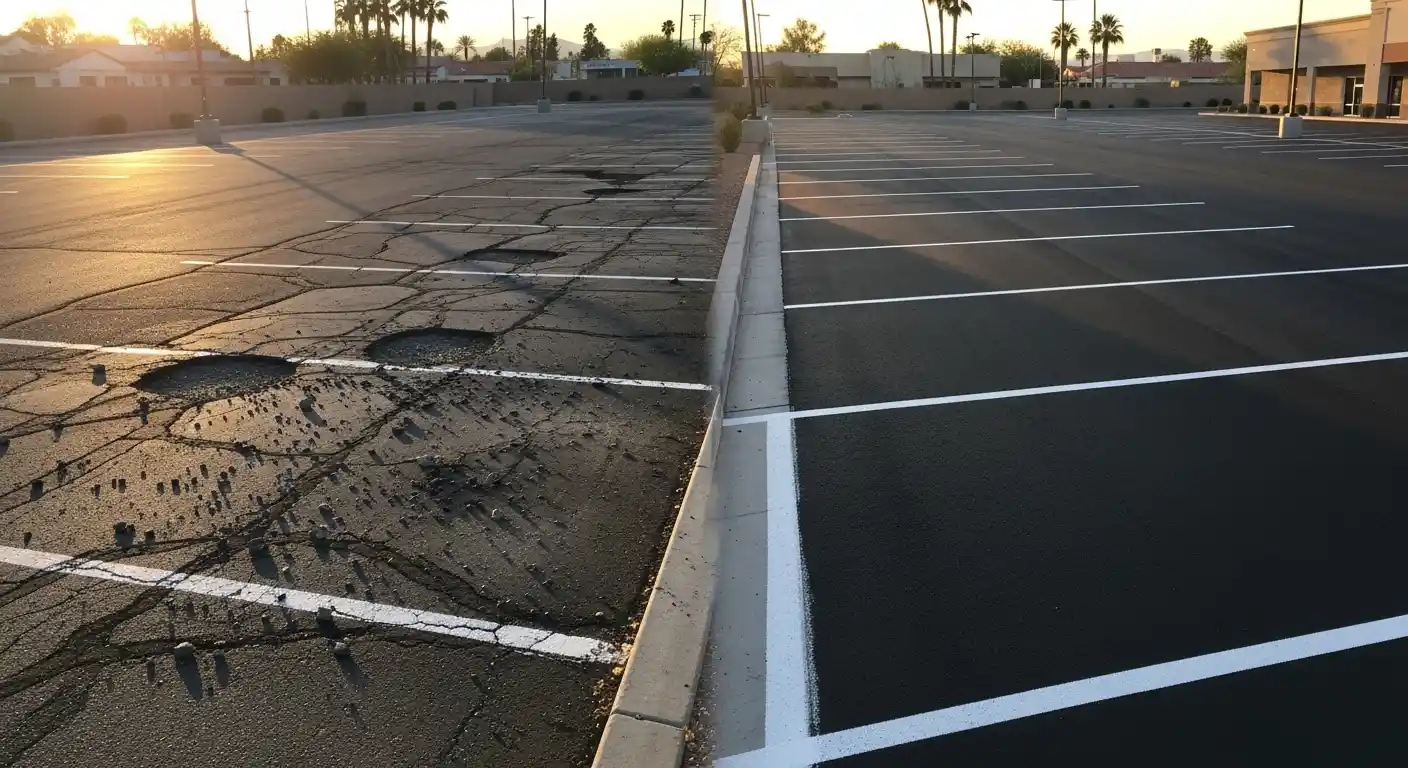
Proper site preparation is the foundation of long-lasting asphalt. Mistakes during this stage often lead to early cracking, uneven surfaces, and costly repairs. Ensuring the subgrade, base, and surface are correctly prepared is essential for durability, safety, and performance.
Neglecting Base Grading and Soil Stability
Asphalt is only as strong as the foundation beneath it. Inadequate base preparation is the root cause of many premature pavement failures. Unstable, poorly compacted, or organic-rich subgrade soil can shift over time, causing depressions, cracks, and heaving.
A proper base consists of well-compacted crushed aggregate, usually four to twelve inches thick depending on the expected load. Before laying asphalt, the subgrade should be graded, compacted, and tested for bearing capacity. Skipping or rushing this step saves time initially but leads to far greater repair costs later.
Skipping Surface Cleaning or Removing Debris
Laying asphalt or applying sealcoat over a dirty surface prevents proper adhesion and leads to premature failureloose aggregate, and . Dust, dirt, oil stains, vegetation all interfere with bonding between layers or between sealant and existing pavement.
Surfaces must be thoroughly swept, pressure washed if needed, and fully dried before work begins. Oil spots require primer treatment, as standard sealcoats cannot adhere to petroleum-contaminated areas.
Ignoring Drainage, Slope, and Water Flow
Water is asphalt’s greatest enemy, and poor drainage is the leading cause of early pavement deterioration. A properly designed surface should have a minimum slope of 1–2% to direct water away from the pavement and prevent pooling.
Standing water saturates the base, accelerates asphalt oxidation, and promotes freeze-thaw damage in cold climates. For new installations or major repairs, assessing and correcting drainage should be a priority, not an afterthought.
Installation Mistakes
Even with quality materials and proper site preparation, mistakes during installation can significantly shorten asphalt lifespan. The way asphalt is laid, compacted, and cured plays a major role in its durability, structural strength, and resistance to cracking.
Insufficient Compaction of Asphalt Layers
Compaction is one of the most critical—and commonly rushed—steps in asphalt installation. Insufficient compaction leaves air voids that allow water infiltration, weaken structural integrity, and cause raveling, which is the gradual loss of surface aggregate.
Proper compaction requires the right equipment, sufficient passes, and asphalt at the correct temperature. Each lift must be compacted fully before the next layer is applied to ensure a strong, long-lasting surface.
Laying Asphalt in the Wrong Temperature or Weather Conditions
Asphalt must be installed within a specific temperature range to be workable and achieve proper compaction. Cold temperatures cause the mix to cool too quickly, preventing effective compaction and resulting in a weak surface.
Laying asphalt on wet or frozen subgrades can prevent bonding and lead to early failure. As a rule, asphalt paving should not be performed when air temperatures are below 50°F or rain is expected. Hot, dry conditions are ideal, though extreme heat can also affect workability.
Rushing the Project
Proper curing time is essential for asphalt to reach full strength. While a fresh surface may feel firm within hours, internal stabilization continues for days or weeks depending on mix design and temperature. Allowing heavy traffic too soon can cause rutting, scuffing, and permanent deformation. Patience during the curing process is essential to ensure long-term durability and performance.
Maintenance Mistakes
Proper maintenance is crucial for extending the life of your asphalt and preventing costly repairs. Neglecting routine upkeep, sealcoating, or crack repairs can turn minor issues into major structural problems, reducing both safety and longevity.
Skipping or Improper Sealcoating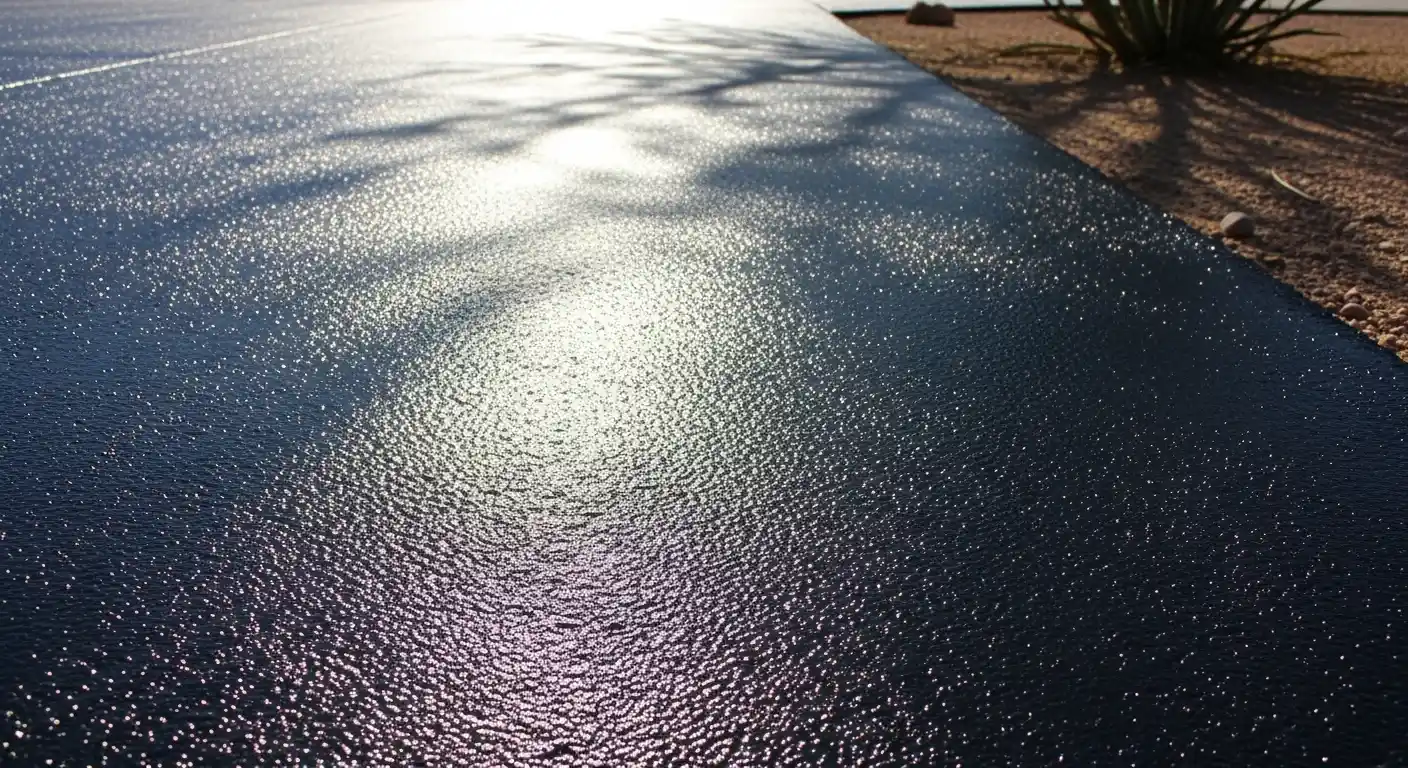
Sealcoating is one of the most effective and cost-efficient ways to protect asphalt. It shields the surface from UV radiation, water penetration, and chemical damage from fuels and oils, all of which break down the asphalt binder over time.
Applying a sealcoat too soon after installation, using the wrong product, or applying it incorrectly can actually damage the surface. New asphalt should cure for at least 90 days before the first application, and reapplication every two to three years is recommended for driveways. Commercial properties may require more frequent applications depending on traffic volume.
Delaying Crack Repairs or Patchwork
Small cracks rarely stay small. Hairline cracks ignored through a winter can expand dramatically under freeze-thaw cycles, eventually forming potholes or zones of alligator cracking that require costly repairs. Filling minor cracks promptly is far cheaper and easier than milling and repaving damaged sections. Regular, timely repairs are one of the most effective maintenance habits property owners can adopt.
Ignoring Routine Inspections
Many pavement problems start invisibly as minor surface oxidation, subtle base settlement, or early drainage issues. Without regular inspections, these small problems go unnoticed until they cause significant damage. Performing walk-through inspections at least twice a year—ideally in spring after winter stress and in fall before freeze season—helps catch and address issues early, when repairs are simplest and least expensive.
Timing and Environmental Mistakes
The timing of installation and maintenance, along with environmental conditions, can make or break asphalt longevity. Ignoring weather, curing periods, or seasonal schedules often leads to cracks, traveling, and premature pavement failure.
Installing Asphalt During Rain, Cold, or Extreme Heat
Weather conditions at the time of installation directly impact pavement performance. Rain introduces moisture between layers, preventing proper bonding and weakening adhesion. Cold temperatures hinder compaction and cause the asphalt to cool too quickly, while extreme heat can affect mix viscosity and workability.
Responsible contractors monitor forecasts closely and avoid paving if conditions fall outside acceptable ranges. If a contractor ignores weather concerns, it should be treated as a warning sign.
Not Allowing Proper Curing Before Traffic
Even under ideal conditions, asphalt must cure properly before handling traffic. Pedestrian traffic may resume within a day or two, but vehicle traffic should generally wait 24–72 hours, and heavy vehicles should stay off new pavement for at least a week. Curing times vary by mix type, ambient temperature, and layer thickness, so always follow your contractor’s guidance.
Failing to Adjust Maintenance Schedule for Seasonal Changes
Asphalt maintenance must account for seasonal threats, including freeze-thaw cycles in winter, UV damage in summer, and moisture in rainy seasons. A static, year-round schedule may miss optimal windows for sealing, crack filling, and inspections.
Fall is ideal for crack filling to allow repairs to set before winter, while spring is perfect for post-winter assessments. Aligning maintenance with local climate ensures the best long-term results.
Contractor and Hiring Mistakes
Even the best materials and planning can fail if the wrong contractor is hired. Choosing an inexperienced, unlicensed, or cost-cutting paving professional often leads to subpar results, premature failures, and expensive repairs.
Hiring Inexperienced or Unlicensed Contractors
The quality of any asphalt project depends on the expertise of the contractor performing the work. Inexperienced crews may improperly grade the base, select the wrong mix, or fail to achieve proper compaction.
Unlicensed contractors add additional risks, including lack of accountability, no insurance coverage for property damage or injury, and limited recourse if the work fails. Always verify that contractors hold proper licensing, carry liability and workers’ compensation insurance, and have documented experience with projects similar to yours.
Cutting Costs on Materials or Labor
While low bids may seem attractive, in asphalt paving they often indicate corners being cut—whether in material quality, base depth, layer thickness, or compaction passes. Pavement installed below specification may look fine initially but can fail years, even decades, ahead of schedule. Evaluate bids based on scope of work, materials, and contractor qualifications—not just the price.
Not Checking References, Reviews, or Past Projects
A reputable contractor should have a verifiable track record. Ask for at least three references from recent clients with similar projects, read reviews on multiple platforms, and, if possible, inspect completed work firsthand. Pay attention to communication—professionals provide clear explanations, detailed written estimates, and answer questions confidently. These signs indicate reliability and accountability.
Bonus Tips to Prevent Asphalt Mistakes
Even with careful planning, installation, and maintenance, proactive strategies can further extend the life of your asphalt. Following a structured routine and knowing when to call professionals can prevent costly mistakes and ensure long-lasting performance.
Proactive Maintenance Checklist
A consistent maintenance routine is the most reliable way to extend asphalt lifespan. Use the following as a baseline schedule:
- Spring: Inspect for winter damage, clear drainage channels, fill any new cracks that have appeared
- Summer: Monitor for surface softening in high-heat zones, address any rutting or raveling
- Fall: Perform crack filling and any patch repairs before temperatures drop, plan sealcoating if due
- Winter: Minimize the use of damaging de-icers such as rock salt; use sand or calcium magnesium acetate instead where possible
Sealcoating and Crack Filling Schedule
For residential driveways, apply the first sealcoat 90 days after installation, then reseal every two to three years thereafter. For commercial lots with moderate traffic, annual crack inspection and filling is recommended, with sealcoating on a two-to-three-year cycle. High-traffic commercial properties may benefit from annual sealcoating. Crack filling should be performed whenever cracks wider than an eighth of an inch are observed, regardless of the time of year, as long as temperatures are above 50 degrees Fahrenheit.
When DIY Repairs Are Okay and When to Call Professionals
Minor crack filling and small pothole patches can be handled by property owners with basic skills and proper products. However, repairs involving base failure, extensive alligator cracking, drainage issues, or large sections should be performed by licensed professionals. Improper DIY fixes can trap moisture, mask deeper problems, and ultimately increase repair costs.
Extending Asphalt Life in High-Traffic and Commercial Settings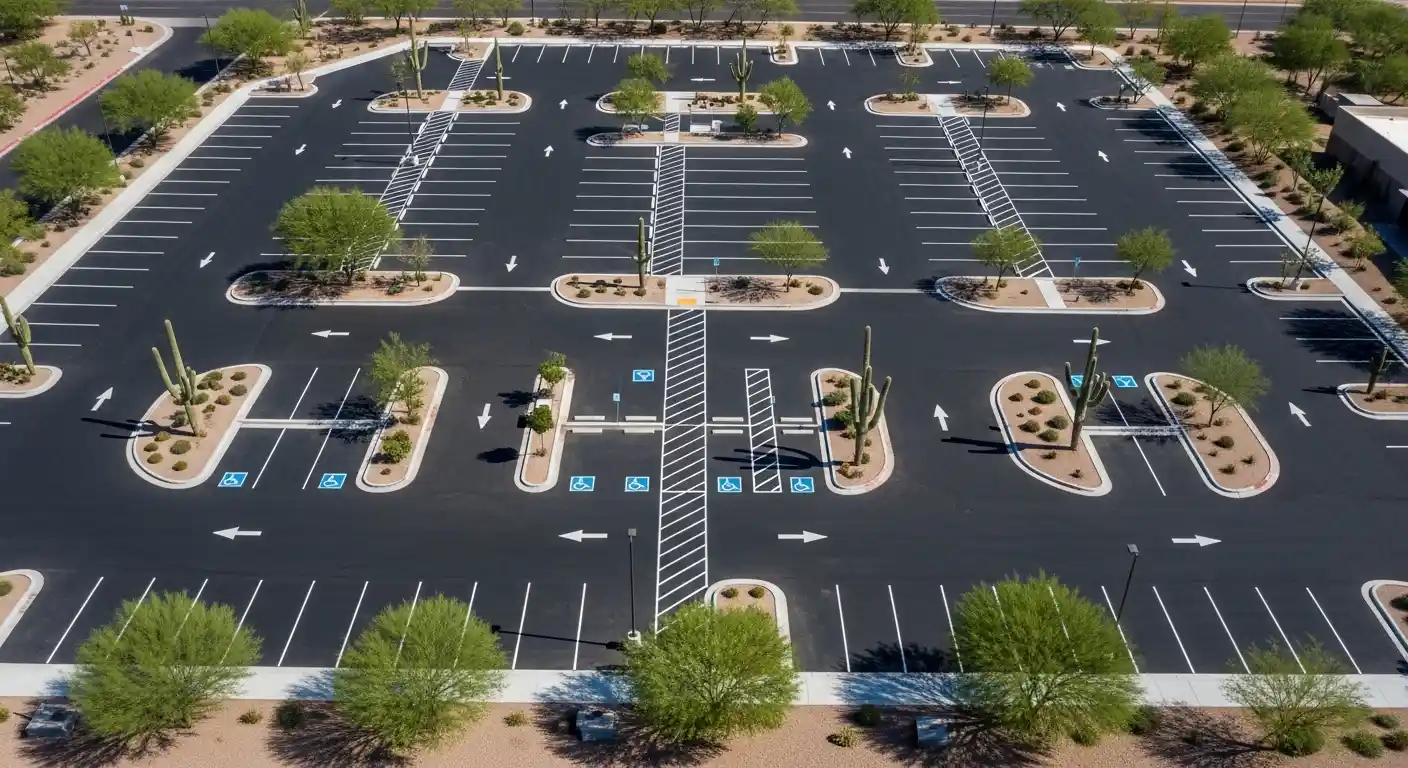
- Design parking lots to distribute traffic evenly, reducing wear in entry lanes.
- Install concrete at dumpster pads, loading docks, and tight turning areas to prevent scuffing and stress.
- For driveways, avoid parking in the same spot repeatedly and designate areas for heavy vehicles.
Consistency is Key
The single most effective strategy for long-lasting asphalt is consistent, proactive care. Properties with scheduled inspections, timely repairs, and professional sealcoating last significantly longer than those treated reactively. The investment in routine maintenance pays dividends in avoided replacement costs and sustained property value over decades.
Protect Your Asphalt in Phoenix, AZ Today!
Keep your driveway or parking lot safe, durable, and long-lasting with professional asphalt services from SS Paving. From inspections and crack repairs to sealcoating and full installations, our experienced team has you covered. Schedule your asphalt maintenance or repair in Phoenix, AZ today and get a free estimate now to extend the life of your pavement.
Conclusion
Maintaining asphalt is a complex process that requires attention to materials, site preparation, installation, and ongoing upkeep. Avoiding common mistakes—from using low-quality products to neglecting routine inspections—can save you thousands in repairs and extend the lifespan of your pavement. By following proactive maintenance schedules, respecting environmental factors, and working with qualified contractors, property owners can protect their investment and ensure safe, long-lasting asphalt surfaces for years to come.
Frequently Asked Questions
What is the most common asphalt maintenance mistake?
Neglecting routine inspections and delaying crack repairs are the most frequent mistakes, as small issues can quickly escalate into costly damage if not addressed early.
How often should I sealcoat my asphalt driveway or parking lot?
For residential driveways, sealcoat every 2–3 years after the initial 90-day curing period. Commercial lots may require annual or biannual applications depending on traffic volume.
Can I repair asphalt cracks myself?
Small cracks and minor potholes can be handled with proper DIY products, but base failures, alligator cracking, or large sections should be repaired by licensed professionals.
How does weather affect asphalt installation and maintenance?
Cold, rain, or extreme heat can compromise compaction, bonding, and curing. Seasonal maintenance schedules and installation under ideal weather conditions ensure long-lasting results.
How do I choose the right contractor for asphalt paving or repair?
Verify licensing, insurance, references, and experience with similar projects. Avoid contractors who offer unusually low bids, as this may indicate subpar materials or workmanship.
