
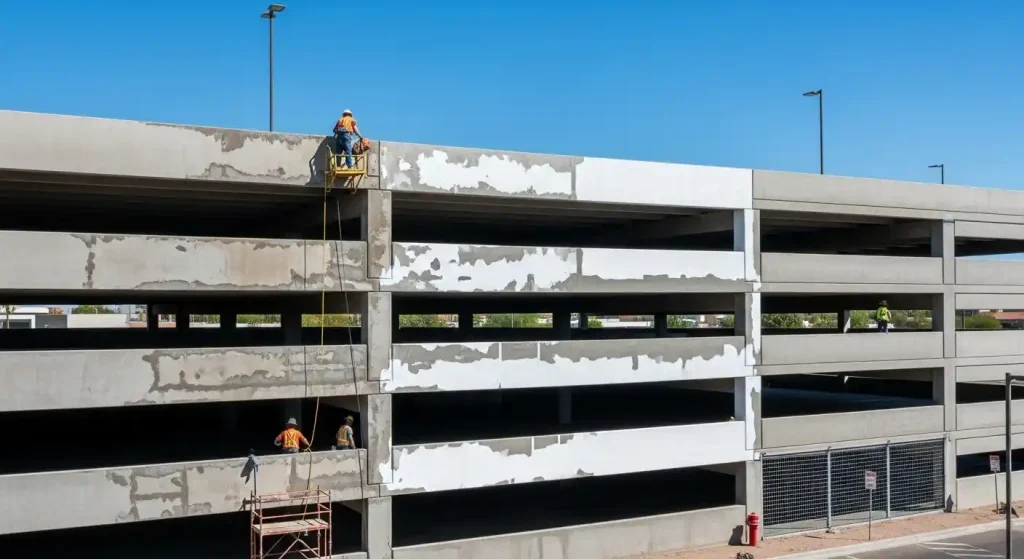
Yes, an old parking structure can often be renovated instead of rebuilt. Most parking garages experiencing typical age-related deterioration are excellent candidates for renovation, which can extend their service life by 20 to 30 years at 30 to 60 percent of the cost of complete reconstruction.
Renovation makes sense when the primary load-bearing elements remain structurally sound, damage is localized rather than widespread, and the facility’s design still meets operational needs. In markets like Phoenix, AZ, rebuilding becomes necessary only when severe structural deterioration affects multiple floors, widespread corrosion compromises safety, or the existing design fails to meet current code requirements.
Overview of Two Primary Approaches
Property owners facing an aging parking structure essentially have two paths forward: targeted renovation or complete reconstruction. Each approach has distinct advantages, limitations, and appropriate applications—especially in high-heat environments like Phoenix, AZ, where exposure and wear can accelerate surface and waterproofing issues.
Renovation (Restoration / Targeted Overhaul)
Renovation involves repairing, restoring, or upgrading specific components of an existing parking structure while maintaining its fundamental framework. This approach addresses deterioration, improves functionality, and extends service life without dismantling the entire facility.
Typical renovation work includes concrete repairs, waterproofing improvements, expansion joint replacement, traffic coating installation, structural steel reinforcement, and drainage system upgrades. The existing structural skeleton remains in place, with interventions focused on problem areas identified through engineering assessments—an approach commonly used for aging parking structures throughout the Phoenix metro area.
Full Rebuild (Demolition & New Construction)
A full rebuild means completely demolishing the existing structure and constructing an entirely new parking facility from the ground up. This approach is necessary when the existing structure has deteriorated beyond economical repair or when fundamental design limitations cannot be addressed through renovation.
Rebuilding offers the opportunity to incorporate modern design standards, improved traffic flow, enhanced safety features, and optimized parking layouts. However, it comes with substantially higher costs, longer project timelines, and greater operational disruption compared to renovation—factors that often weigh heavily on property owners in Phoenix, AZ.
Garage Renovation vs Rebuild: Which Option Is Right for You?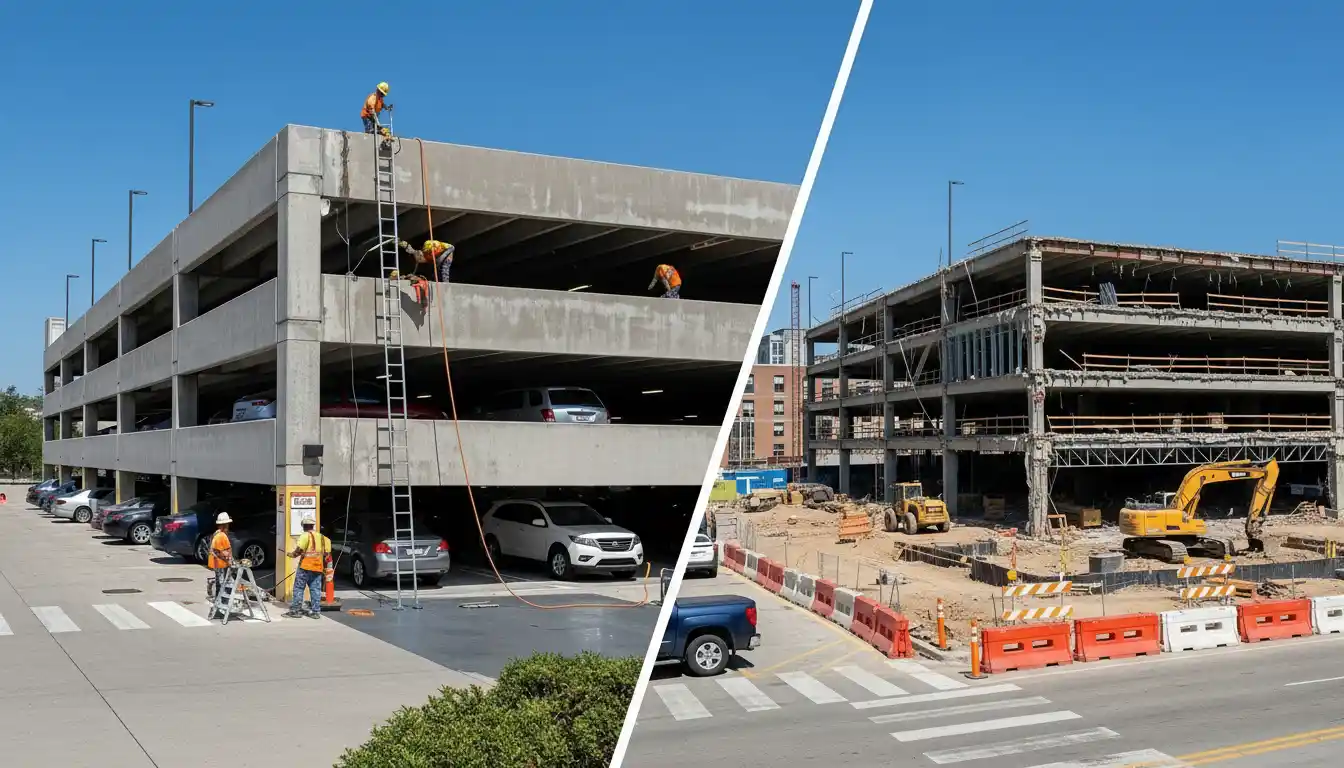
Determining the right approach requires understanding the fundamental differences between these options and how they align with your facility’s condition and operational objectives.
Key Differences in Scope
Renovation preserves the existing structural framework while addressing specific deficiencies. Work typically occurs in phases, allowing portions of the garage to remain operational during construction. Project timelines generally range from several months to a year, depending on scope.
Rebuilding eliminates everything and starts over. This requires complete facility closure, temporary parking alternatives, extended construction periods often lasting one to two years, and navigating full permitting processes as if building a brand-new structure.
The financial implications differ dramatically. Renovations typically cost between 30 to 60 percent of what a complete rebuild would require, though this varies based on the extent of deterioration and specific repairs needed.
When Renovation Makes Sense
Renovation is preferred when the structural foundation remains sound. If engineering assessments confirm that load-bearing elements retain adequate strength and capacity, renovation can address surface-level and system-level issues without replacing the entire structure.
Facilities experiencing localized problems rather than systemic failure are excellent renovation candidates. When budget constraints exist but safety and functionality must be maintained, renovation offers a cost-effective solution that extends service life without the major capital expenditure required for reconstruction.
When Rebuilding Is Unavoidable
Certain conditions make renovation impractical or impossible. When structural deterioration has progressed too far, attempting repairs becomes economically irrational compared to starting fresh with a new facility designed for decades of service.
If the cost of necessary repairs approaches or exceeds 70 to 80 percent of reconstruction costs while only providing a fraction of the service life a new structure would offer, rebuilding typically makes better financial sense.
Indicators That Renovation Is Appropriate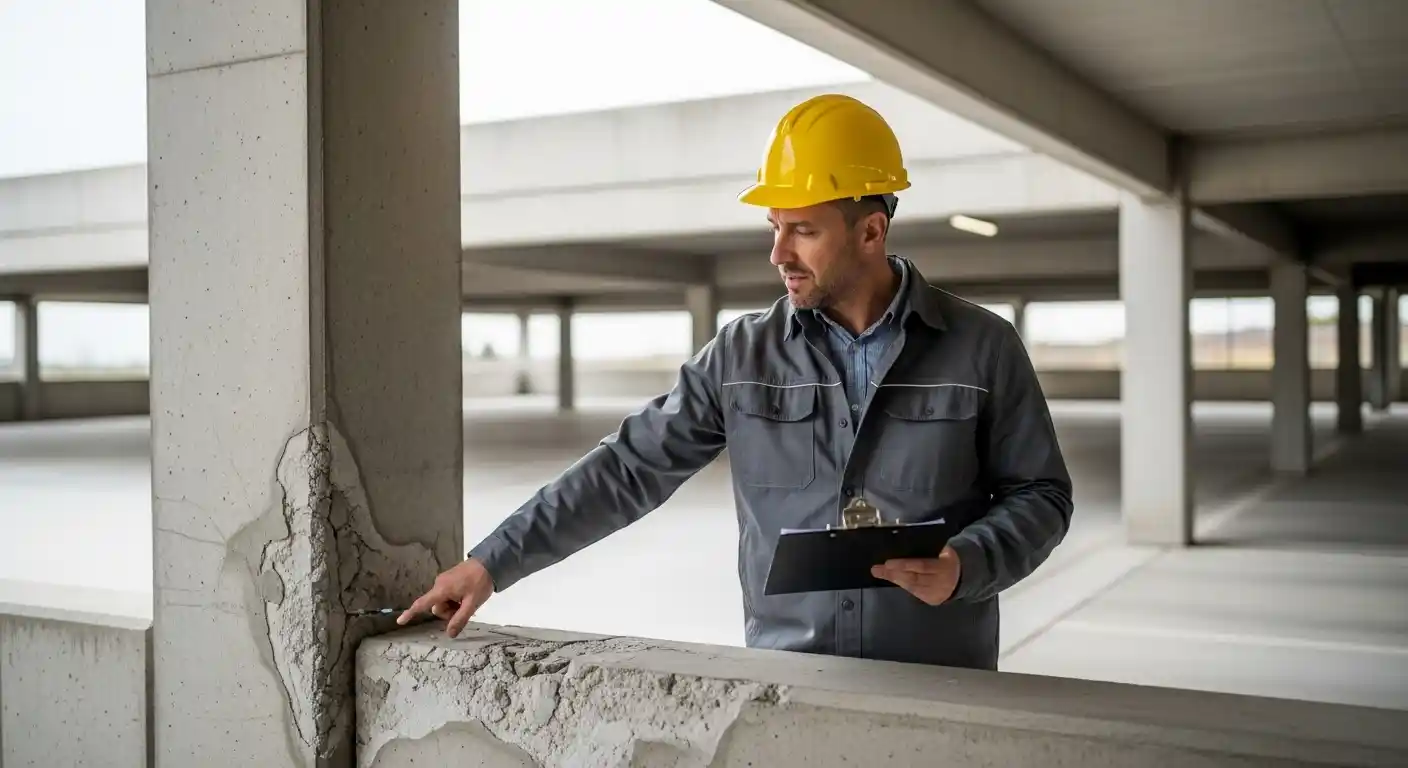
Several positive indicators suggest that renovation represents a viable and cost-effective approach for extending your parking structure’s service life.
Structural Integrity Still Intact
The most critical factor is the condition of primary load-bearing elements. If columns, beams, and foundation elements retain their designed capacity with no significant loss of cross-sectional area or reinforcement exposure, the structural skeleton can support renovation efforts.
Engineering assessments that confirm adequate remaining strength in these critical components provide the green light for renovation planning.
Localized Concrete or Surface Damage
Surface-level concrete damage, even when visually dramatic, doesn’t necessarily indicate structural failure. Spalling, scaling, and surface cracking often result from environmental exposure, freeze-thaw cycles, or inadequate waterproofing rather than fundamental structural problems.
When deterioration concentrates in specific zones—top decks exposed to weather, areas near expansion joints, or locations with chronic drainage issues—targeted repairs can address these problems effectively.
Drainage or Waterproofing Issues
Water represents the primary enemy of parking structures, but drainage and waterproofing deficiencies can be corrected through renovation. If structural problems stem from water infiltration rather than inherent design or construction flaws, implementing proper waterproofing systems can halt deterioration and prevent future damage.
Aging Finishes, Not Failing Systems
Parking structures often look worse than they actually are. Stained concrete, faded striping, outdated lighting, and deteriorated traffic coatings create an impression of serious decline even when underlying systems remain functional.
When the primary issues involve appearance or outdated amenities rather than structural capacity, renovation can transform the facility without the expense and disruption of reconstruction.
Signs That a Full Rebuild Is Needed
Certain conditions indicate that renovation would be throwing good money after bad, and that complete reconstruction represents the only prudent path forward.
Severe Structural Deterioration
When primary load-bearing members show advanced deterioration—significant section loss in beams or columns, extensive reinforcement corrosion, or large-scale concrete delamination—the structure’s fundamental capacity is compromised. If multiple floors exhibit serious structural problems, the cumulative cost and complexity of repairs generally exceeds reconstruction costs.
Widespread Corrosion or Spalling
Concrete spalling results from reinforcement corrosion, which causes the steel to expand and break apart surrounding concrete. When this condition appears throughout the structure rather than in isolated locations, it indicates systemic problems that are difficult and expensive to address comprehensively.
Outdated Design Failing Modern Load or Code Requirements
Parking structures built decades ago may not meet current building codes for seismic performance, accessibility, fire protection, or live load capacity. If bringing the structure into compliance requires extensive modifications to fundamental systems, rebuilding often makes more sense than attempting to retrofit an outdated design.
Safety and Liability Risks
When structural deficiencies create genuine safety hazards that cannot be adequately addressed through repairs, continued operation poses unacceptable liability risks. Property owners carry responsibility for maintaining safe facilities, and if renovation cannot restore adequate safety margins within reasonable timeframes and budgets, rebuilding becomes the responsible choice.
Core Aspects of Parking Garage Renovation
Understanding the technical components of parking structure renovation helps property owners appreciate what these projects entail and how they address deterioration.
Structural Steel Repair and Replacement
Many parking structures incorporate structural steel elements that may require attention during renovation. Corroded steel members can be cleaned, treated, and protected with specialized coatings, or replaced entirely if deterioration has reduced load capacity.
Concrete Slab and Spandrel Panel Repairs
Concrete repair forms the heart of most parking structure renovations. Damaged areas are removed to sound concrete, corroded reinforcement is cleaned or replaced, and new concrete is installed using repair mortars specifically formulated for structural applications.
Expansion Joint Rehabilitation
Expansion joints accommodate thermal movement in large concrete structures, but these locations experience significant wear and water infiltration. Joint rehabilitation involves removing deteriorated materials, repairing adjacent concrete, and installing new joint systems designed for parking structure applications.
Traffic-Bearing Coatings and Sealers
Protective coatings and sealers create barriers against water intrusion, chemical exposure from deicing salts, and abrasion from vehicle traffic. These systems range from penetrating sealers to thick traffic-bearing membranes that provide waterproofing and wear resistance.
Water Management and Waterproofing
Comprehensive water management addresses the root cause of most parking structure deterioration. Renovation projects should improve drainage slopes, repair or replace drain systems, install effective waterproofing membranes, and eliminate paths for water infiltration.
Importance of Surface Evaluation and Condition Ratings
Professional structural assessment provides the foundation for informed decision-making about renovation versus rebuilding.
Visual Inspections
Trained inspectors examine all accessible areas of the structure, documenting concrete condition, cracking patterns, spalling, efflorescence, rust staining, and other deterioration indicators. Standardized condition rating systems allow objective comparison across different structures.
Structural Testing
Beyond visual assessment, structural engineers employ testing methods including core sampling to evaluate concrete strength, half-cell potential testing to locate active corrosion, and ground-penetrating radar to map reinforcement and detect delamination.
Pavement or Deck Condition Indicators
Specific indicators help assess whether deck surfaces require simple maintenance or major intervention. Chain dragging or hammer sounding reveals delaminated concrete that requires removal, while chloride testing determines salt contamination levels that predict future corrosion.
How Assessments Guide Renovate vs Rebuild Decisions
Comprehensive condition assessment provides the objective basis for comparing renovation and rebuilding options. Engineers can estimate repair quantities, project costs, predict post-renovation service life, and identify issues that might preclude renovation.
Safety and Liability Considerations
Beyond economics and engineering, safety and legal responsibilities significantly influence the renovation versus rebuild decision.
Public Safety Risks
Parking structures with structural deficiencies pose risks to users. Property owners have both moral and legal obligations to maintain safe facilities. When renovation can restore adequate safety margins, it fulfills this responsibility cost-effectively.
Load Capacity and Fire Protection
Modern vehicles weigh more than their predecessors, and parking structures designed decades ago may have marginal capacity for current loading. Renovation projects should address these concerns where feasible.
Environmental Responsibility and Sustainability
Sustainability considerations increasingly influence infrastructure decisions, often favoring renovation over reconstruction from an environmental perspective.
Reduced Material Waste Through Renovation
Demolishing a parking structure generates massive quantities of waste concrete and steel. Renovation preserves the existing structure, dramatically reducing waste generation and the environmental burden of material disposal.
Reuse of Existing Structure
Beyond waste reduction and carbon avoidance, reusing existing structures exemplifies sustainable practice by maximizing value from previous resource investments.
Why Targeted Overhaul Often Makes Sense
When conditions permit, renovation through targeted overhaul offers compelling advantages that make it the preferred option for many aging parking structures.
Extends Service Life Without Full Replacement
Well-executed renovation can add 20 to 30 years of service life to a parking structure at a fraction of reconstruction cost. Property owners gain decades of continued use from their existing asset while deferring the major capital expenditure that rebuilding requires.
Faster Completion Timelines
Renovation projects typically complete in less time than rebuilding. While comprehensive renovation might take six months to a year, complete reconstruction often requires 18 months to two years from planning through completion.
Lower Upfront Costs
The reduced capital requirement for renovation versus rebuilding improves project feasibility and allows property owners to allocate resources to other investments.
Step-by-Step Decision Framework
A systematic approach ensures thorough evaluation and informed decision-making when choosing between renovation and rebuilding.
Structural Evaluation
Begin with comprehensive structural assessment by qualified engineers experienced in parking structure evaluation. This assessment should document current conditions, identify deterioration mechanisms, evaluate remaining structural capacity, and project future deterioration.
Cost and Lifespan Comparison
Develop detailed cost estimates for both renovation and rebuilding based on actual structural conditions. Calculate life-cycle costs by dividing total project cost by expected years of service to facilitate direct comparison.
Long-Term Usage Goals
Consider how the parking facility fits into broader property plans. If the site may be redeveloped within 15 to 20 years, renovation makes more sense than rebuilding for 50 years of use you won’t need.
Common Mistakes to Avoid
Certain pitfalls frequently undermine parking structure renovation decisions and outcomes.
Delaying Structural Assessments
Postponing professional evaluation allows deterioration to progress, often reaching points where renovation becomes impractical when early intervention could have been successful and affordable. Regular inspections enable early detection and proactive intervention.
Choosing Cosmetic Fixes Over Structural Repairs
Applying fresh paint and coatings over deteriorated concrete without addressing underlying structural issues wastes resources. Effective renovation prioritizes structural repairs and waterproofing over aesthetic improvements.
Ignoring Water Intrusion Issues
Water drives most parking structure deterioration through freeze-thaw damage and corrosion of reinforcement. Comprehensive water management should be central to any parking structure renovation, as keeping water out prevents future damage and expensive repairs.
Transform Your Parking Structure in Phoenix, AZ
Don’t wait for minor damage to become costly in the Arizona heat. Contact SS Paving’s Phoenix-based experts for a professional evaluation and customized solution—whether you’re renovating existing pavement or planning a full reconstruction. Get your Free Estimate today.
Conclusion
Yes, an old parking structure can often be renovated instead of rebuilt—and in many cases, renovation is the smarter, more economical choice. When the primary structural elements remain sound and deterioration is localized, targeted renovation can extend service life by decades at a fraction of the cost and disruption of full reconstruction.
However, renovation is not a one-size-fits-all solution. Severe structural deterioration, widespread corrosion, or fundamental design deficiencies may make rebuilding the safer and more responsible option. The key to making the right decision lies in early professional assessment, realistic cost and lifespan analysis, and alignment with long-term property goals.
By addressing problems proactively and understanding the true condition of a parking structure, property owners can protect safety, control costs, and maximize the value of existing infrastructure—whether through strategic renovation or, when necessary, a complete rebuild.
Frequently Asked Questions
Can a parking structure be renovated without closing it completely?
Yes, many parking structure renovations can be completed in phases, allowing portions of the facility to remain open during construction. Phased renovation minimizes disruption, preserves revenue, and maintains access for users, which is a major advantage over full reconstruction that requires total closure.
How long does a renovated parking structure typically last?
A properly engineered and executed renovation can extend a parking structure’s service life by 15 to 30 years, depending on the original construction quality, environmental exposure, and the scope of repairs performed. Ongoing maintenance further improves longevity.
Is renovating a parking garage always cheaper than rebuilding?
Renovation is usually less expensive upfront, often costing 30 to 60 percent of a full rebuild. However, the most accurate comparison comes from life-cycle cost analysis, which considers total cost relative to expected years of service rather than initial price alone.
What types of damage cannot be fixed through renovation?
Renovation becomes impractical when there is widespread structural failure, severe reinforcement corrosion across multiple levels, or when the structure cannot be brought into reasonable compliance with modern safety or load requirements. In these cases, rebuilding is often the safer and more economical option.
When should a property owner start evaluating renovation vs rebuilding?
Evaluation should begin at the first signs of persistent deterioration, such as recurring concrete spalling, water intrusion, or corrosion staining. Early assessment allows for timely intervention, which often preserves renovation as a viable and cost-effective option.
