
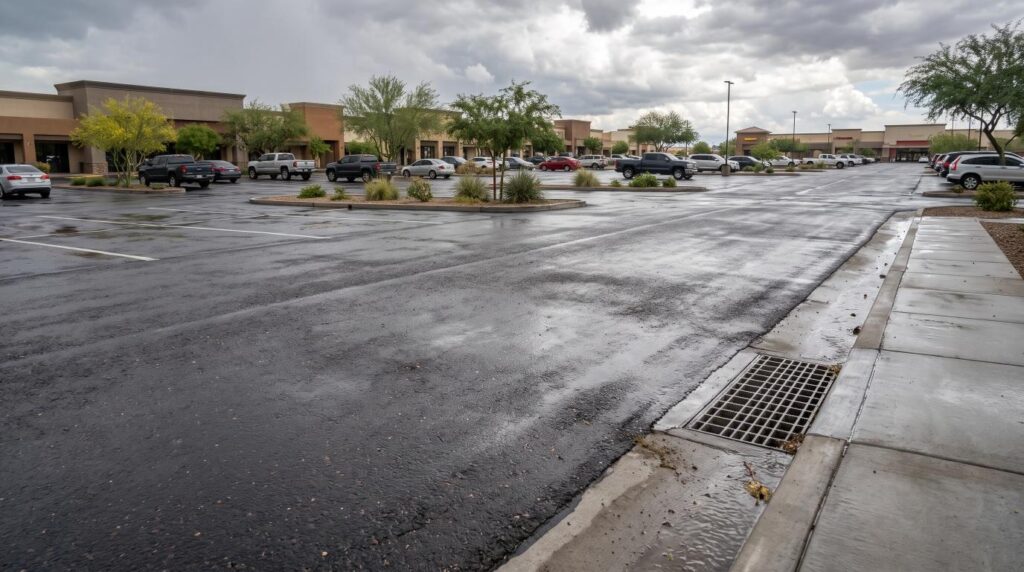



Commercial parking lot stormwater drainage works by using graded pavement, slopes, curbs, gutters, catch basins, and underground pipes to collect and move rainwater toward an approved discharge or storage area. These components work together to prevent standing water, protect pavement foundations, reduce flooding, and maintain safer conditions for vehicles and pedestrians.
For commercial property owners in Phoenix, AZ, understanding how stormwater drainage works in commercial parking lots is particularly important during monsoon season. Even in a dry climate, heavy rainfall can overwhelm poorly constructed drainage systems, damage asphalt, and interrupt normal business operations.
How Rainwater Moves Across a Commercial Parking Lot
Rainwater moves across a commercial parking lot as surface runoff because conventional asphalt and concrete surfaces absorb very little water. Instead of soaking into the ground, most rainwater flows toward lower areas of the pavement.
The amount of runoff produced depends on several factors:
- The size of the paved parking area.
- The intensity and duration of rainfall.
- The type of pavement surface.
- The slope and layout of the property.
- The amount of water entering from surrounding areas.
Larger parking lots generally produce more runoff because they contain more impervious surfaces. During heavy rainfall, water can accumulate faster than drainage structures can collect it. Without a planned drainage route, runoff may collect around building entrances, sidewalks, parking spaces, and loading areas. Proper site preparation provides a controlled path for this water to leave the paved surface.
How Grading and Pavement Slope Direct Water Toward Drainage Points
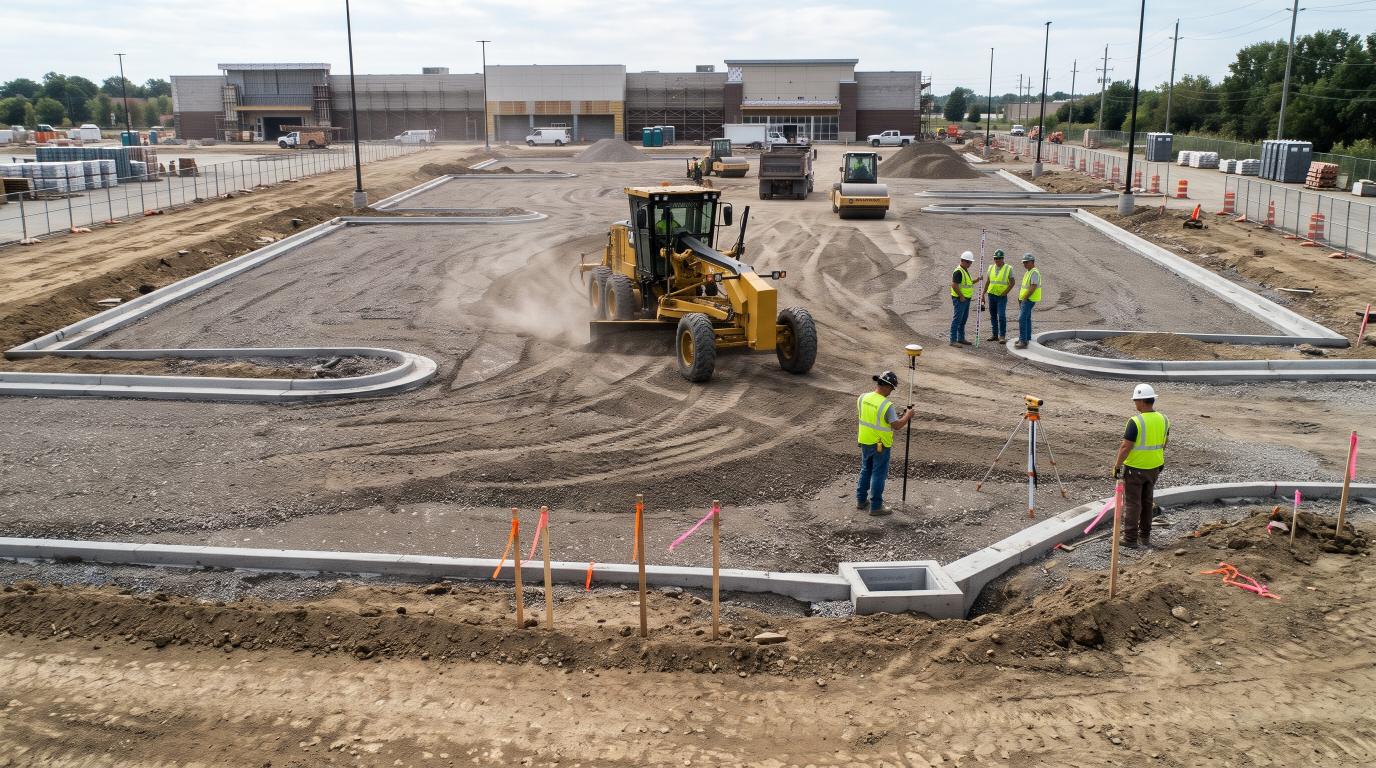
Grading establishes the surface elevations of a parking lot, while pavement slopes allow gravity to move rainwater toward designated drainage points. Both must be carefully planned before asphalt or concrete is installed. During earthwork and site grading, construction crews shape the ground according to the approved site elevations. Higher areas direct runoff toward lower collection points, such as catch basins, gutters, or drainage channels.
A parking lot may have several slopes that divide the property into smaller drainage areas. This helps prevent excessive amounts of water from collecting at a single location. Incorrect grading, uneven pavement, and ground settlement can create depressions where water becomes trapped. These areas often develop recurring puddles even when nearby storm drains are working properly.
Drainage slopes must also meet accessibility requirements. According to the Americans with Disabilities Act parking standards, accessible parking spaces and access aisles must have a maximum slope of 1:48, or approximately 2.08%, in all directions. Proper grading must account for these limits while maintaining effective drainage.
How Curbs, Gutters, and Surface Channels Guide Runoff
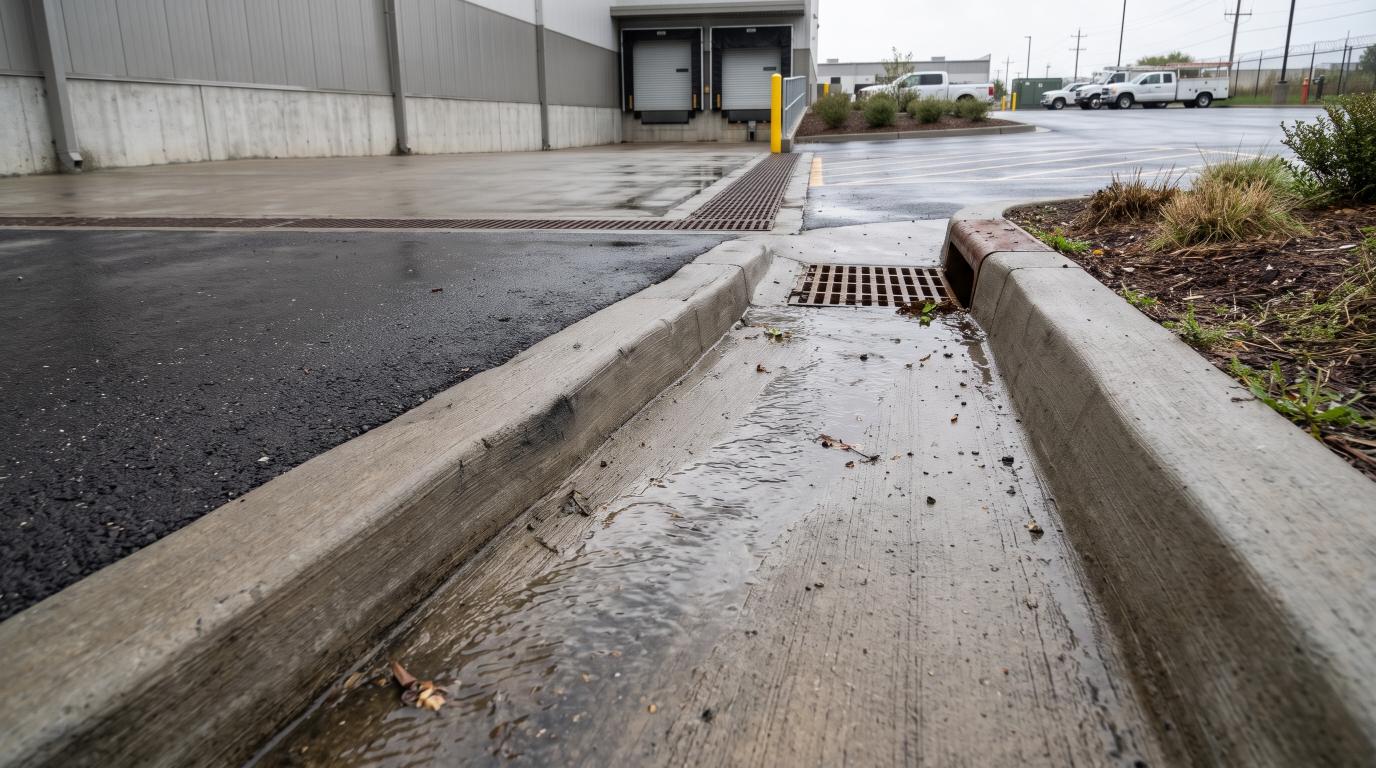
Curbs, gutters, and surface drainage channels control the movement of rainwater after it flows down the parking lot slope. They help prevent runoff from spreading into unwanted areas and guide it toward drainage inlets.
Curbs and Gutters
Concrete curbs create boundaries between paved areas, sidewalks, landscaped islands, and surrounding property features. Gutters provide a shallow drainage path alongside these boundaries. As runoff reaches the gutter, it follows the planned slope toward a storm drain inlet. This arrangement helps reduce uncontrolled water movement around buildings and pedestrian areas.
Trench Drains and Channel Drains
Trench drains are narrow drainage channels installed across or alongside paved surfaces. They usually have removable grates that allow water to enter while supporting the expected vehicle or pedestrian loads. These drains are useful near loading docks, garage entrances, driveways, and other locations where runoff needs to be collected across a wider surface. The choice between gutters and channel drains depends on pavement elevations, expected water flow, traffic loads, and the property’s drainage design.
How Catch Basins and Storm Drain Inlets Collect Water
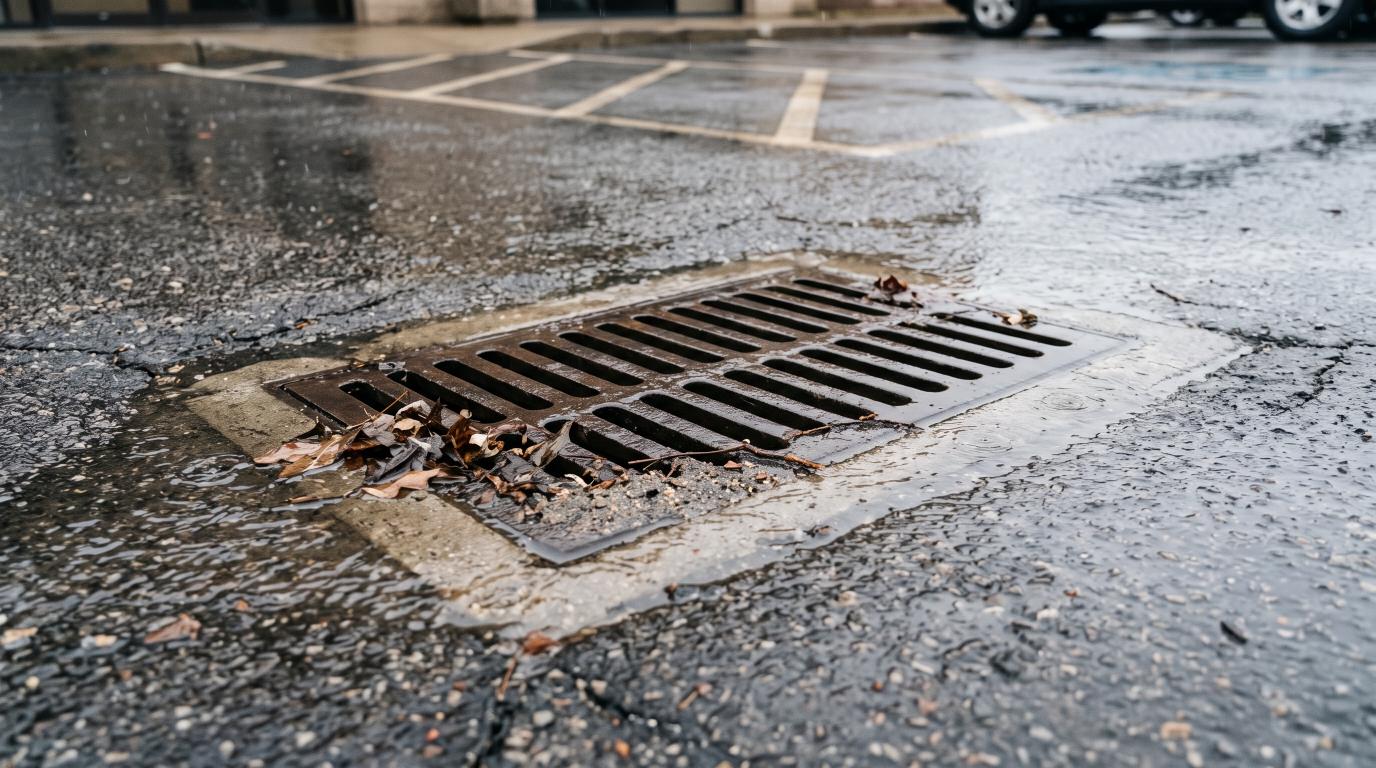
Catch basins and storm drain inlets collect surface runoff and transfer it into the underground drainage network. They act as connection points between the parking lot surface and the storm drain pipes beneath it.
A typical catch basin with sediment storage contains four main components:
|
Component |
Function |
| Drain grate |
Allows surface runoff to enter the structure. |
|
Basin chamber |
Receives collected stormwater. |
| Sump |
Holds sediment and heavier debris below the outlet. |
|
Outlet pipe |
Transfers collected water into the drainage network. |
As water passes through the grate, heavier particles such as sand and soil can settle at the bottom of the basin. Water continues through the outlet pipe toward the next drainage structure. The sediment storage area helps reduce the amount of debris entering underground pipes. However, not every storm drain inlet includes a sediment sump. When a grate becomes blocked or the sump fills with debris, drainage performance can decline. Water may collect around the inlet or carry additional sediment into the underground system.
How Underground Storm Drain Pipes Transport Collected Water
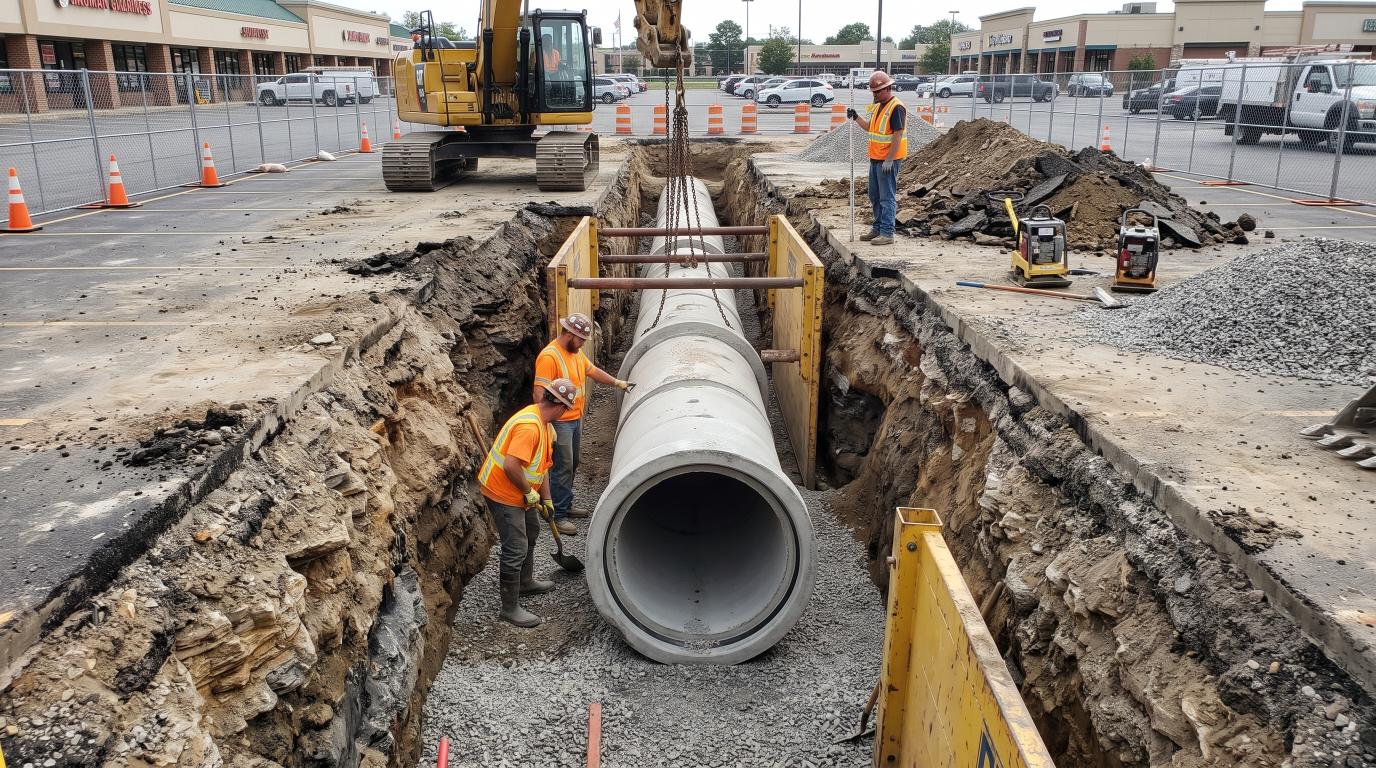
Underground storm drain pipes carry collected rainwater from drainage inlets to a designated storage area or discharge point. Most conventional parking lot storm drain networks rely on gravity to transport water. During underground utility construction, storm drain pipes are installed at planned elevations with suitable bedding and backfill. Individual pipes connect catch basins and other drainage structures to form a continuous network.
Several factors determine how effectively these pipes transport water:
- Pipe diameter and carrying capacity.
- Pipe slope and installation depth.
- The condition of pipe joints and connections.
- Sediment accumulation and internal obstructions.
- The condition of downstream drainage structures.
Damaged pipes, displaced joints, and root intrusion through defective connections can restrict water movement. Excessive sediment can also reduce the space available for water to flow. Proper installation and inspection help maintain the structural condition and carrying capacity of underground drainage networks.
Where Stormwater Goes After Leaving the Parking Lot
Stormwater collected from a commercial parking lot flows toward an approved discharge point, detention basin, retention system, or another stormwater management structure. Its final destination depends on the property’s drainage plan and local requirements.
Stormwater Detention Systems
Detention systems temporarily store collected rainwater and release it at a controlled rate through an outlet structure. This reduces the amount of water entering downstream drainage networks at one time. Detention facilities may include above-ground basins or underground storage chambers. They are particularly useful when runoff from large paved areas needs to be managed during heavy rainfall.
Stormwater Retention and Infiltration Areas
Retention systems hold stormwater rather than routinely releasing it through a controlled outlet. Depending on their design, collected water may soak into the soil, evaporate, or remain in a permanent pool. Infiltration-based facilities are particularly dependent on suitable soil conditions and available storage capacity.
Approved Storm Sewer Connections
Some commercial parking lots discharge collected runoff into an approved municipal storm sewer network or another permitted drainage outlet. Storm sewers are generally separate from sanitary sewer systems. Property owners should not redirect parking lot runoff into sanitary sewer connections or neighboring properties without proper authorization.
How Parking Lot Drainage Systems Manage Runoff Pollution
Parking lot drainage systems can help manage runoff pollution by collecting sediment, trapping certain contaminants, and directing water through suitable stormwater treatment features. Rainwater flowing across parking lots can pick up motor oil, fuel residue, tire particles, soil, litter, and other pollutants left behind by vehicles and daily commercial activities. Catch basin sumps capture some heavier particles before water enters underground pipes. However, conventional catch basins do not remove every pollutant, especially dissolved contaminants.
A 2013 study published in Water Research examined a permeable parking lot equipped with channel drains and specialized oil and sediment retention devices. The research evaluated how this combined system could retain and treat pollutants associated with vehicle use. Other drainage features, such as vegetated swales and permeable pavement, can provide additional runoff control and treatment when properly designed. The choice of treatment method depends on the activities taking place on the property, expected pollutants, soil conditions, and applicable environmental requirements.
How Proper Stormwater Drainage Protects Asphalt and Concrete Pavement
Proper stormwater drainage protects asphalt and concrete by reducing water exposure and preventing excess moisture from entering the underlying pavement layers. Both asphalt and concrete parking lots depend on stable foundations to support repeated vehicle loads. When water enters through cracks, joints, or damaged pavement edges, it can weaken these supporting materials.
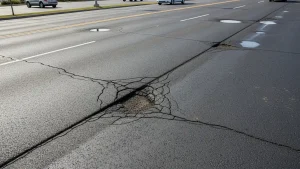
The Federal Highway Administration’s pavement engineering guidance emphasizes the importance of free-draining base materials, stable subgrade soils, and effective moisture removal from pavement systems. Poor drainage can lead to potholes, alligator cracking, pavement settlement, and erosion beneath pavement edges. Excess moisture can also cause asphalt stripping, where the bond between asphalt binder and aggregate weakens.
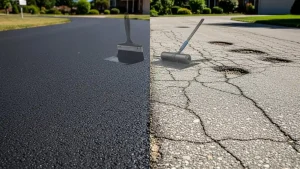
In concrete parking lots, weakened foundation layers can cause uneven slabs and premature pavement deterioration. Installing a new asphalt surface without correcting drainage problems may only cover the visible damage. The underlying issues can continue to weaken the pavement and lead to costly repairs. For this reason, drainage conditions should be evaluated before starting major asphalt paving and construction projects.
What Happens When a Commercial Parking Lot Drainage System Fails
When a commercial parking lot drainage system fails, rainwater can accumulate on the pavement, back up through drainage structures, or flow toward buildings. These problems can damage pavement, increase flooding risks, and create unsafe conditions for pedestrians and vehicles. Blocked catch basin grates prevent surface runoff from entering the drainage system, while restricted underground pipes can slow water flow and cause backups. Incorrect pavement grading often creates recurring puddles away from drainage points. Undersized drainage components may also struggle to handle large volumes of runoff during heavy rainfall.
Damaged underground pipes can allow water to escape into surrounding soil, causing erosion and pavement settlement. Similarly, blocked discharge outlets can reduce drainage efficiency throughout the entire network. These problems can disrupt customer access, loading operations, and parking availability. Property managers should identify the underlying cause before choosing a repair method. While removing debris may resolve minor blockages, damaged underground pipes and incorrect pavement grading often require professional repairs to restore proper drainage.
How to Inspect and Maintain Commercial Parking Lot Drainage Systems
Commercial parking lot drainage systems should be inspected regularly to identify blocked inlets, sediment buildup, damaged structures, and changes in pavement elevations before they cause serious drainage problems. Property managers should pay particular attention to drainage conditions before and after major storms. The City of Phoenix Stormwater Post-Construction Program emphasizes regular maintenance of private stormwater controls, particularly during monsoon season.
Commercial Parking Lot Drainage Maintenance Checklist
Regular inspections should cover both surface and underground drainage components. The following checklist helps property managers identify common drainage problems and determine which areas need cleaning, maintenance, or professional repairs.
|
Inspection area |
What to check |
| Catch basin grates |
Trash, leaves, damage, and blocked openings. |
|
Catch basin sumps |
Excessive sediment accumulation. |
| Pavement surface |
Recurring puddles, cracks, and depressions. |
|
Curbs and gutters |
Damage, obstructions, and erosion. |
| Underground pipes |
Blockages, damaged connections, and restricted flow. |
|
Discharge outlets |
Debris, erosion, and signs of water backups. |
| Retention and detention basins |
Sediment buildup, erosion, and reduced storage capacity. |
Professional inspections may include underground camera surveys to identify pipe damage and internal obstructions that cannot be seen from the surface. Keeping maintenance records also helps property managers recognize recurring drainage problems and plan repairs before the next major rainfall.
How Existing Commercial Parking Lot Drainage Systems Can Be Improved
Existing commercial parking lot drainage systems can be improved by correcting pavement slopes, repairing damaged drainage structures, increasing collection capacity, and introducing suitable runoff management features.
Correcting Pavement Grading
Regrading or reconstructing low pavement areas can restore the intended direction of water flow. Depending on the severity of the problem, repairs may involve milling, excavation, base reconstruction, and asphalt replacement. The finished surface must direct water toward existing or newly installed collection points.
Repairing and Upgrading Drainage Structures
Damaged catch basins, deteriorated pipes, and failed connections may require repair or replacement. Additional drainage inlets or channel drains may also be necessary when existing collection points cannot adequately handle runoff. These improvements should be based on an assessment of the entire drainage network rather than individual structures alone.
Incorporating Permeable Surfaces and Vegetated Drainage Areas
Where site conditions allow, permeable pavement and vegetated swales can improve existing parking lot drainage systems by allowing more rainwater to soak into the ground. A parking lot drainage study conducted in Tampa, Florida reported an average runoff reduction of 30% with vegetated swales and a further reduction of 10% to 15% with permeable paving at the study site. For commercial properties in Phoenix, AZ, the effectiveness of these improvements depends on local soil conditions, rainfall intensity, available space, and proper drainage design.
What a Properly Functioning Commercial Parking Lot Drainage System Looks Like
A properly functioning commercial parking lot drainage system provides a clear path for rainwater from the pavement surface to an approved storage or discharge location. During a rainstorm, pavement slopes direct runoff toward gutters, which carry water to catch basins. Sediment and heavier debris settle in the sumps, while underground storm drain pipes transport water to retention basins or approved discharge points.
When these components work together, water moves away from parking spaces, pedestrian routes, and building entrances. However, blocked catch basins or incorrect grading can interrupt this process and cause standing water. Effective drainage depends on proper construction and regular maintenance of the entire system.
Conclusion
Commercial parking lot drainage should be treated as a long-term property investment rather than a one-time construction requirement. As commercial properties develop, changes in land use, building additions, and surrounding infrastructure can affect how much runoff an existing system needs to handle. Property owners should maintain accurate drainage records, review previous inspection findings, and include drainage improvements in their future property budgets. Making informed decisions based on actual site conditions can help reduce unexpected expenses and preserve the property’s value. A proactive approach is often more practical and cost-effective than responding to drainage emergencies.
Work With Commercial Drainage Contractors in Phoenix, AZ
S&S Paving & Construction provides commercial construction services for property owners, developers, and general contractors throughout Phoenix, AZ, and Maricopa County. Our services include earthwork, underground utilities, storm drain installation, site concrete, and asphalt paving. By coordinating multiple construction activities, our team helps clients manage project requirements, site specifications, and construction schedules.
Whether your project involves a new commercial development or upgrades to existing infrastructure, we can discuss the construction services required for your site. Contact us to discuss your project scope, construction requirements, and request an estimate.
Frequently Asked Questions
How Much Does Commercial Parking Lot Drainage Installation Cost?
Installation costs depend on the property size, excavation depth, pipe materials, number of drainage structures, and project complexity. A site assessment is necessary to determine construction requirements and provide an accurate estimate.
How Long Does It Take to Install a Parking Lot Drainage System?
Installation time depends on the size of the project, soil conditions, excavation requirements, and the complexity of the underground network. Existing utility lines, weather conditions, and required inspections can also affect the construction schedule.
How Often Should Commercial Parking Lots Catch Basins Be Cleaned?
Cleaning frequency depends on how quickly sediment and debris accumulate inside the basin. Parking lots near construction sites, landscaped areas, or unpaved land may require more frequent cleaning than properties with limited sediment exposure.
Can Underground Utility Lines Affect Parking Lot Drainage Installation?
Existing water, gas, electrical, and sewer lines can influence the placement and depth of storm drain pipes. Utility locations must be identified before excavation to prevent damage and determine suitable routes for new drainage infrastructure.
Can a Commercial Parking Lot Remain Open During Drainage Construction?
Commercial parking lots may remain partially open when construction is completed in phases. Temporary barriers, designated vehicle routes, and planned work zones can help maintain access while protecting customers, employees, and construction crews.
How Is Storm Drain Capacity Calculated for a Commercial Parking Lot?
Drainage engineers calculate capacity using the drainage area, local design rainfall intensity, surface characteristics, and expected runoff volume. These calculations help determine the required pipe sizes, inlet capacity, and storage volume for the property.
