
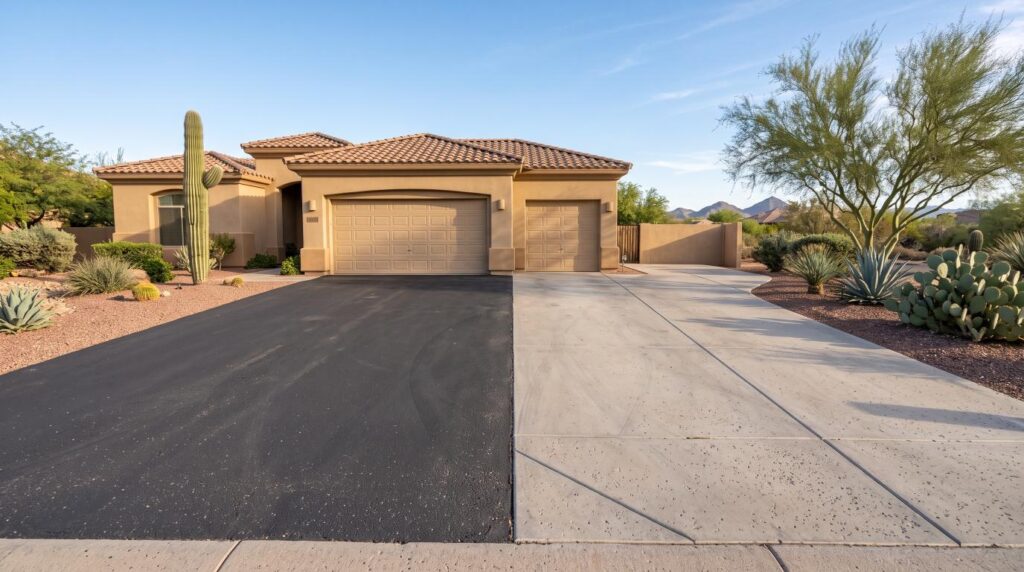
Yes, asphalt is usually cheaper than concrete to install. But is asphalt cheaper than concrete over 20 or 30 years? Not always. Asphalt paving generally requires less finishing work and offers a lower starting cost, while concrete usually lasts longer and needs less routine surface maintenance. The better value depends on ground preparation, repairs, weather, and how long you will use the surface.
In Phoenix, AZ, summer heat and intense sunlight make the choice especially important. An inexpensive installation may cost more if the surface develops ruts or drainage problems. The right comparison includes the pavement design and its future care.
What Does an Asphalt vs. Concrete Driveway Cost?
Driveway size affects both prices, but thickness, base preparation, traffic, and ground conditions also matter. Standard asphalt generally costs less upfront. Plain concrete often costs more, especially when it requires additional reinforcement or finishing.
|
What Affects the Cost? |
Asphalt | Concrete | What to Compare |
| Basic installation | Usually lower upfront | Usually higher upfront |
Same paved area and site preparation |
|
Decorative finish |
Limited common options | More colors and patterns | Plain finish versus specialty finish |
| Routine surface care | Usually more frequent | Usually less frequent |
Maintenance planned over time |
|
Major repair |
Patching or overlay may be possible | Individual slab replacement may be needed | Cause and extent of damage |
| Service life | Generally shorter | Generally longer |
Expected use and local conditions |
How Driveway Size and Thickness Change the Cost
A larger driveway needs more paving material, while a small job may cost more per square foot because equipment still needs transporting. Thickness also matters. A surface for passenger cars may not handle delivery trucks or heavy equipment. Ask the contractor to specify pavement thickness and compacted base depth. Quotes are not comparable when one includes a stronger pavement structure than the other.
What Site Preparation Adds to the Quote
Preparation can include removing weak soil, compacting the subgrade, adding aggregate base, and correcting the slope. Subgrade means the prepared soil beneath the pavement structure. Firm, well-drained ground may need less corrective work than a site with settlement or standing water. Ask contractors to itemize this work so a lower quote does not hide missing preparation.
Why Is Asphalt Usually Cheaper to Install?
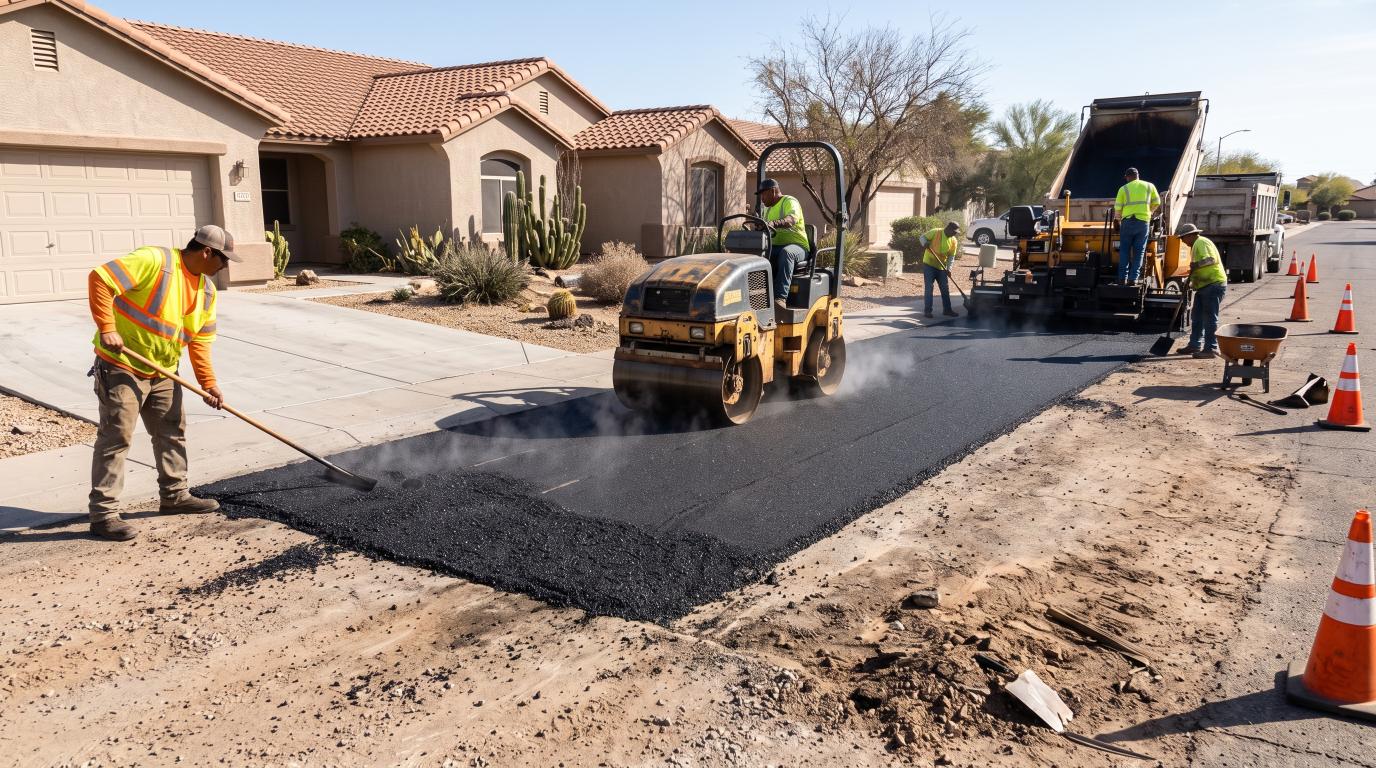
Asphalt generally costs less because crews can place and compact it without the same forming, finishing, and curing process required for a concrete slab. Once the base is ready, asphalt crews can often work efficiently. Labor, site access, and surface details still affect the final price. Compare designs made for the same loads.
Materials, Labor, and Equipment
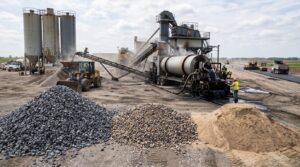
Hot-mix asphalt combines stone aggregate with asphalt binder and is compacted using paving equipment. Concrete uses cement, aggregates, and water, with reinforcement where the design calls for it. Concrete also requires forms, joints, and careful finishing. These steps affect labor costs. Asphalt still requires correct delivery temperatures and compaction, so a quicker process should not mean skipping quality checks.
Installation Time and Access Restrictions
Asphalt placement may finish sooner, but neither material can be installed until the base is ready. Tight entrances or steep slopes can slow work and limit equipment access. Concrete must cure after placement, while asphalt must cool and become stable enough for traffic. Follow the contractor’s reopening instructions for each surface. Driving on fresh pavement too early may cause damage.
Which Is Cheaper Over 10, 20, or 30 Years?
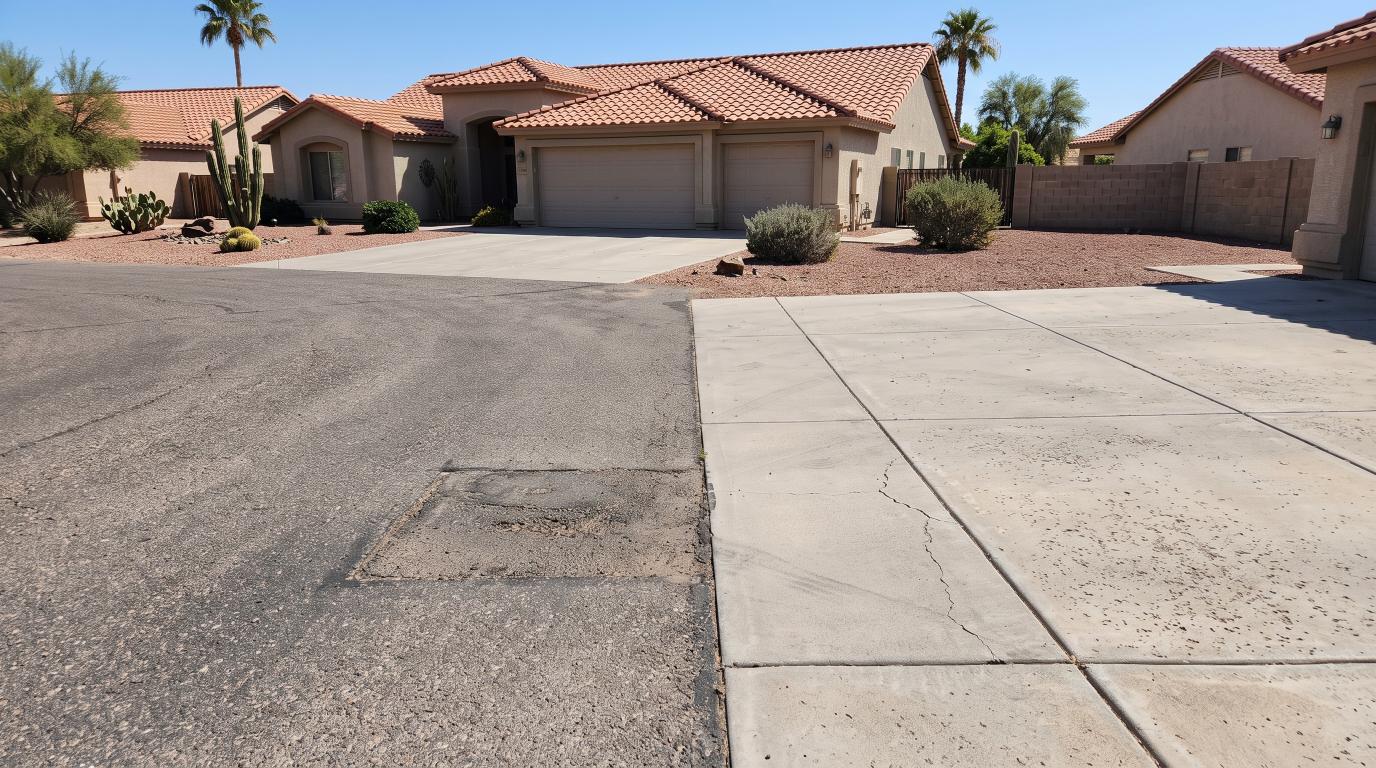
Asphalt can be cheaper over the first 10 years because the installation bill starts lower. Over 20 or 30 years, concrete may catch up if asphalt needs repeated repairs or a full replacement. The correct comparison is total cost of ownership: installation plus maintenance, repairs, and any replacement during the period. Use the same design assumptions for both materials. No option is automatically cheaper at every time horizon.
What Matters During the First 10 Years?
Installation cost usually has the greatest effect during the first decade. Asphalt owners should allow for crack repairs and condition-based surface care; concrete owners may need joint maintenance or localized repairs. Either material might need little work when properly installed. Track actual maintenance expenses rather than assuming the surface will require nothing. The lower 10-year total depends on its condition and use.
What Changes After 20 or 30 Years?
Replacement becomes more important over longer periods. If asphalt needs reconstruction while concrete remains serviceable, concrete may recover its higher starting cost. In a 2001 Embacher and Snyder study, concrete had lower maintenance and rehabilitation costs on the Minnesota low-volume roads examined. This supports checking lifetime costs, but those road findings cannot predict a Phoenix driveway’s expenses.
How to Compare Future Costs Without Guessing
Begin with itemized installation quotes. For 10, 20, and 30 years, add maintenance, repairs, and any expected resurfacing or replacement. Ask contractors what condition would trigger each major expense. Compare a low-repair scenario with a high-repair scenario rather than promising one future total. If you include inflation, calculate it the same way for both materials.
How Much Maintenance Will Asphalt and Concrete Need?
Asphalt usually needs more planned surface care, while concrete often needs fewer routine treatments. Both surfaces still require inspection, drainage, and prompt attention to damage. Sealing a crack is different from rebuilding a failed pavement base. Choose treatments based on actual condition rather than a fixed schedule.
Sealcoating Asphalt and Sealing Concrete
Sealcoating may protect suitable aging asphalt, but it cannot repair a failing base. Check cracks before applying any surface treatment. Concrete does not always require a whole-surface sealer, although joints or selected areas may need protection. Ask what the product accomplishes, how often conditions justify another treatment, and when vehicles can return. A maintenance plan should reflect the actual pavement condition.
Patching, Resurfacing, and Full Replacement
Small asphalt defects may be patched, and sound pavement may accept an overlay. Widespread alligator cracking, deep ruts, or settlement can signal failure below the surface. Concrete repairs may involve replacing individual slabs rather than covering the whole driveway. Neither option fixes continuing soil movement or poor drainage. Have the damaged area inspected so you pay for a repair that addresses the cause.
Can Asphalt Be Installed Over Concrete?
Yes, asphalt can sometimes cover an existing concrete driveway when the slabs are stable. The contractor must assess joints, cracks, drainage, and surface height first. Movement at concrete joints may show through the asphalt as reflective cracking. The new layer also raises the finished level near garages and curbs. Shifting or badly broken slabs may need removal instead of an overlay.
Which Driveway Material Lasts Longer?
Concrete generally lasts longer than asphalt when both are installed correctly and used as designed. NerdWallet’s September 2025 comparison gives a broad asphalt lifespan of 15 to 30 years and notes that concrete may last 30 to 40 years. These are planning ranges, not warranties.
Heat, water intrusion, heavy vehicles, and poor ground support may shorten either lifespan. Asphalt may show cracks, potholes, or rutting; concrete can develop cracked, uneven, or flaking slabs. A longer expected lifespan matters most when you plan to use the same pavement for many years and can maintain it properly.
How Do Heat and Weather Affect Asphalt and Concrete?
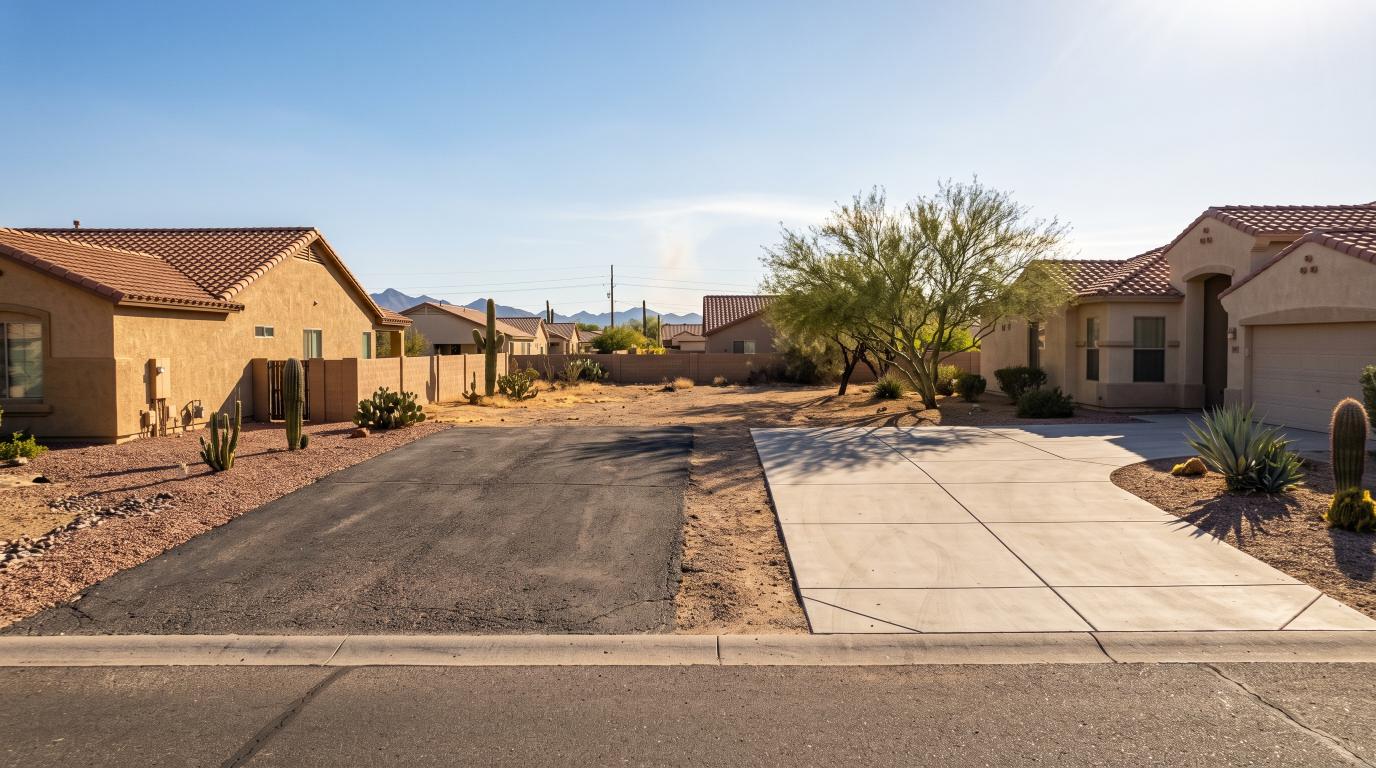
Weather affects repair needs, surface performance, and the likely replacement schedule. Asphalt and concrete respond differently to heat, moisture, and changes in the ground. Material selection and pavement thickness should reflect local conditions before installation begins.
Hot Weather and Direct Sunlight in Phoenix
In Phoenix, intense heat can cause rutting where unsuitable asphalt carries heavy vehicles that stop or turn. Concrete resists heat-related deformation better, but careful placement and curing are still required. Ask whether the proposed asphalt mix suits local temperatures and expected loads. Dark asphalt also absorbs more sunlight, which may matter near outdoor living areas or places where people walk barefoot.
Rainfall, Drainage, and Soil Movement
Water can weaken the supporting base beneath either material. Rain that pools near a driveway may expose poor grading and worsen damage at cracks or edges. Settling soil can create low spots or uneven concrete slabs. Ask contractors to inspect runoff paths and existing drainage before installation. In colder regions, water freezing below pavement adds another design concern.
How Can You Compare Asphalt and Concrete Quotes Fairly?
Get written estimates for the same paved area and the same expected traffic. Tell each contractor whether you need new paving, an overlay, or replacement. Compare the same scope. S&S Paving & Construction describes asphalt installation and resurfacing among its published services, along with structural repairs and heavy-duty pavement work. Those differences in scope explain why a detailed estimate matters.
What Should a Written Paving Estimate Include?
A written estimate should describe what will be built, not just name the surface material. Ask the contractor to separate base preparation from paving and identify who pays for work discovered after excavation. Compare the following items across every proposal:
- Area, pavement thickness, and expected vehicle loads
- Excavation, base materials, compaction, and drainage
- Removal, disposal, and required permits
- Surface finish, edges or joints, and reopening instructions
- Cleanup, warranty, and exclusions
How Should You Check a Paving Contractor?
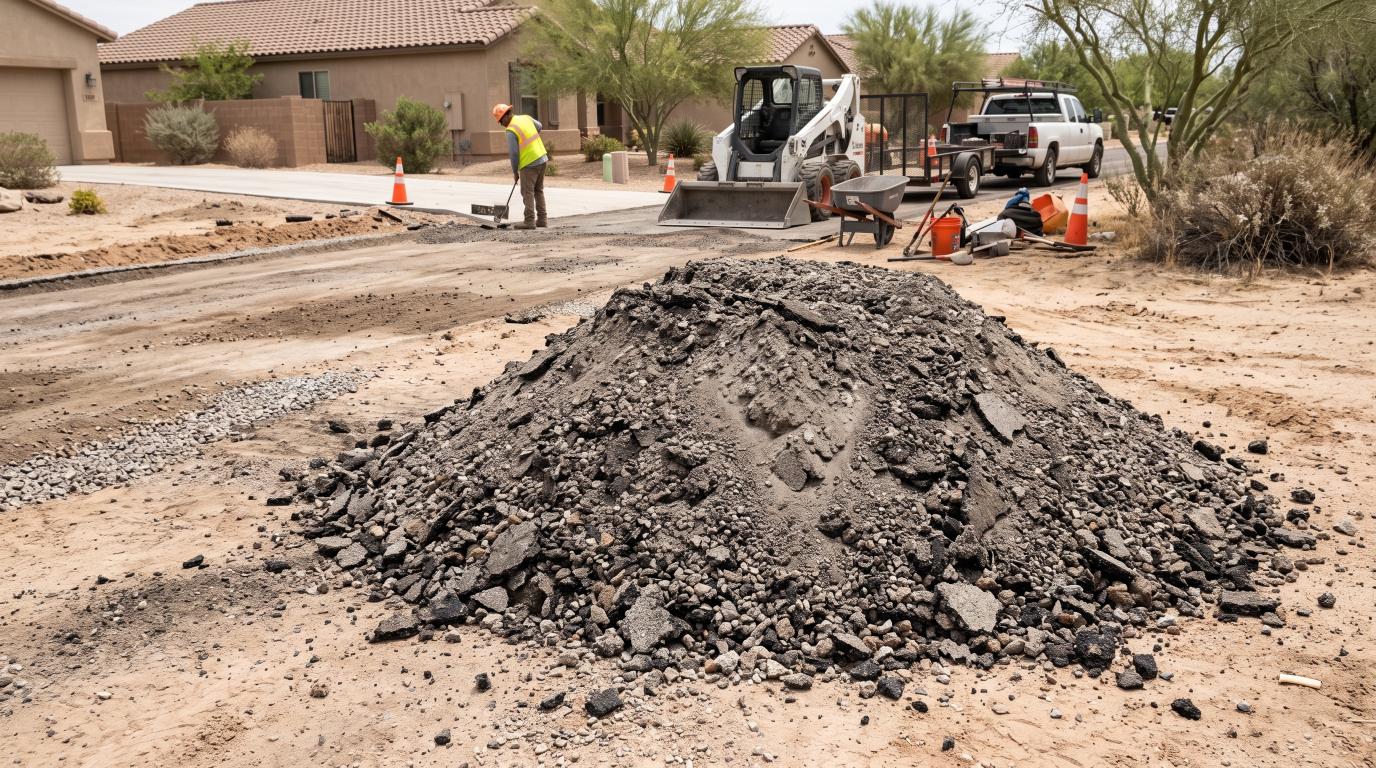
Choose a paving contractor with experience in projects similar to yours. In Arizona, you can verify their license through the Arizona Registrar of Contractors to confirm they are licensed for the type of work you need. Ask about previous paving projects, base preparation, drainage, and warranty coverage. Compare written estimates and make sure each contractor explains what is included before you hire them.
Conclusion
Asphalt is generally cheaper than concrete to install, but the initial price is only one part of the comparison. Concrete often lasts longer and requires less routine maintenance, while asphalt may be easier to repair or resurface when the supporting base remains stable. If you’re deciding whether asphalt is cheaper than concrete for your project, consider the expected lifespan, maintenance needs, local weather, and traffic. Comparing complete installation quotes will help you choose the material that fits your budget and long-term needs.
Request a Paving Estimate in Phoenix, AZ
Planning a new paving project or replacing damaged pavement? S&S Paving & Construction provides asphalt paving, resurfacing, structural repairs, and site concrete services in Phoenix, AZ. Whether your project involves a commercial parking area, access road, or another paved surface, choosing the right material starts with understanding the site’s conditions and expected traffic.
Contact us today to discuss your project’s size, existing pavement condition, drainage concerns, and installation requirements. We can review your project details and determine which services fit your needs. Call (602) 437-0818 or request a free estimate to get started.
Frequently Asked Questions
How Much Cheaper Is Asphalt Than Concrete on Average?
Asphalt usually costs less to install, but there is no fixed percentage that applies to every driveway. Size, thickness, base preparation, and contractor labor can change the difference. Compare written estimates for the same scope to find the actual saving on your project.
Is Asphalt Cheaper Than Concrete Over 20 Years?
Yes, asphalt can remain cheaper over 20 years when it needs limited repairs and does not require early replacement. Concrete can become less expensive if it avoids major work during that period. Add the expected maintenance and replacement costs to both installation quotes before deciding.
Which Driveway Material Is Cheaper to Maintain?
Concrete generally needs less routine surface maintenance than asphalt. Asphalt may require crack treatment and sealcoating, while concrete may need joint repairs or work on individual slabs. The cost of major damage can change the comparison, so routine care and structural repairs should be budgeted separately.
Which Surface Is Better for Hot Weather?
Concrete generally offers stronger resistance to heat-related surface deformation. Asphalt can still perform well in hot areas when the mixture, pavement thickness, and base are suitable for the traffic. For Phoenix properties, ask contractors about local mix specifications and heavy-vehicle use.
Can You Resurface Asphalt Instead of Replacing It?
Yes, asphalt can sometimes be resurfaced when the existing pavement and supporting base remain stable. A new layer cannot reliably fix major settlement, widespread base failure, or drainage problems. Have the pavement assessed before paying for an overlay instead of reconstruction.
Does an Asphalt Driveway Increase Property Value?
A well-maintained asphalt driveway may improve curb appeal and help a property look cared for, but no fixed resale-price increase is guaranteed. Buyers also consider drainage, surface condition, and the surrounding property. Repair visible damage before assuming a new driveway will produce a financial return.
