

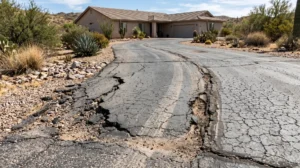

What is pavement? Pavement is a constructed surface designed to support vehicles and pedestrians by spreading traffic loads into the ground below. It is built using materials such as asphalt, concrete, aggregate, and compacted soil arranged in layers that create a stable and durable surface. Pavement is commonly used for roads, driveways, parking lots, sidewalks, runways, and industrial areas.
For pavement projects in Phoenix, AZ, S&S Paving & Construction designs, installs, and maintains pavement systems based on traffic needs, soil conditions, drainage requirements, and local climate factors. Proper pavement construction involves more than placing a surface material. It requires planning the foundation, selecting suitable materials, preparing the site, and maintaining the finished pavement over time.
Pavement can be made with different materials and designs depending on how the surface will be used. Asphalt pavement, concrete pavement, and composite pavement each have different characteristics, benefits, and applications. This guide explains pavement meaning, types, materials, construction process, uses, performance factors, maintenance, and common problems.
Pavement Definition and Structure
Pavement is a constructed surface designed to support traffic and spread the weight of vehicles into the ground below. In everyday language, people may use the word pavement to mean a road, sidewalk, driveway, or other hard surface.
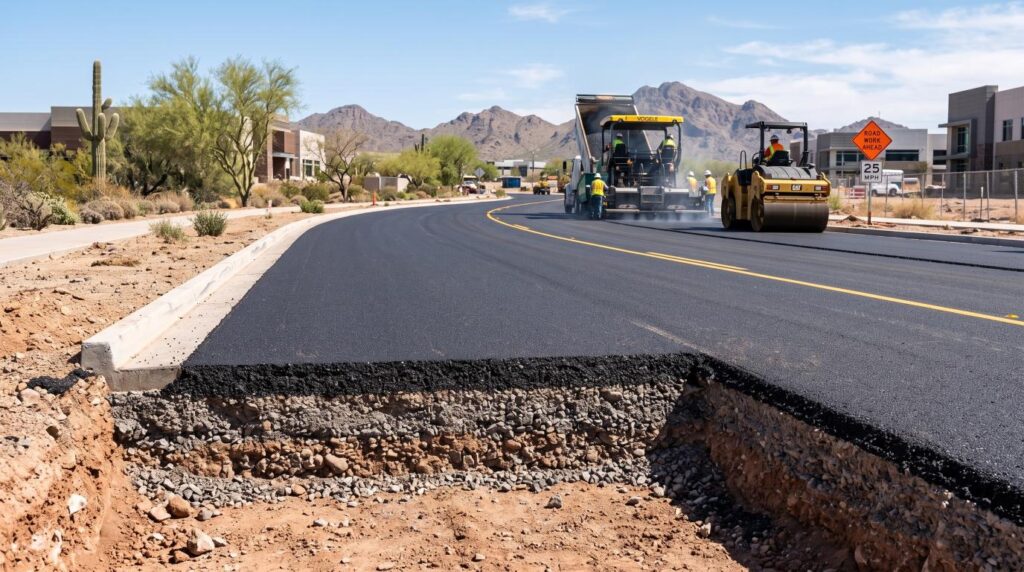
In engineering, a pavement system includes more than the visible surface. It may include the surface course, base, subbase, and prepared subgrade below. These parts work together to carry traffic and provide stable support. The exact pavement design depends on the type of traffic, soil conditions, drainage, climate, materials, and expected use.
Pavement Meaning in Construction
In construction, pavement means a prepared surface and supporting structure designed to carry vehicle or pedestrian traffic. In the United States, the term commonly refers to engineered surfaces such as roads, parking lots, driveways, and other paved areas.
The meaning can vary by context. For example, “pavement” may refer mainly to a sidewalk in British English, while U.S. roadway and construction terminology commonly uses pavement to describe the traffic-bearing structure or surface.
What Is the Purpose of Pavement?
The main purpose of pavement is to provide a stable and safe surface for movement. It supports cars, trucks, construction equipment, bicycles, and pedestrians while helping the ground below handle repeated loads. Pavement also spreads vehicle weight across a larger area. This helps reduce pressure on the soil and supporting layers.
The main purposes of pavement include:
- Supporting vehicles and pedestrian traffic
- Creating a smoother and safer travel surface
- Distributing vehicle loads
- Protecting the underlying soil
- Helping manage water and drainage
- Improving access to homes, businesses, and public areas
- Providing a durable surface for repeated use
A pavement system must be designed for its expected use. A residential driveway does not need the same design as a road used by heavy commercial trucks every day.
What Are the Main Types of Pavement?
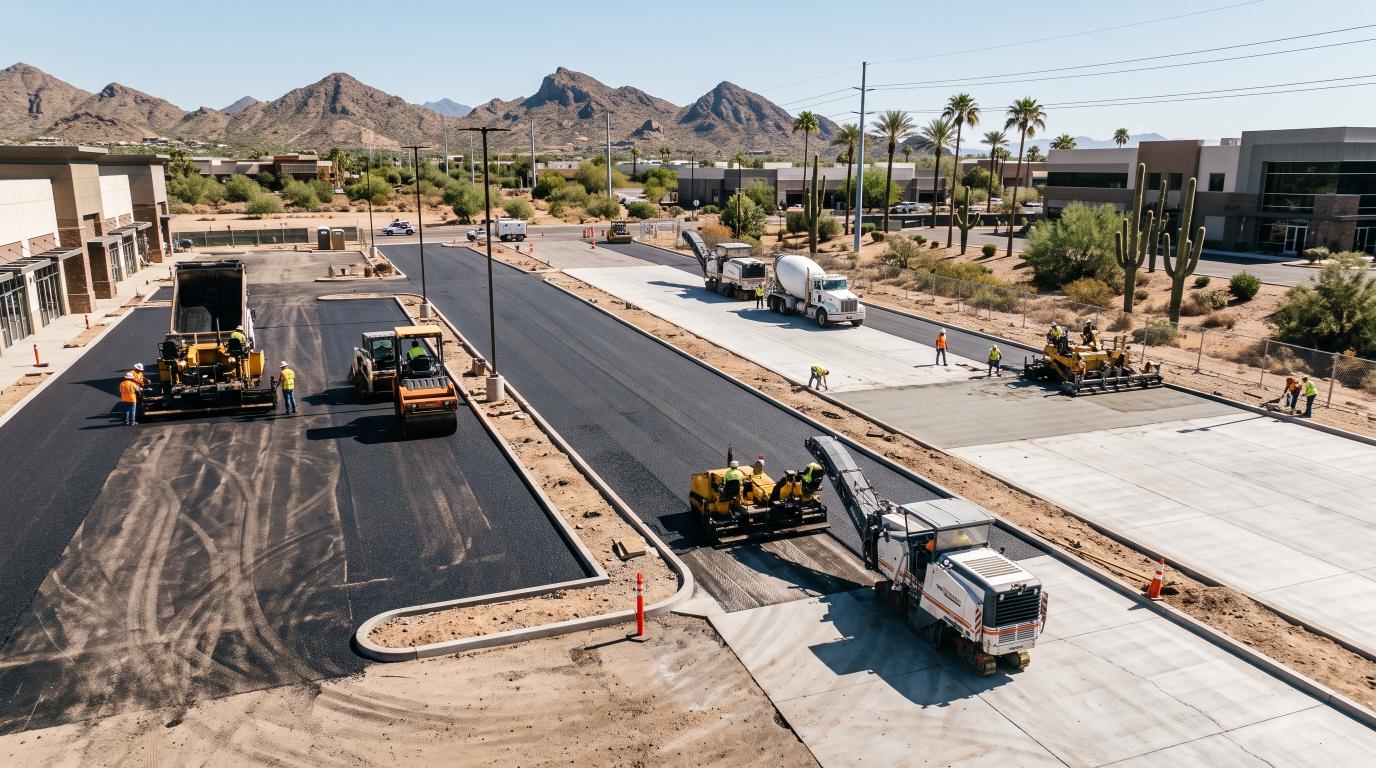
Pavement is usually classified by how it is built and how it carries traffic loads. The three common categories are flexible pavement, rigid pavement, and composite pavement.
Flexible Pavement
Flexible pavement normally has an asphalt surface placed over supporting layers of aggregate and prepared soil. It is called flexible because the pavement structure can bend slightly when vehicles pass over it. Traffic stresses are distributed through the pavement layers and decrease as they move deeper toward the subgrade. This means the strength and condition of the lower layers are important to pavement performance.
Flexible pavement is commonly used for:
- Roads and streets
- Parking lots
- Residential driveways
- Commercial properties
- Industrial areas
Asphalt is a common flexible pavement material because it provides a smooth surface and can often be repaired or resurfaced without replacing the entire pavement system.
Rigid Pavement
Rigid pavement is commonly made from concrete. The concrete forms a strong slab that spreads traffic loads across a larger area. Because concrete is stiff, the pavement depends heavily on the strength of the slab itself. The base and subgrade still matter because they provide support and help control movement below the concrete.
Rigid pavement may be used for roads, intersections, industrial areas, loading zones, and other locations that experience repeated or heavy traffic. Concrete can provide strong long-term performance, but repairs may involve removing and replacing damaged sections and allowing new concrete time to cure.
Composite Pavement
Composite pavement uses both asphalt and concrete in the same pavement system. One common example is a new asphalt surface installed over an existing concrete pavement.
This approach may allow an existing concrete structure to continue providing support while asphalt creates a smoother new driving surface. Composite pavement can be useful for certain rehabilitation projects. However, cracks or movement in the older pavement below can sometimes affect the new surface if those problems are not properly addressed.
What Is Pavement Made Of?
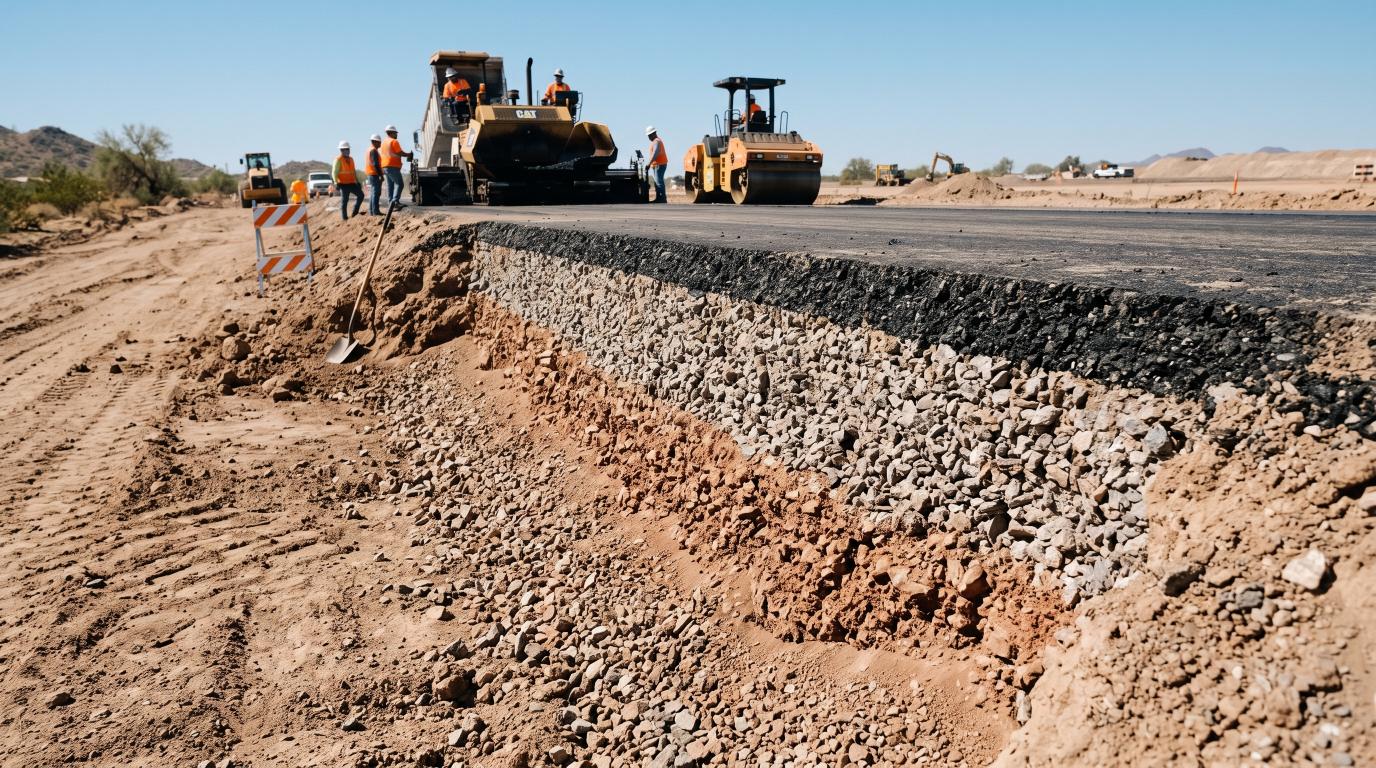
Pavement is usually built in layers. Each layer performs a different job and supports the layers above it.
Surface or Wearing Layer
The surface layer is the part that vehicles and people directly contact. It must handle traffic, weather, sunlight, and normal wear. For flexible pavement, this surface is usually asphalt. For rigid pavement, the surface is concrete.
Base Course
The base sits below the surface and adds strength to the pavement structure. It is often made from compacted crushed stone or other approved aggregate. A strong base helps spread loads and provides stable support for the surface.
Subbase
A subbase may be installed below the base course. It can improve support, drainage, and separation between the pavement structure and the natural soil. Not every project requires the same type or thickness of subbase.
Compacted Subgrade
The subgrade is the prepared soil at the bottom of the pavement system. It must be properly graded and compacted because every layer above depends on stable support. Weak or wet soil can cause pavement movement, cracking, or settlement. Proper material selection is important at every level. A strong surface alone cannot make up for a weak foundation.
Asphalt vs. Pavement: What’s the Difference?
Asphalt and pavement are often used to describe the same surface, but they have different meanings. Asphalt is a material used to build certain types of pavement, while pavement refers to the complete surface and supporting structure below it.
|
Feature |
Asphalt |
Pavement |
|
Definition |
Asphalt is a paving material made from aggregates mixed with asphalt binder. |
Pavement is the complete constructed surface designed to support vehicles or pedestrians. |
|
What It Is |
A material used to create a pavement surface. |
A full pavement system that may include several layers and different materials. |
|
Common Uses |
Roads, driveways, parking lots, highways, and commercial areas. |
Roads, parking lots, driveways, sidewalks, runways, and other transportation surfaces. |
|
Materials |
Usually includes stone, sand, gravel, and asphalt binder. |
Pavement commonly uses asphalt or concrete as the finished surface, with aggregate, crushed stone, and prepared soil forming supporting layers below. |
|
Structure |
Asphalt usually forms the top surface of flexible pavement. |
Pavement may include a surface layer, base, subbase, and compacted subgrade. |
|
Type |
Asphalt is commonly used in flexible pavement systems. | Pavement can be flexible, rigid, or composite. |
|
Key Difference |
Asphalt is one material used to build pavement. |
Pavement is the complete surface and supporting structure. |
|
Simple Example |
The black surface on a parking lot may be asphalt. |
The asphalt surface and all supporting layers below it together form the pavement. |
Where Is Pavement Used?
Pavement is used anywhere a stable surface is needed for vehicles, pedestrians, or equipment. Common pavement areas include roads, highways, driveways, parking lots, sidewalks, airport runways, industrial yards, loading zones, bicycle paths, and commercial properties.
The pavement design depends on how the area will be used. A residential driveway may only carry passenger vehicles, while a commercial or industrial pavement may need greater thickness and stronger supporting layers to handle frequent truck traffic and heavier loads.
How Is Pavement Constructed?
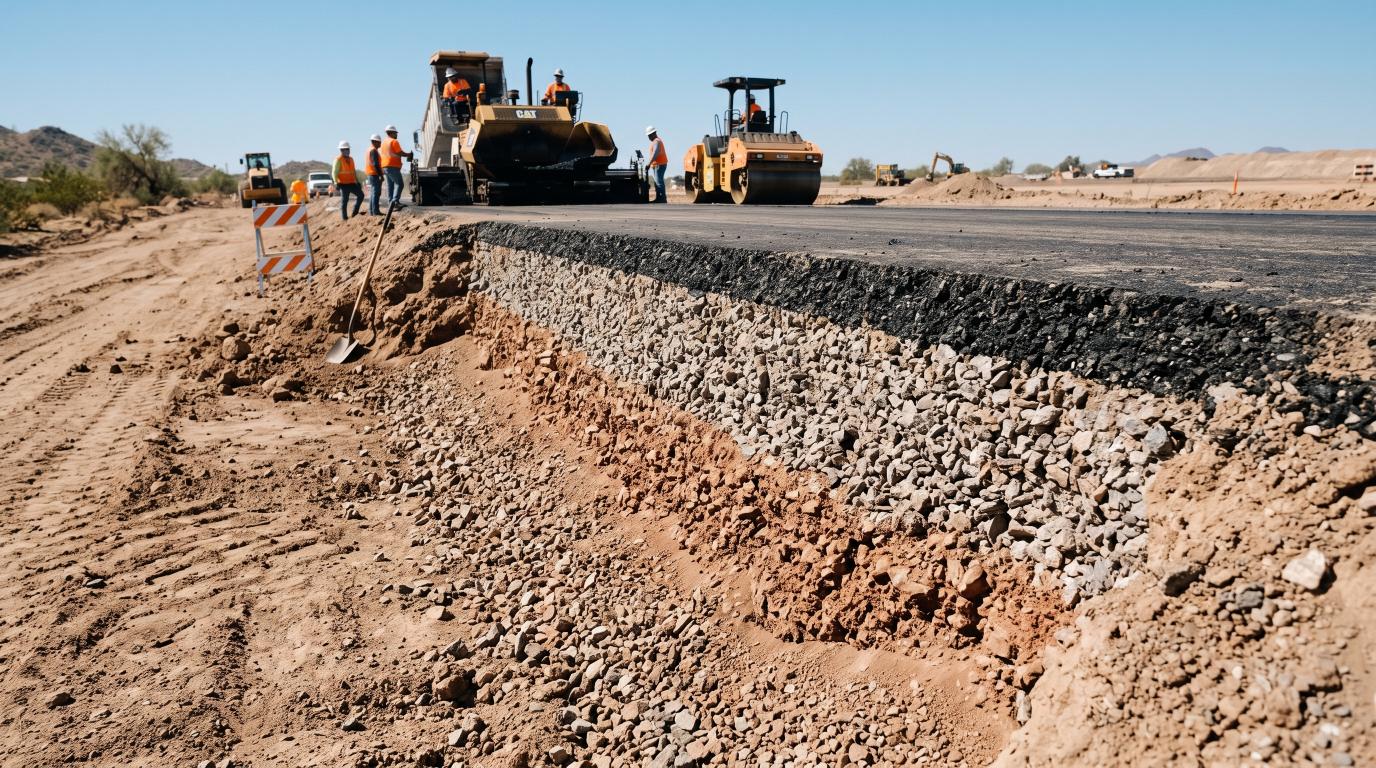
A strong pavement starts below the visible surface. Site preparation, drainage, soil conditions, material placement, and compaction all affect the final result.
Site Preparation
The construction area is first cleared and graded. Unwanted materials may be removed, and the site is shaped to match the planned elevations.
Drainage also needs to be considered. Water should move away from the pavement instead of collecting beneath or beside it. Soil conditions are checked to determine whether the ground can provide enough support. Weak areas may need to be removed, replaced, or stabilized.
Subgrade and Base Preparation
The natural soil is shaped and compacted to create the subgrade. Base and subbase materials can then be placed in controlled layers. Each layer must be properly compacted before the next material is added. Crews also check grade and drainage during this stage. Poor support beneath the surface can cause problems even when the top layer looks good.
Pavement Installation
For asphalt pavement, asphalt mix is placed across the prepared base and compacted to create a dense, smooth surface. For concrete pavement, concrete is placed, levelled, finished, and allowed to cure. Joints may be added to help manage normal movement and cracking. Proper thickness and installation methods depend on the pavement design and expected traffic.
Final Inspection
The finished pavement should be inspected before it is fully opened for use.
Important items may include:
- Surface smoothness
- Pavement thickness
- Proper drainage
- Compaction
- Finished grade
- Surface condition
The pavement may need time to cool or cure before regular traffic begins.
What Is Paving in Construction?
Paving in construction is the process of preparing a site and installing a durable surface for vehicles, pedestrians, or equipment. Depending on the project, paving may involve grading and compacting the subgrade, placing aggregate base materials, managing drainage, and installing asphalt or concrete as the finished surface.
Paving is not limited to placing the visible top layer. Proper pavement construction depends on preparation below the surface, material selection, thickness, compaction, drainage, and the traffic the finished area is expected to support. Roads, parking lots, driveways, industrial yards, and other pavement areas may require different paving methods based on their intended use.
What Factors Affect Pavement Performance?
Several factors determine how well pavement performs over time. Traffic volume and vehicle weight are major factors. Heavy trucks place more stress on pavement than passenger vehicles.
Soil conditions also matter. A weak or unstable subgrade can cause settlement and movement. Drainage is another important factor. Water that reaches the pavement base or soil can reduce support and contribute to damage.
Other factors include:
- Weather and temperature
- Material quality
- Pavement thickness
- Construction quality
- Traffic patterns
- Maintenance
- Site preparation
- Drainage design
These factors work together. A problem in one area can sometimes reduce the performance of the entire pavement system.
What Are the Disadvantages of Pavement?
Pavement requires an upfront investment in site preparation, materials, drainage, equipment, and installation. It also needs ongoing maintenance because traffic, heat, water, aging, and soil movement can eventually lead to cracks, potholes, rutting, or surface wear.
Repairs can temporarily affect vehicle or pedestrian access, and serious structural damage may require resurfacing or reconstruction. Pavement can also contribute to stormwater runoff and surface heat, so proper drainage, material selection, and maintenance are important for long-term performance.
How Long Does Pavement Last?
There is no single lifespan that applies to every pavement. The useful life of pavement depends on its material, traffic, vehicle weight, soil, climate, drainage, construction quality, and maintenance history.
Asphalt and concrete also age differently. Asphalt may need crack sealing, patching, surface treatments, or overlays as it gets older. Concrete may require crack repair, joint work, or replacement of damaged slabs. The condition of the pavement is often more useful than its age alone. A well-built and well-maintained surface may perform much longer than pavement with poor drainage or delayed repairs.
How Is Pavement Maintained?
Regular maintenance helps catch small pavement problems before they become larger and more expensive. Routine inspections can help identify cracks, drainage problems, surface wear, potholes, and damaged areas.
Common pavement maintenance methods include:
- Crack sealing
- Patching
- Sealcoating on suitable asphalt surfaces
- Drainage maintenance
- Asphalt overlays
- Resurfacing
- Full-depth repairs
The right treatment depends on the cause and depth of the damage. Surface maintenance cannot correct every structural problem. When the base or subgrade has failed, deeper repairs or reconstruction may be needed.
Common Pavement Problems
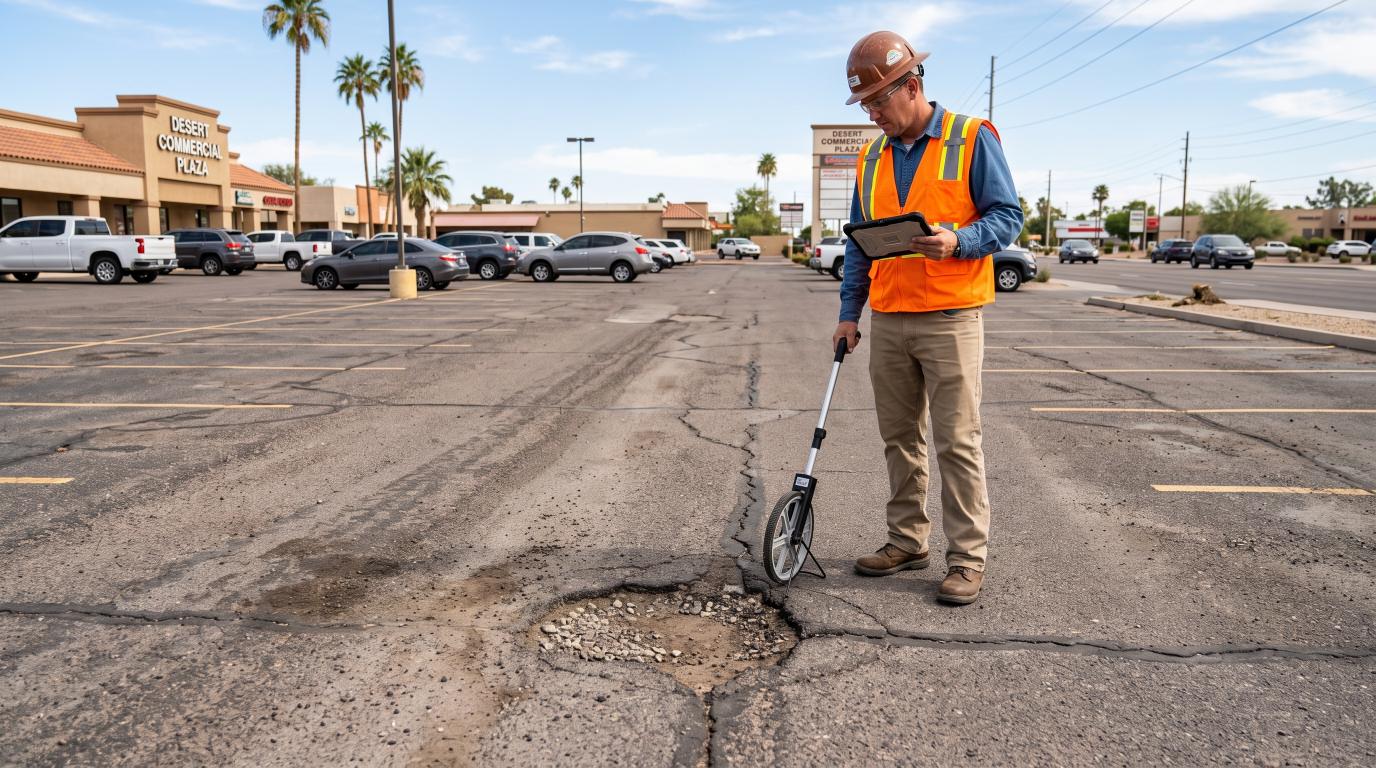
Pavement damage can appear in several forms. Understanding the type of damage can help determine what may be happening below the surface.
Cracks: Cracks can develop because of traffic loads, temperature changes, aging, weak base materials, poor drainage, or soil movement. Small cracks can allow water to enter the pavement structure. Over time, this may lead to deeper damage if the problem is not addressed.
Potholes: Potholes can develop when pavement becomes weak and pieces of surface material break away. Water entering damaged pavement can weaken the layers below. Repeated vehicle traffic can then make the damaged area larger.
Rutting: Rutting appears as long depressions where vehicle tires regularly travel. It may be caused by heavy loads, weak pavement layers, poor compaction, or unstable materials. Ruts can also collect water and create an uneven driving surface.
Surface Wear: Pavement surfaces slowly change as they are exposed to traffic, sunlight, heat, weather, and age. Asphalt may become rougher or lose small surface particles. Surface wear can be an early sign that maintenance should be considered.
Water Damage: Water can enter pavement through cracks, joints, edges, or poorly drained areas. Once it reaches the base or subgrade, it can weaken support and contribute to cracking, potholes, settlement, and other problems. Good drainage is one of the most important parts of pavement design and maintenance.
Pavement vs. Road: What’s the Difference?
Pavement and road are often used as if they mean the same thing, but there is a clear difference. Pavement is the built surface and supporting layers, while a road includes the entire transportation area and its related features.
|
Feature |
Pavement |
Road |
|
Definition |
Pavement is the constructed surface and supporting layers designed to carry traffic. |
A road is the complete transportation route used to move vehicles and people. |
|
What It Includes |
Surface layer, base course, subbase, and prepared subgrade. |
Pavement, shoulders, curbs, drainage systems, signs, medians, and other features. |
|
Main Purpose |
Provides a smooth, stable, and durable surface for traffic. |
Connects locations and provides a complete route for transportation. |
|
Common Materials |
Asphalt, concrete, gravel, or a combination of materials. |
A road may contain asphalt or concrete pavement along with other infrastructure. |
|
Example |
The asphalt surface and supporting layers you drive on are pavement. |
The pavement, shoulders, drainage, signs, and surrounding features together make up the road. |
|
Key Difference |
Pavement is one part of the transportation structure. |
A road is the entire transportation corridor, which usually includes pavement. |
Conclusion
Pavement is a constructed surface and supporting structure designed to provide stable access for vehicles or pedestrians while distributing traffic loads into the layers and soil below. Depending on its purpose, a pavement area may be a road, driveway, parking lot, sidewalk, runway, or industrial surface. The main structural types are flexible pavement, rigid pavement, and composite pavement.
What pavement is made of depends on its design. Flexible pavement commonly uses an asphalt surface over aggregate and prepared soil layers, while rigid pavement uses a concrete slab supported by a prepared foundation. A pavement system may include the surface course, base, subbase, and compacted subgrade, although the exact layers and thicknesses vary by project.
In construction, paving means preparing the site and supporting layers before placing and compacting asphalt, concrete, or another suitable paving material to form the finished surface. Traffic loads, soil strength, drainage, climate, material quality, construction methods, and maintenance all influence how pavement performs over time. Understanding these factors helps explain why pavement is more than simply the asphalt or concrete visible at the surface.
Need Reliable Pavement Services?
S&S Paving & Construction provides professional pavement construction, asphalt paving, pavement maintenance, resurfacing, crack sealing, and related site work throughout Phoenix, AZ. Whether you need a new pavement area or repairs to an existing surface, the right solution depends on traffic, drainage, pavement condition, and the supporting layers below. Contact us today to discuss your Phoenix pavement project and request a free estimate from our experienced paving team.
Frequently Asked Questions
Is asphalt the same as pavement?
No. Asphalt is one material that can be used to build pavement. Pavement can also be made from concrete, gravel, or a combination of materials. An asphalt road, driveway, or parking lot is one type of pavement.
What is the difference between asphalt and concrete pavement?
Asphalt pavement is flexible and normally uses asphalt over supporting base layers. Concrete pavement uses a rigid cement-based slab. The right choice depends on traffic, soil, drainage, project needs, and expected maintenance.
What are the two main types of pavement?
The two main types are flexible pavement and rigid pavement. Flexible pavement is commonly built with asphalt, while rigid pavement is commonly made with concrete. Composite pavement combines materials from both systems.
What are the layers of pavement?
A pavement system may include a surface layer, base course, subbase, and compacted subgrade. Not every project uses the same layers or thicknesses. The design depends on traffic, soil strength, drainage, and the materials being used.
What is flexible pavement?
Flexible pavement is a layered pavement structure that can bend slightly when vehicles travel over it. Asphalt is commonly used for the surface. Traffic loads pass through the layers and spread into the prepared soil below.
What is rigid pavement?
Rigid pavement normally uses a strong concrete slab as its main structural surface. The slab spreads vehicle loads across a wider area. It is often used where strength and support for repeated traffic are important.
How long does pavement last?
There is no exact pavement lifespan that applies to every project. Traffic, materials, climate, drainage, soil, construction quality, and maintenance all affect how long it performs. Regular inspections and timely repairs can help extend its useful life.
What causes pavement to crack?
Pavement can crack because of traffic stress, heat, temperature changes, aging, soil movement, weak supporting layers, or drainage problems. Different crack patterns can point to different causes. Finding the cause helps determine the right repair.
Can damaged pavement be repaired?
Yes. Many pavement problems can be repaired with crack sealing, patching, resurfacing, overlays, or full-depth repairs. The correct method depends on how deep the damage goes. Severe structural failure may require partial or complete reconstruction.
Why is drainage important for pavement?
Water can weaken the base and soil supporting a pavement surface. Poor drainage may increase the risk of cracks, potholes, settlement, and other damage. Proper grading and drainage help move water away from the pavement structure.
