
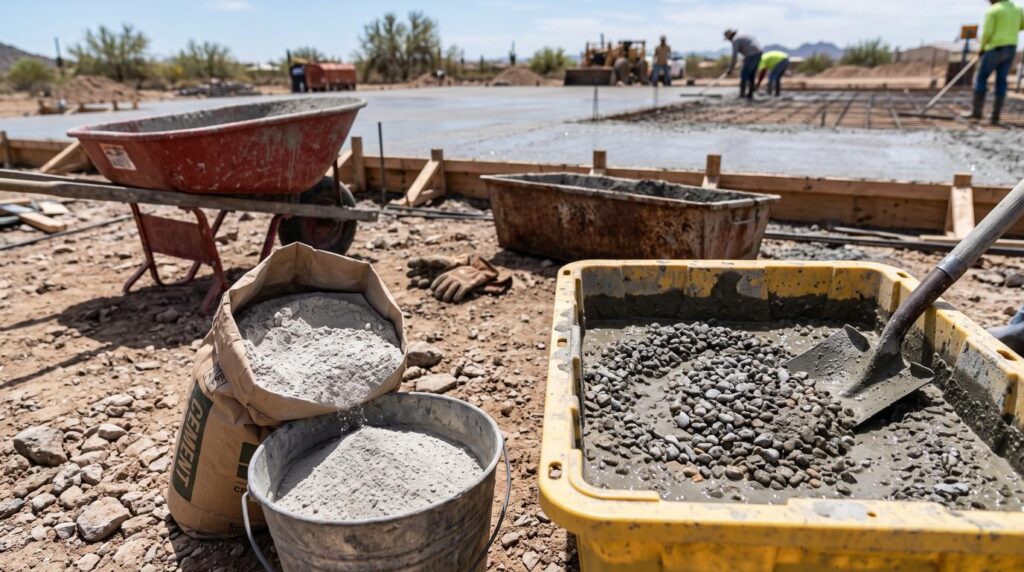



The main difference between concrete and cement is that cement is an ingredient used to make concrete. Concrete is a complete construction material made by combining cement, water, sand, and larger aggregates such as gravel or crushed stone. Cement helps bind these materials together as the mixture hardens.
People often use the words cement and concrete as if they mean the same thing. You may hear someone refer to a cement sidewalk or cement slab, even though the finished material is normally concrete. In Phoenix, AZ, understanding the difference also helps explain why concrete mix design, placement, curing, and weather conditions matter.
Cement and concrete are closely related, but they are not interchangeable. This guide explains what each material contains, how concrete hardens, why concrete mixtures vary, and what can affect the finished material.
Cement vs. Concrete at a Glance
The basic difference becomes easier to understand when the two materials are compared side by side.
|
Feature |
Cement |
Concrete |
|
Material type |
Binding material |
Composite construction material |
|
Basic form |
Fine powder |
Workable mixture that hardens |
|
Main materials |
Processed mineral materials |
Cement, water, sand, and coarse aggregate |
|
Main purpose |
Helps bind materials together |
Forms finished construction surfaces and structures |
|
Typical uses |
Concrete, mortar, grout, and related materials |
Sidewalks, slabs, curbs, foundations, and structural elements |
|
How it hardens |
Reacts with water |
Cement paste hardens around the aggregates |
The important point is that cement is one part of concrete. Concrete is the complete material used to build many finished surfaces and structures.
What Is Cement?
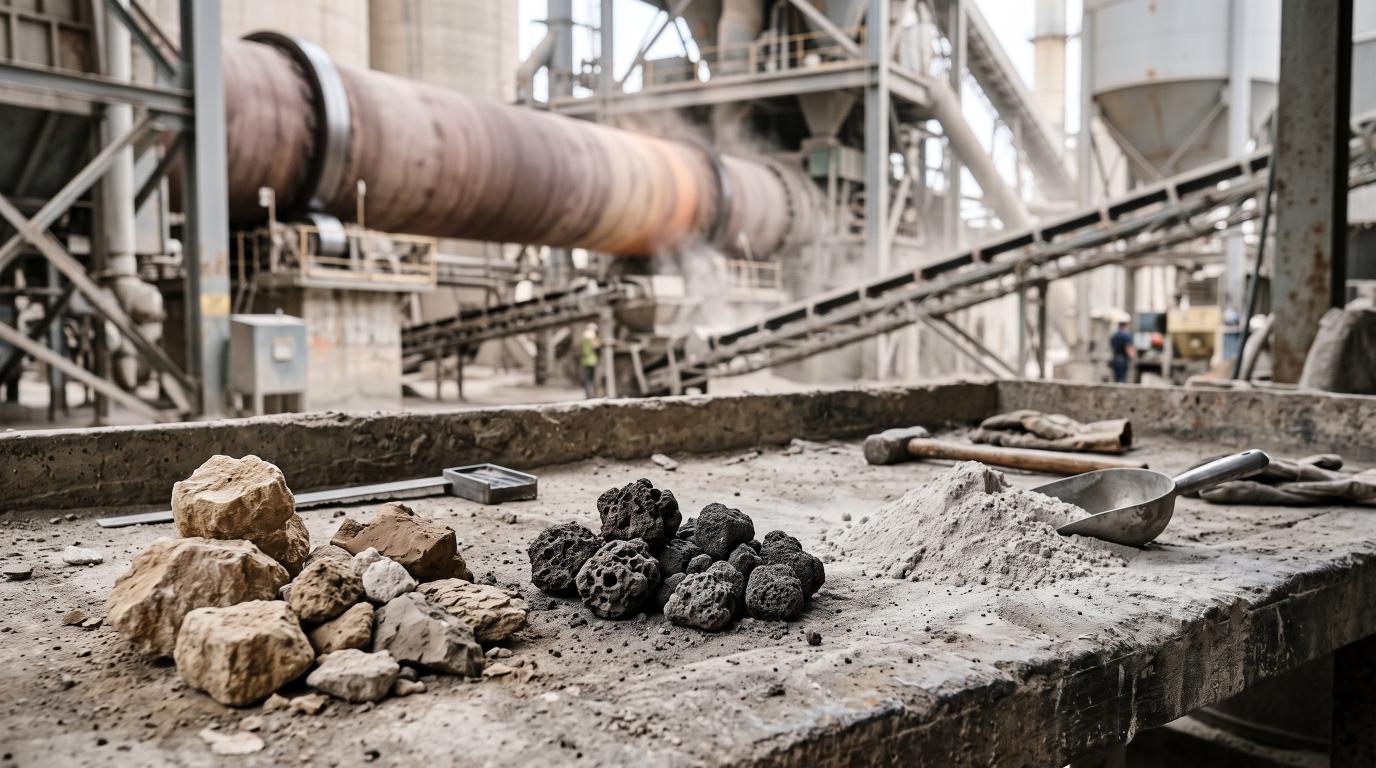
Cement is a finely ground binding material used in many construction mixtures. Portland cement is one of the most common types. When cement comes into contact with water, chemical reactions begin that allow the material to harden and bind other ingredients together.
Cement itself is not normally the finished material used for a sidewalk, slab, or foundation. Instead, it is combined with other materials to make concrete, mortar, grout, and other cement-based products.
What Is Cement Made From?
Portland cement begins with mineral raw materials that supply important chemical components. Limestone is commonly used as a source of calcium. Other materials provide silica, alumina, iron, and other compounds. These materials are prepared and heated at very high temperatures inside a kiln. This process creates hard pieces called clinkers.
After cooling, the clinker is ground into a fine powder. Gypsum is commonly added during grinding to help control how quickly the cement sets after water is introduced. Different cement types can be manufactured depending on the properties required from the finished concrete or other cement-based material.
Why Cement Is Used as a Binder
The important property of cement is its ability to react with water and form a hardened paste. Once water is added, the paste can surround sand and larger aggregate particles. As it hardens, it helps bind those materials into one solid mass. This binding action is why cement is an important ingredient in concrete.
What Happens When Cement Is Mixed With Water?
When cement and water are combined, a chemical process called hydration begins. During hydration, compounds in the cement react with water and form new products. These reactions gradually make the cement paste firmer and stronger.
Concrete Does Not Simply Dry
Concrete does not become hard simply because water evaporates. Water is needed for cement hydration to continue. If moisture disappears too quickly during the early stages, the concrete may not develop its intended properties. This is one reason proper curing matters after concrete has been placed.
Why Water Content Matters
Water also helps make fresh concrete workable enough to mix, place, consolidate, and finish. However, adding more water does not automatically improve the concrete. Excess water can leave additional pore space after the mixture hardens, which can affect strength and durability. The proper amount depends on the concrete mix design and intended use.
What Is Concrete?
Concrete is a composite construction material made from several ingredients. A basic concrete mixture contains cement, water, fine aggregate, and coarse aggregate. Fine aggregate usually means sand. Coarse aggregate may include gravel, crushed stone, or another suitable material.
When cement and water combine, they form a paste around the aggregate particles. As hydration continues, this paste hardens and binds the separate materials into one solid mass. The finished material is concrete.
The Main Ingredients in Concrete
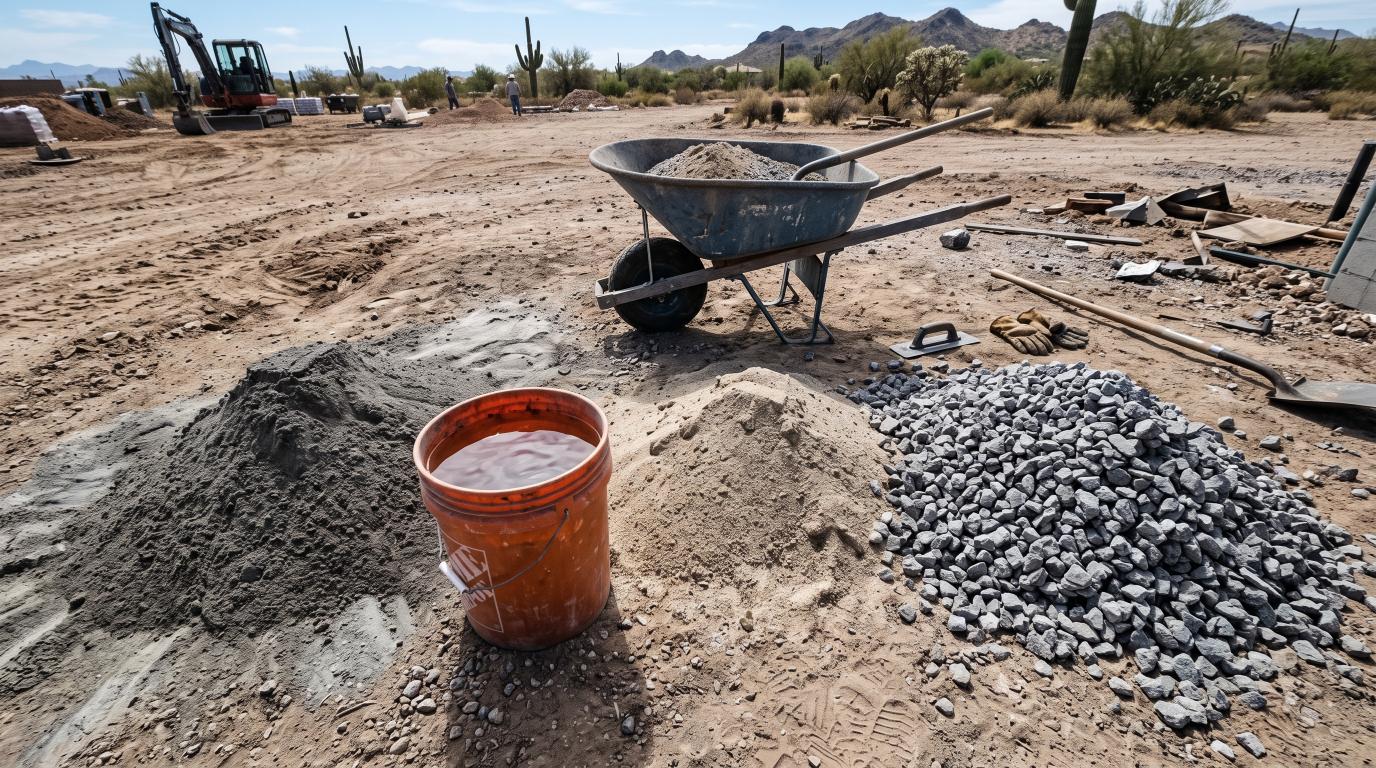
Traditional concrete generally contains four main components.
Cement provides the binding material.
Water begins hydration and helps make fresh concrete workable.
Fine aggregate usually consists of sand and helps fill smaller spaces within the mixture.
Coarse aggregate may include gravel or crushed stone and provides much of the concrete’s volume and internal structure.
Some concrete mixtures may also contain admixtures or additional cementitious materials to change certain properties.
Why Concrete Is a Composite Material
Concrete is called a composite because it combines several materials with different properties into one finished material. The hardened cement paste holds the mixture together, while aggregates form much of its internal structure. The finished concrete therefore behaves differently from cement paste, sand, or stone used separately.
What Each Ingredient Adds to Concrete
Each ingredient in concrete has a different purpose. Cement acts as the binder, while water starts the chemical reactions that allow the cement to harden. Fine aggregate, usually sand, helps fill smaller spaces in the mixture, while coarse aggregate such as gravel or crushed stone provides much of the concrete’s volume and structure.
The balance between these ingredients affects how fresh concrete behaves and how hardened concrete performs. Too much water, unsuitable aggregate grading, or incorrect proportions can affect workability, strength, and durability. Concrete mix design therefore considers the complete combination of materials rather than focusing only on cement.
How Concrete Changes From Fresh to Hard
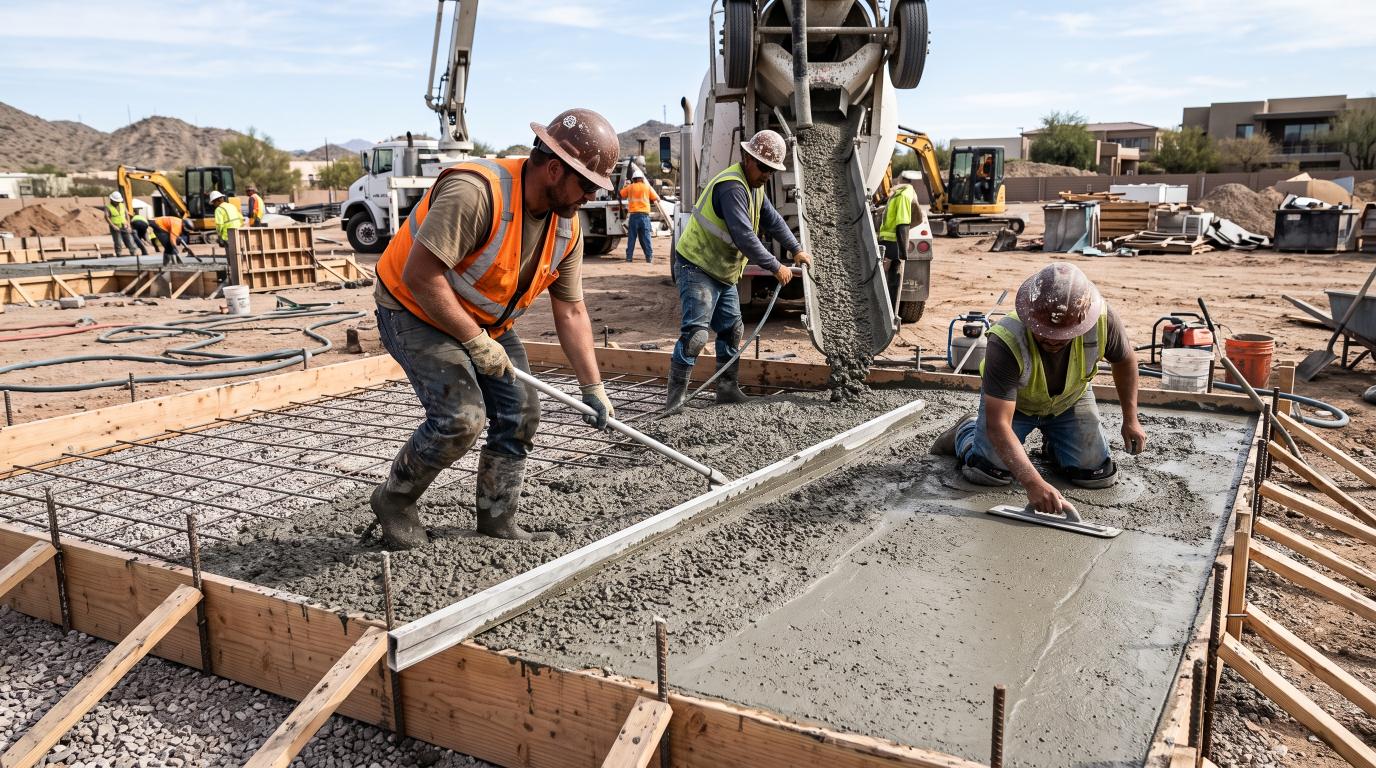
Concrete goes through several stages before becoming the hard material seen in finished construction.
Fresh Concrete Must Remain Workable
Fresh concrete needs enough workability to be transported, placed, and finished correctly. If it becomes too stiff too quickly, placement may become difficult. However, simply adding unnecessary water to make concrete easier to work with can change the intended mixture.
Placement and Consolidation
After concrete reaches the placement area, it needs to fill the required space. Consolidation can help reduce larger trapped air pockets and improve contact around forms or reinforcement when needed. Correct placement also helps maintain the required thickness, elevation, and shape.
Hydration Continues After Placement
Hydration continues after the concrete has been placed. The cement paste gradually becomes firmer and harder. Concrete may appear solid relatively soon, but strength continues developing after that point.
Curing Supports Strength Development
Curing helps maintain suitable moisture and temperature conditions while hydration continues. Proper curing can support strength development, durability, and surface quality.
Why Concrete Mixtures Are Not All the Same
There is no single concrete mixture that is suitable for every construction use. A sidewalk, structural foundation, drainage structure, pad, curb, or other concrete element may have different requirements.
Strength Requirements Can Vary
Different concrete elements may need different strength levels. A foundation supporting a structure can have different requirements from a pedestrian sidewalk because the expected loads and conditions are different. Required concrete properties normally come from the project plans and specifications.
Exposure Conditions Matter
Concrete may be exposed to water, traffic, heat, chemicals, soil contact, and other environmental conditions. These conditions can influence the materials and mixture proportions selected for the concrete.
Cement Type Can Affect Concrete Properties
Cement selection can change how a concrete mixture performs. Tomasz Rudnicki of the Military University of Technology in Warsaw tested pavement concrete made with CEM I Portland cement and CEM III cement containing blast-furnace slag. In his tests, both concrete types met the required road specifications, while the CEM III mixture reached a higher 90-day compressive strength and showed a more favorable pore distribution.
These findings apply to the pavement concrete mixtures tested in that research. They do not mean that CEM III is automatically the better choice for every concrete application.
Admixtures Can Change Concrete Behavior
Concrete mixtures may also contain chemical admixtures. Depending on their purpose, admixtures can affect workability, setting time, air content, water demand, or other properties. Their use depends on the concrete mix design and construction requirements.
The Difference Between Cement, Mortar, Grout, and Concrete
Cement appears in several construction materials, which is one reason these terms are sometimes confused.
Cement: A binding material that reacts with water and is used as an ingredient in other construction mixtures.
Mortar: Usually combines cementitious material, water, and fine aggregate. It is commonly used between bricks, blocks, and other masonry units.
Grout: Generally designed to fill spaces or voids. Its composition depends on its intended use.
Concrete: Commonly combines cement, water, fine aggregate, and coarse aggregate to form a hardened construction material.
These materials may contain some of the same ingredients, but they are not interchangeable.
Common Uses of Concrete in Construction
Concrete can be formed into many shapes and designed for different performance requirements.
Common uses include:
- Sidewalks and pedestrian paths
- Curbs and gutters
- Foundations and footings
- Concrete slabs and pads
- Drainage structures
- Loading and service areas
- Structural concrete elements
The exact mixture, thickness, reinforcement, preparation, and finish depend on the intended use and project specifications.
S&S Paving & Construction provides site concrete work in Phoenix for curbs, gutters, sidewalks, flatwork, structural foundations, drainage structures, and other site infrastructure.
Why Aggregate Matters in Concrete
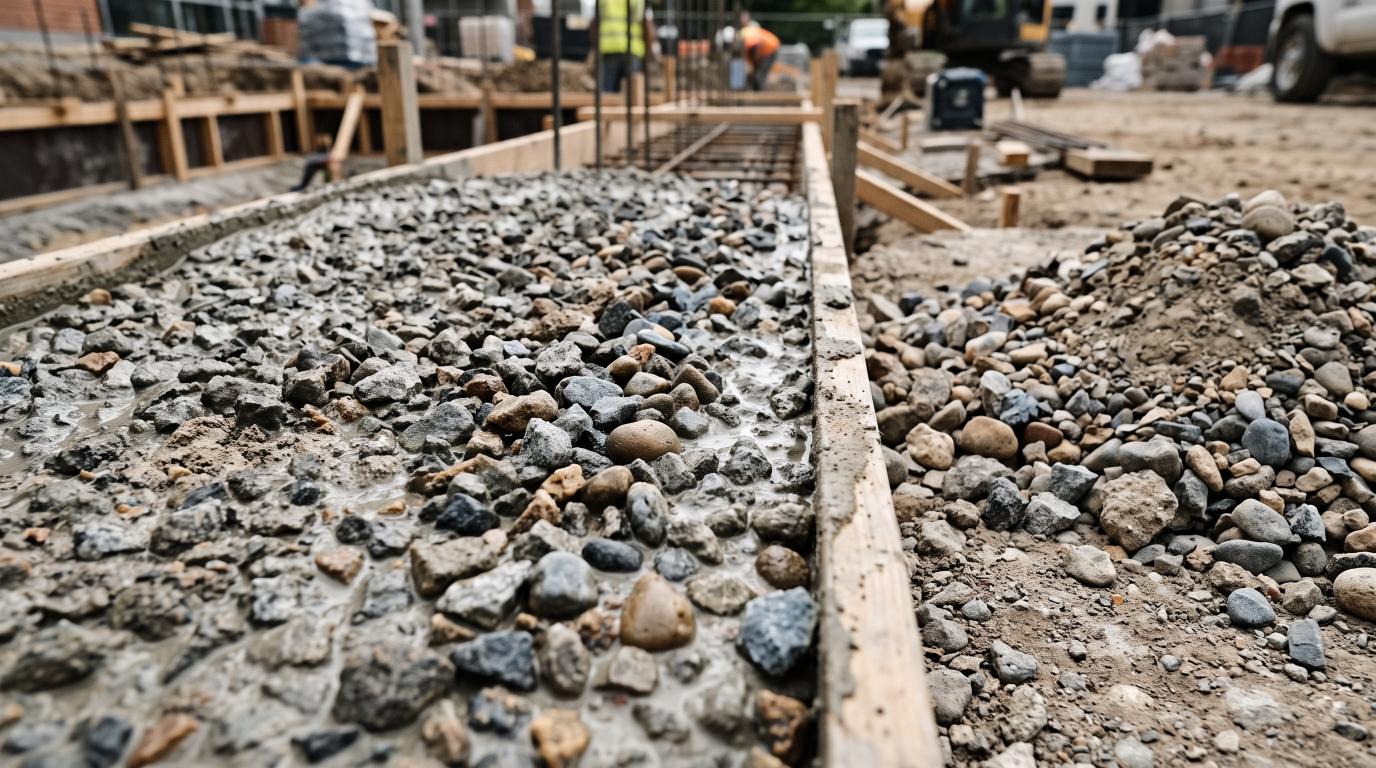
Aggregate makes up a large part of most concrete mixtures. Although cement often receives more attention, the characteristics of the aggregate can also affect fresh and hardened concrete.
Aggregate Is More Than Filler
Aggregate is not included simply to increase the amount of material. Particle size, grading, shape, cleanliness, and strength can influence how concrete behaves. A suitable combination of fine and coarse aggregate can also help control the amount of cement paste needed to fill spaces between particles.
Aggregate Can Affect Workability
The way aggregate particles fit together can influence how easily fresh concrete can be mixed, placed, and finished. Poor aggregate grading can leave larger spaces between particles and change the amount of paste needed in the mixture.
Aggregate Can Affect the Finished Surface
Aggregate type and size can also influence the appearance and texture of finished concrete. This is another reason concrete performance cannot be judged by looking only at the amount of cement.
Cement Content Does Not Tell the Whole Story
It may seem logical that adding more cement would automatically produce stronger or more durable concrete. Concrete performance is more complicated than that.
What the University of Dundee Researchers Found
Dhir, McCarthy, Zhou, and Tittle’s concrete durability research published through the University of Dundee examined concrete with fixed water-to-cementitious ratios while changing cement content around the minimum levels used in standards. Their tests covered fresh properties, engineering properties, permeability-related properties, and durability.
The researchers reported that reducing cement content by up to 22% at a fixed water-to-cement ratio did not negatively affect most of the concrete properties tested and sometimes produced improvements. This does not mean cement content is unimportant. It shows that cement quantity alone cannot be used to judge the expected performance of a concrete mixture.
Other Factors Affect Performance
Water-to-cement ratio, cement type, aggregate, curing, placement, environmental exposure, and required strength can all affect the finished concrete. The full mixture and its intended use need to be considered together.
Why Water-to-Cement Ratio Matters
The relationship between the amount of water and cement is an important part of concrete mix design. This relationship is commonly called the water-to-cement ratio.
Too Much Water Can Create More Pore Space
When more water is used than the mixture needs, some of that water can eventually leave spaces inside the hardened cement paste.
Additional pore space can affect concrete strength and permeability. This is why adding water simply to make concrete easier to place can change the intended properties of the mixture.
Too Little Water Can Affect Workability
Concrete still needs enough water for cement hydration and practical placement. A mixture with poor workability may become harder to place, consolidate, and finish properly.
The goal is not simply to use as little water as possible. Water needs to be controlled according to the designed mixture.
Why Cement Content Cannot Be Viewed Alone
Dhir, McCarthy, Zhou, and Tittle’s University of Dundee research kept the water-to-cementitious ratio fixed while varying cement content.
Their results showed why concrete specifications should consider factors such as water-to-cement ratio and required strength rather than assuming that increasing cement content alone will improve durability.
Concrete Placement Also Affects the Finished Material
A suitable concrete mixture still needs correct construction practices. Mix design alone cannot determine the finished result.
Base Preparation Comes First
Concrete needs suitable support beneath it. Poorly compacted or unstable material below the concrete can move over time and may contribute to cracking or settlement.
Thickness and Elevation Matter
Concrete should be placed to the thickness and grade required by the plans. Correct elevation is especially important for curbs, gutters, sidewalks, and drainage areas where water needs to move in the intended direction.
Finishing Should Match the Intended Use
Different concrete surfaces can require different finishes. A pedestrian surface may need texture for traction, while another concrete element may need a smoother or different finish.
Curing Starts After Finishing
After finishing is complete, curing helps protect the concrete during early strength development. Suitable curing conditions allow hydration to continue and help the concrete develop its intended properties.
How Phoenix Heat Can Affect Concrete
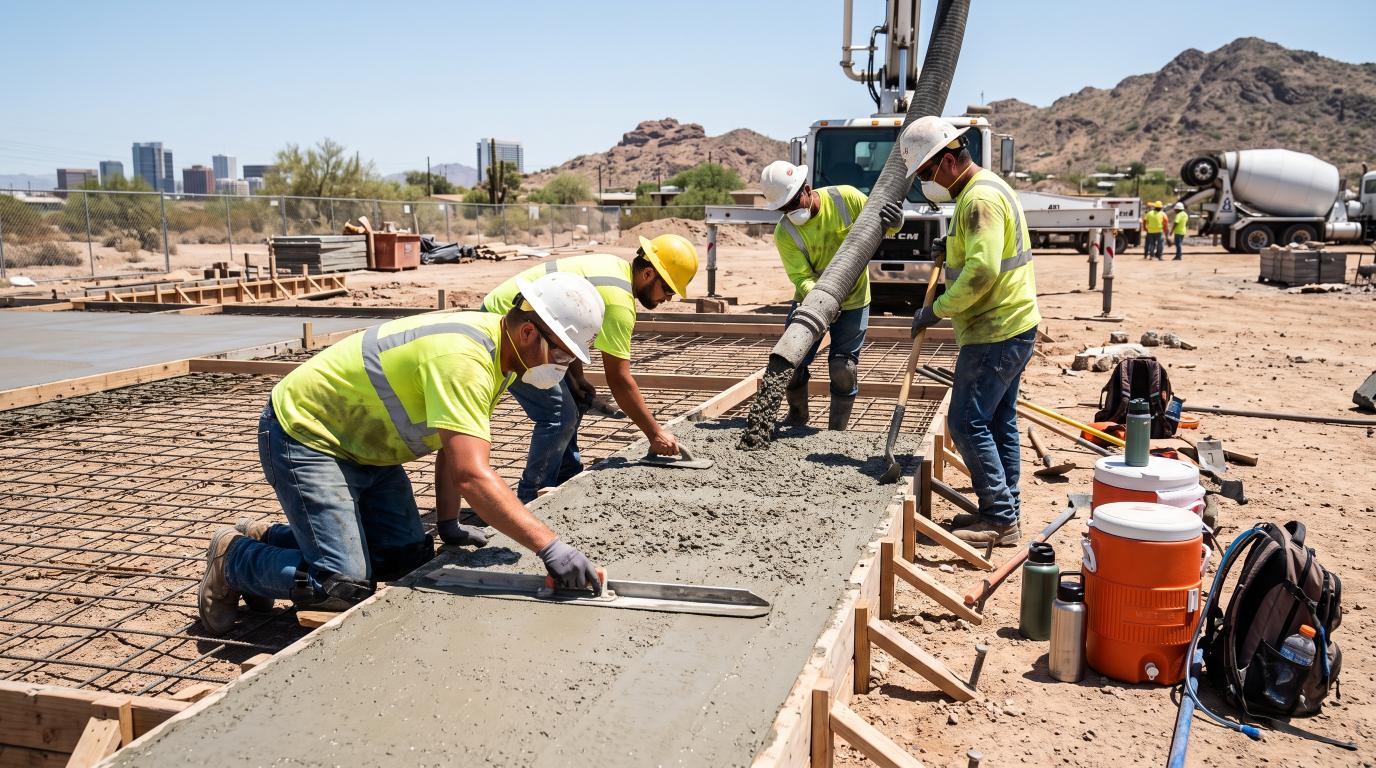
Phoenix heat can affect concrete before, during, and after placement. High air temperatures, strong sunlight, low humidity, and hot ground surfaces can increase moisture loss from fresh concrete. This matters because concrete needs moisture for cement hydration to continue.
Heat Can Speed Up Moisture Loss
In hot, dry conditions, water can evaporate quickly from the surface of fresh concrete. If moisture is lost too quickly, the surface can begin drying while the concrete below is still fresh. This can make finishing more difficult and increase the risk of early surface problems. A very hot subgrade or formwork can also contribute to faster moisture loss.
Higher Temperatures Can Shorten Working Time
Concrete can begin setting more quickly when temperatures are high. This gives less time for placement, consolidation, leveling, and finishing. Planning delivery and placement becomes especially important during Phoenix summer conditions.
Hot Weather Can Affect Workability
Fresh concrete may lose workability more quickly in high temperatures. Adding extra water may look like an easy solution, but uncontrolled water additions can change the designed water-to-cement ratio.
Mix design, approved admixtures, delivery timing, and placement methods should be managed according to the project requirements.
Curing Becomes Especially Important
Hot and dry conditions can cause moisture to leave newly finished concrete quickly. Proper curing helps maintain conditions that allow hydration to continue. Depending on the project, curing may involve water, coverings, curing compounds, or another approved method.
Placement Timing Can Make a Difference
Concrete placement may sometimes be planned away from the hottest part of the day. Early morning placement can reduce some heat-related challenges during extreme summer conditions.
S&S Paving & Construction’s Phoenix concrete guidance also identifies mix design, placement timing, and curing as important factors when working with concrete in Arizona’s extreme heat.
Are Cement and Concrete the Same Thing?
No. Cement and concrete are not the same material. Cement is a binding ingredient used to make concrete. Concrete is the complete mixture containing cement, water, fine aggregate, and coarse aggregate.
Because cement is an important part of concrete, the two terms are often mixed in everyday conversation.
Why People Say “Cement” Instead of “Concrete”
People often say “cement” instead of “concrete” because cement is one of the better-known ingredients in the mixture. Over time, the word has also become an informal way to describe hardened concrete surfaces.
In construction, the distinction is more important. Cement, concrete, mortar, and grout have different compositions and uses, so using the correct terms helps make plans, specifications, and material requirements easier to understand.
A Real-World Example
Think about a concrete sidewalk. Cement is only one ingredient inside the sidewalk. The concrete also contains water, sand, and coarse aggregate such as gravel or crushed stone.
So when someone says “cement sidewalk,” they usually mean a concrete sidewalk. Cement helps bind the ingredients, while the complete concrete mixture forms the finished walking surface.
Can Cement Be Used Without Concrete?
Yes, cement can be used without making concrete, but it is normally combined with other materials to create a specific cement-based product. Cement is used in mortar, grout, masonry mixtures, and certain repair materials.
Cement mixed only with water is not a direct substitute for concrete. Concrete also contains fine and coarse aggregate that contribute to its structure and properties. The correct material depends on what is being built or repaired.
What Makes Concrete Strong and Durable?
Concrete strength and durability depend on several connected factors.
Mix Design: The proportions of cement, water, aggregate, and other materials affect the finished concrete.
Placement: Concrete should be placed and consolidated correctly to maintain the required thickness and shape.
Curing: Suitable curing supports hydration and continued strength development.
Site Conditions: Soil, drainage, loading, heat, moisture, and other environmental conditions can influence long-term performance.
The finished result depends on the complete concrete system rather than one material alone.
How to Tell Whether You Need Concrete or a Cement-Based Product
Start by considering what the finished material needs to do. Concrete is commonly used for slabs, sidewalks, foundations, curbs, and other larger surfaces or structural elements because it forms a complete hardened construction material.
A different cement-based material may be more appropriate for masonry work, filling spaces or joints, or certain repairs. Mortar and grout contain cement but serve different purposes from concrete. For engineered or commercial construction, project plans, specifications, and product requirements should guide material selection.
Conclusion
The difference between concrete and cement comes down to composition and purpose. Cement is a binding ingredient, while concrete is a complete composite material made from cement, water, fine aggregate, and coarse aggregate.
Concrete performance depends on much more than the amount of cement in the mixture. Water-to-cement ratio, aggregate, cement type, mix proportions, curing, placement, weather, and site preparation can all affect the finished material.
Understanding these differences makes it easier to use the correct construction terms and understand why concrete mixtures and construction methods vary between applications.
Concrete Sitework in Phoenix, AZ
If your project requires professional concrete sitework, S&S Paving & Construction in Phoenix, AZ provides concrete services for curbs, gutters, sidewalks, flatwork, structural foundations, drainage structures, and other site improvements.
S&S Paving also provides paving, earthwork, underground utilities, and related site construction services, helping concrete work fit with the surrounding project. Contact us to discuss your Phoenix concrete project and request a free estimate.
Frequently Asked Questions
What Percentage of Concrete Is Cement?
There is no single percentage that applies to every concrete mixture. Cement content depends on the mix design, required strength, aggregate proportions, water content, and intended use.
Does Concrete Harden Because the Water Dries Out?
No. Concrete mainly hardens because cement reacts chemically with water through hydration. Enough moisture still needs to remain available for hydration to continue.
Why Does Concrete Contain Both Sand and Gravel?
Sand helps fill smaller spaces within the mixture, while coarse aggregate provides much of its volume and internal structure. Hardened cement paste binds these materials together.
Is Portland Cement the Same as Concrete?
No. Portland cement is a type of cement commonly used as an ingredient in concrete. Concrete also contains water, fine aggregate, and coarse aggregate.
Does Using More Cement Always Make Concrete Better?
No. Cement content alone does not determine concrete quality. Water-to-cement ratio, cement type, aggregate, curing, placement, and exposure conditions can also affect performance.
Why Is Curing Important After Concrete Is Placed?
Curing helps maintain moisture and temperature conditions that allow cement hydration to continue. This supports strength development, durability, and surface quality.
