
Managing waterproofing in a parking structure means choosing the right system, installing membranes correctly, sealing every joint, and ensuring proper drainage. By taking these steps, you can prevent water damage, corrosion, and concrete deterioration, protecting both your facility and your investment.
Regular inspections and proactive maintenance are key to keeping parking decks in Phoenix, AZ safe and long-lasting. Implementing proven waterproofing strategies helps reduce risks, enhance user safety, and ensure your structure remains fully functional for years to come.
Why Waterproofing Parking Structures Matters
Waterproofing is essential for protecting parking structures from water damage, corrosion, and structural deterioration. Concrete may look strong, but it is porous, allowing water to seep through cracks and reach steel reinforcements, causing corrosion that can compromise the entire structure—especially in areas with freeze-thaw cycles or heavy use of de-icing salts.
Beyond structural protection, waterproofing also safeguards users and property. Leaks create slippery surfaces, damage vehicles, and cause unsightly staining, while a quality waterproofing system—often a small fraction of total construction cost—protects every other component, from lighting and security systems to ventilation equipment.
Common Water Issues in Parking Structures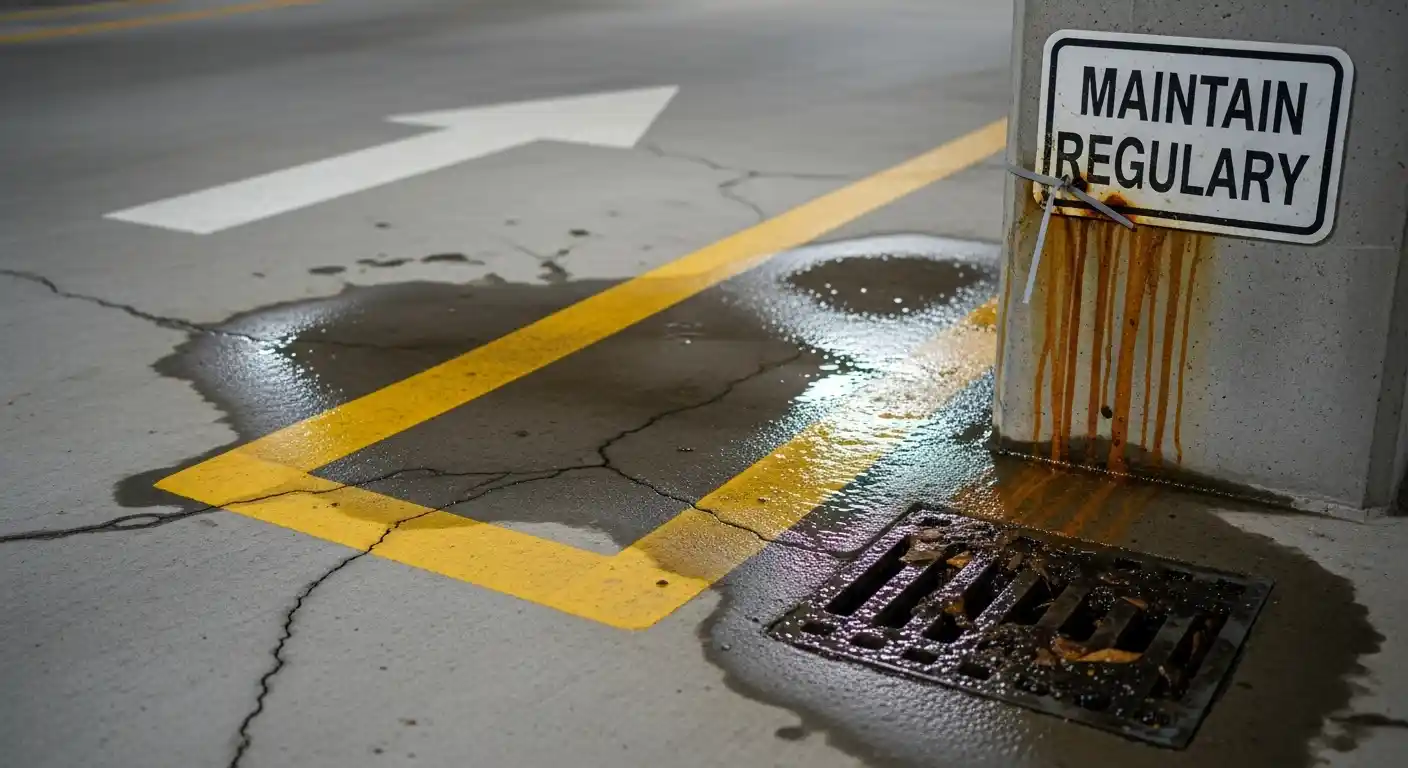
Parking structures face constant exposure to water from multiple sources, which can compromise their durability if not properly managed. Identifying these common water issues early is essential for effective waterproofing and long-term structural health.
Sources of Water in Parking Structures
Parking decks face constant exposure to water from multiple sources. Rain drips from vehicles, melted snow carries corrosive salts, and washing operations often leave standing water. Combined with environmental precipitation, these factors create continuous moisture stress that can compromise the structure.
Vulnerable Joints and Seals
Expansion, construction, and control joints are particularly susceptible to water infiltration. Without proper sealing, these joints act as direct pathways for leaks. Drainage failures can also cause water to pond on driving surfaces, increasing hydrostatic pressure and stressing waterproofing membranes.
Concrete Cracking and Leakage
Concrete cracks develop from shrinkage, thermal expansion, structural loads, and settlement. Even hairline fractures allow water to penetrate, and repeated vehicle traffic can enlarge these cracks over time. If not properly managed, small fissures can escalate into significant leaks, threatening both structural integrity and safety.
Risks of Water Infiltration in Parking Decks
Water infiltration in parking structures can cause serious structural and safety problems if not addressed. Even minor leaks may escalate, leading to costly repairs and operational disruptions.
Structural Damage from Corrosion
Steel reinforcement inside concrete is highly vulnerable to water exposure. When water reaches the rebar, oxidation causes it to expand, creating internal pressure that leads to spalling and cracking. Over time, unchecked corrosion can compromise load-bearing capacity and the structural lifespan of the deck.
Freeze-Thaw and Chemical Damage
Concrete absorbs water through cracks and pores, making it susceptible to freeze-thaw cycles. Freezing water expands, creating micro-cracks, while de-icing salts accelerate corrosion over time. Effective waterproofing prevents water from reaching concrete and steel, reducing these risks.
Safety and Operational Risks
Water infiltration creates safety hazards and operational disruptions. Falling ice, electrical failures, and mold growth endanger users and can interrupt facility operations. Preventing water infiltration is critical for both structure longevity and everyday safety.
Common Waterproofing Systems for Parking Structures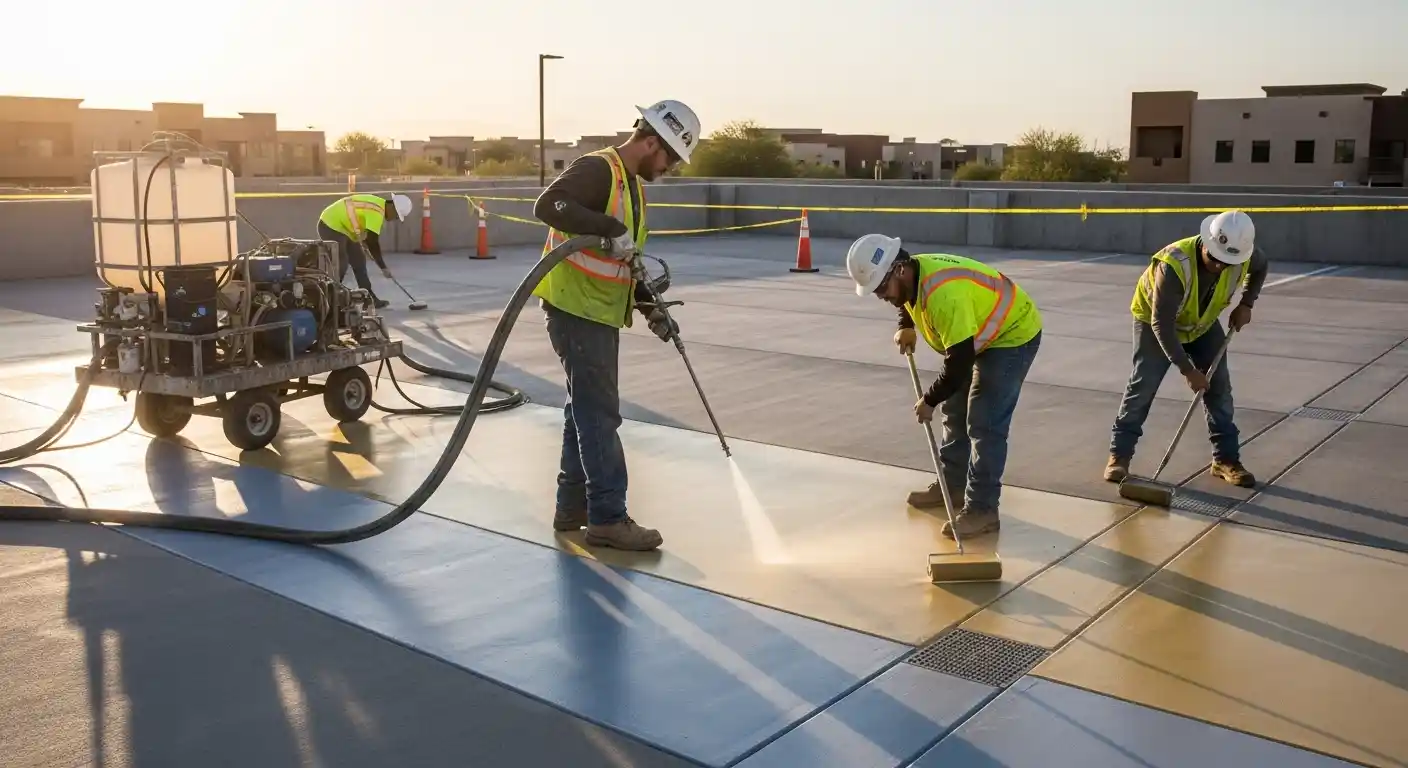
Selecting the appropriate waterproofing system depends on factors including structure type, traffic loads, exposure conditions, and budget constraints.
Liquid-Applied Waterproofing Systems
Liquid-applied membranes are popular for their versatility and seamless coverage. These include polyurethanes, polyureas, and polymer-modified cementitious coatings that cure into a continuous, elastic barrier. They conform to complex surfaces, bridge cracks, and offer excellent flexibility. Polyurethane provides abrasion resistance, while polyurea cures rapidly for faster project completion, though it requires skilled applicators.
Sheet Membrane Waterproofing
Sheet membranes are pre-manufactured rolls, such as modified bitumen or rubberized asphalt, installed over prepared concrete. They provide consistent thickness and long-term performance when seams and penetrations are properly sealed. Self-adhered options bond without heat, simplifying installation.
Below-Grade Waterproofing Solutions
Underground garages face hydrostatic pressure and limited repair access. Blindside systems are applied before concrete placement, while bentonite membranes swell to form impermeable barriers. Crystalline waterproofing reacts with moisture to fill capillary pores, offering self-healing protection.
Parking Structure Waterproofing Process
Successful waterproofing installation follows a systematic process that begins long before materials are applied. Each phase builds upon the previous steps, creating an integrated system rather than simply coating a surface.
Site Assessment and Moisture Evaluation
Before waterproofing begins, a thorough assessment identifies potential issues. Engineers check structural loads, traffic patterns, drainage, and exposure conditions. Moisture meters and non-destructive testing detect hidden water, while chloride testing checks for contamination. Core samples reveal concrete strength and deterioration.
Surface Preparation and Crack Repair
Proper surface prep is critical for waterproofing success. Concrete must be clean, sound, and correctly profiled. Methods include shotblasting, grinding, or pressure washing. Dormant cracks are sealed with flexible sealants, while active cracks may need isolation membranes. Spalled or delaminated areas are repaired using polymer-modified concrete or repair mortars.
Waterproofing System Installation
Installation varies by system but requires strict quality control. Liquid-applied membranes must achieve correct film thickness, with multiple coats applied perpendicular to each other. Sheet membranes demand precise measurement, seam attention, and rolling to remove air pockets. Special care is taken around drains, expansion joints, and penetrations.
Curing, Testing, and Quality Control
After installation, membranes need proper curing before traffic loading. Flood testing ensures watertight integrity, with any leaks marked, repaired, and retested. Quality inspections verify thickness, detailing, and adherence to manufacturer specs. Documentation through photos, reports, and as-built drawings supports future maintenance and warranty claims.
Best Practices for Effective Parking Structure Waterproofing
Robust design, proper joint sealing, and good drainage prevent water infiltration. Protection boards and membranes maintain durability and watertight integrity.
Use a Robust Waterproofing Design
Effective waterproofing starts at the design stage. Engineers should combine multiple protection layers and select materials that balance cost with long-term performance under specific loading, chemical, and thermal conditions.
Sealing Joints in Precast Parking Structures
Precast structures have many joints that are potential leak points. Using compatible sealants, proper backing, and regular inspections every 10–15 years prevents minor failures from becoming major problems.
Provide Proper Drainage to the Parking Deck
Even the best membranes fail with poor drainage. Decks need at least a 2% slope toward drains, with overflow systems to prevent flooding if primary drains clog. Proper detailing ensures the membrane integrates seamlessly with the drainage assembly.
Waterproofing Requirements for Parking Garage Slabs
Traffic-bearing membranes must support vehicles while remaining watertight. Protection boards shield membranes from punctures, and wearing surfaces add an extra layer of durability.
Waterproofing Maintenance and Inspection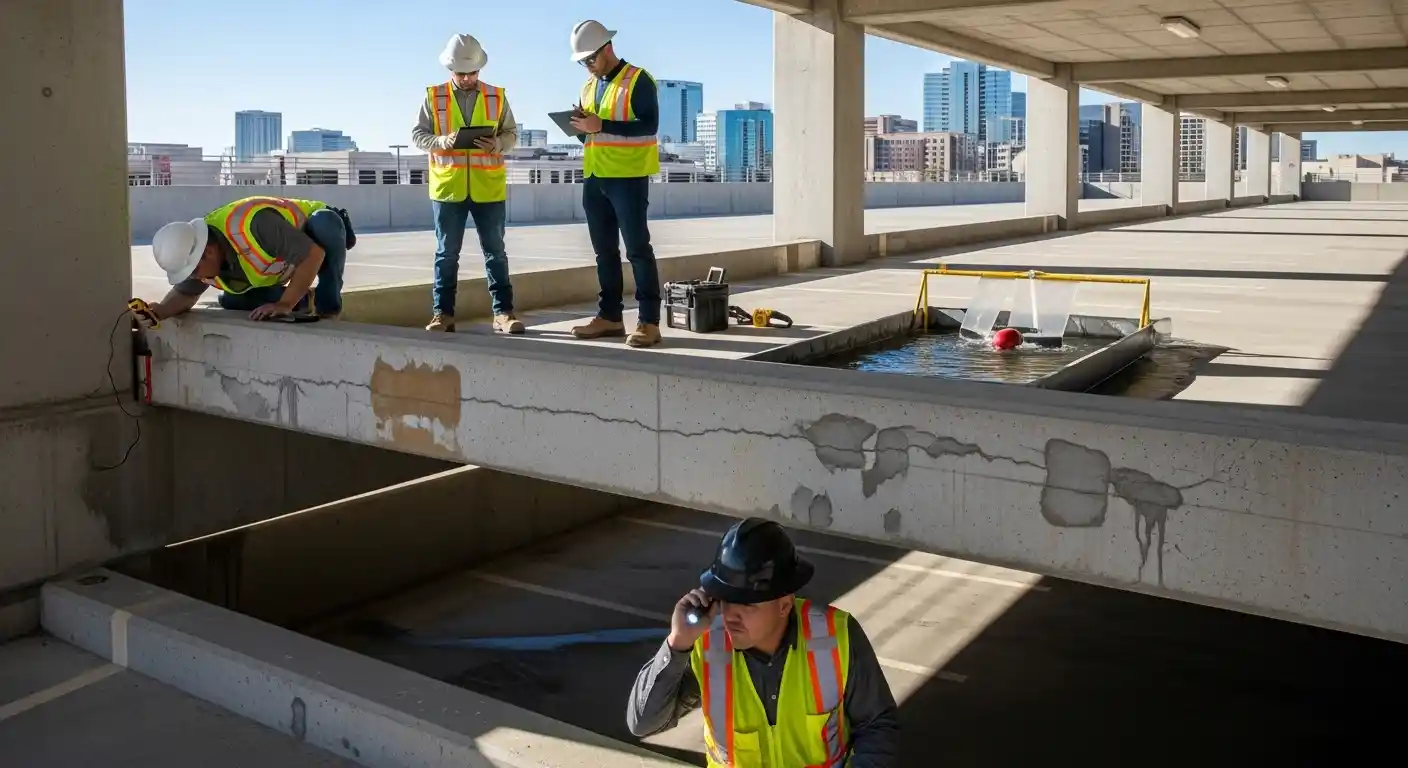
Inspections and maintenance catch issues early. Recoating and timely repairs keep the system durable.
Inspecting Waterproof Membranes and Seals
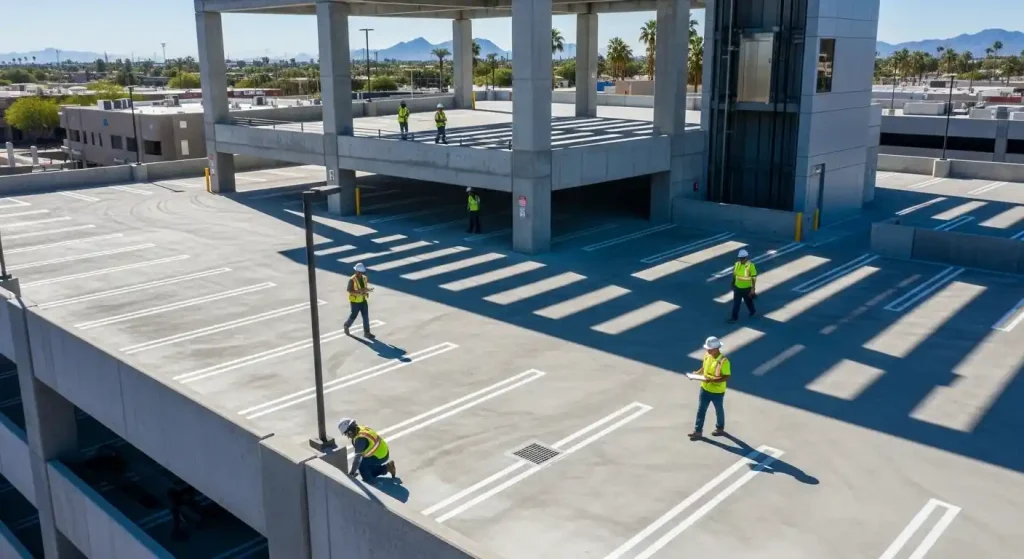
Regular inspections catch minor issues before they become major problems. Inspectors check membrane condition, joint integrity, drainage performance, and signs of leaks or water ponding.
Best Practices for Ongoing Maintenance
Keep drains clear, clean deck surfaces, and repair small cracks promptly. Formal maintenance schedules with inspection and repair protocols help extend waterproofing life.
How Do You Maintain Waterproofing Systems?
Liquid-applied membranes may need periodic recoating, while sheet membranes require seam checks and resealing. Joint sealants and traffic surfaces should be monitored and repaired as needed to maintain full waterproofing protection.
Cost Considerations for Parking Structure Waterproofing
Understanding the cost and timeline of parking structure waterproofing helps owners plan effectively. Proper waterproofing protects the structure and minimizes long-term repair expenses.
How Much Does Parking Structure Waterproofing Typically Cost?
Waterproofing costs vary depending on system type and project complexity. Liquid-applied, sheet membrane, and below-grade systems each have different preparation, application, and protection requirements that affect overall pricing.
Factors That Affect Waterproofing Costs
Project size, surface condition, and local labor/material rates significantly influence costs. Additional factors include the extent of concrete repair, warranty requirements, and system specifications.
How Long Does Waterproofing Installation Take?
Installation time depends on project scope and site conditions. Typical above-grade decks may take a few weeks, while larger or repair-intensive projects can require several months, with weather affecting curing and scheduling.
Signs Your Parking Structure Needs Waterproofing
Early identification of waterproofing issues is critical to prevent structural damage and costly repairs. Regular inspections help property owners address minor problems before they escalate into major failures.
Visible Cracks and Leaks
Active water leakage, such as dripping from joints or wet spots on ceilings, indicates failing waterproofing. Even minor seepage should be investigated, as hairline cracks can allow water to penetrate and cause larger issues.
Concrete Spalling and Rust Stains
Chunks of concrete separating from the surface (spalling) or rust streaks signal steel corrosion and water damage. White efflorescence shows minerals carried by water, highlighting areas where waterproofing may be failing.
Ponding Water and Drainage Issues
Standing water on deck surfaces or clogged drains indicates drainage problems that stress waterproofing systems. Persistent moisture can damage finishes, promote mold growth, and create liability concerns.
Proper waterproofing management—covering design, installation, and ongoing maintenance—protects the structure and ensures long-term reliability.
Protect Your Parking Structure with Proven Expertise
Ensure your parking facility in Phoenix, AZ stands strong against water damage, structural wear, and long‑term deterioration with professional waterproofing and construction services from S&S Paving. Whether you’re building a new structure, renovating an existing one, or need ongoing maintenance and waterproofing solutions, our experienced team delivers durable results that enhance safety, extend lifespan, and protect your investment. Contact us today for a free consultation and custom parking structure plan — let’s build lasting performance together.
Conclusion
Effective waterproofing is essential to protect parking structures from water damage, corrosion, and structural deterioration. By selecting the right systems, ensuring proper installation, and maintaining a proactive inspection and repair program, property owners can extend the lifespan of their facilities, enhance safety, and reduce costly repairs. Prioritizing waterproofing not only safeguards the concrete and steel but also preserves the overall functionality and value of the parking structure for decades to come.
Frequently Asked Questions
Why is waterproofing important for parking structures?
Waterproofing protects concrete and steel from water infiltration, corrosion, and freeze-thaw damage. It ensures structural integrity, prevents costly repairs, and enhances user safety.
What are the common waterproofing systems used in parking decks?
Common systems include liquid-applied membranes, sheet membranes, and below-grade solutions such as bentonite or crystalline waterproofing. The choice depends on structure type, traffic load, and environmental exposure.
How often should a parking structure’s waterproofing be inspected?
Annual or semi-annual inspections are recommended. Regular maintenance helps identify minor issues like cracks, joint deterioration, or ponding water before they escalate into major damage.
What signs indicate a parking deck needs waterproofing?
Visible cracks, active leaks, concrete spalling, rust stains on surfaces, efflorescence, and standing water or drainage issues are all indicators that waterproofing may be failing.
How long does it take to waterproof a parking structure?
Installation time varies by project size and system type. Typical above-grade decks can take a few weeks, while larger structures or those requiring extensive concrete repair may take several months.
