
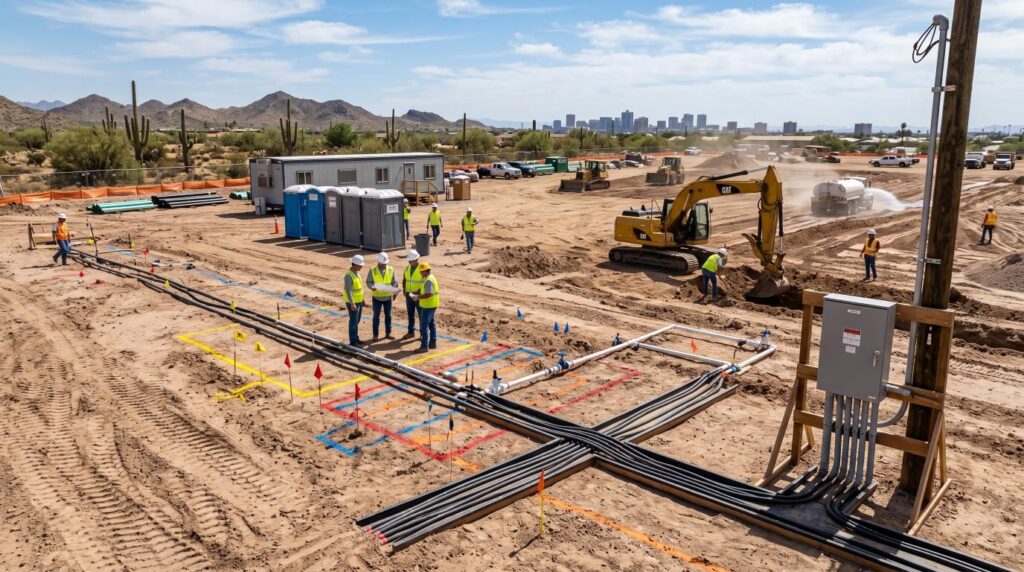
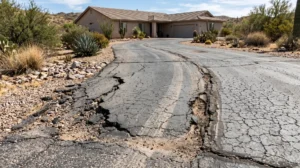
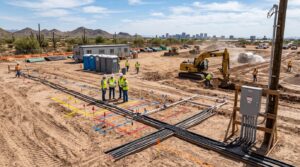

To set up utilities on a construction site, first identify the services the project needs, locate existing underground lines, plan utility routes, secure required permits and approvals, and coordinate installation before major construction begins. Construction site utilities may include temporary power, water, sanitation, drainage, lighting, and communications, along with permanent building utilities such as water, sewer, electrical, gas, irrigation, and storm drainage.
For projects in Phoenix, AZ, S&S Paving & Construction provides construction management and underground utility support for civil and commercial sitework. Utility availability should be reviewed during site selection and preconstruction because existing connections, site grades, drainage, access, and underground conflicts can affect the cost, sequence, and method of utility installation.
Installing utilities in construction requires careful coordination between the project schedule, utility providers, contractors, inspectors, and other sitework activities. Temporary utilities keep crews working before permanent services are available, while permanent utility infrastructure must be installed, tested, backfilled, and protected according to project requirements. This guide explains site utility planning, temporary power and water, sanitation, utility installation sequence, safety, costs, maintenance, and common setup mistakes.
What Are the First Steps to Set Up Construction Site Utilities?
Setting up construction site utilities starts with careful planning before installation begins. Contractors need to understand the project’s needs, identify available connections, and create a utility plan that supports each construction phase. Proper preparation helps prevent delays, safety issues, and costly changes during the project.
The basic steps for setting up construction site utilities include:
Review Project Utility Needs
Start by evaluating the size of the project, number of workers, equipment requirements, construction timeline, and daily utility demands. This helps determine the amount of power, water, sanitation, drainage, and communication services needed.
Locate Existing Underground Utilities
Before excavation begins, identify existing underground utility lines, including water, gas, electrical, and communication systems. Proper utility locating helps prevent damage, safety hazards, and unexpected project delays.
Confirm Utility Connections
Check available utility services near the construction site and coordinate with utility providers. Confirm connection requirements, permits, inspections, and approval processes before installation begins.
Arrange Temporary Power and Water
Most construction sites need temporary power and water before permanent systems are available. Contractors should choose the right sources, install safe distribution routes, and place connections where crews can easily access them.
Install and Test Utility Systems
After installation, utility systems should be inspected and tested to confirm they operate safely. Regular checks throughout construction help identify problems early and keep the project moving smoothly.
What Are Construction Site Utilities?
Construction site utilities are temporary or permanent systems that provide essential services during a construction project. These systems support workers, equipment, materials, and daily operations throughout the building process. Temporary utilities are commonly installed during early construction phases. They may include temporary electrical power, water supply, portable toilets, drainage systems, lighting, and communication services.
Permanent utilities are the final systems that will remain after construction is complete. These include permanent electrical connections, water lines, sewer systems, gas lines, and communication networks. Temporary utilities allow construction teams to operate before permanent systems are finished. They must be carefully planned because they impact safety, productivity, and the overall construction schedule.
|
Utility Type |
Purpose During Construction |
Common Examples |
|
Temporary Power |
Provides electricity for tools and equipment |
Generators, temporary panels, electrical outlets |
|
Temporary Water |
Supports construction activities and worker needs |
Water tanks, temporary water lines |
|
Sanitation |
Provides restroom facilities |
Portable toilets and waste services |
|
Drainage |
Controls water movement on site |
Temporary drains, runoff control |
|
Communication |
Keeps teams connected |
Internet, phones, job site communication systems |
|
Lighting |
Improves visibility and safety |
Temporary lights, security lighting |
What Utilities Does a Construction Site Need?
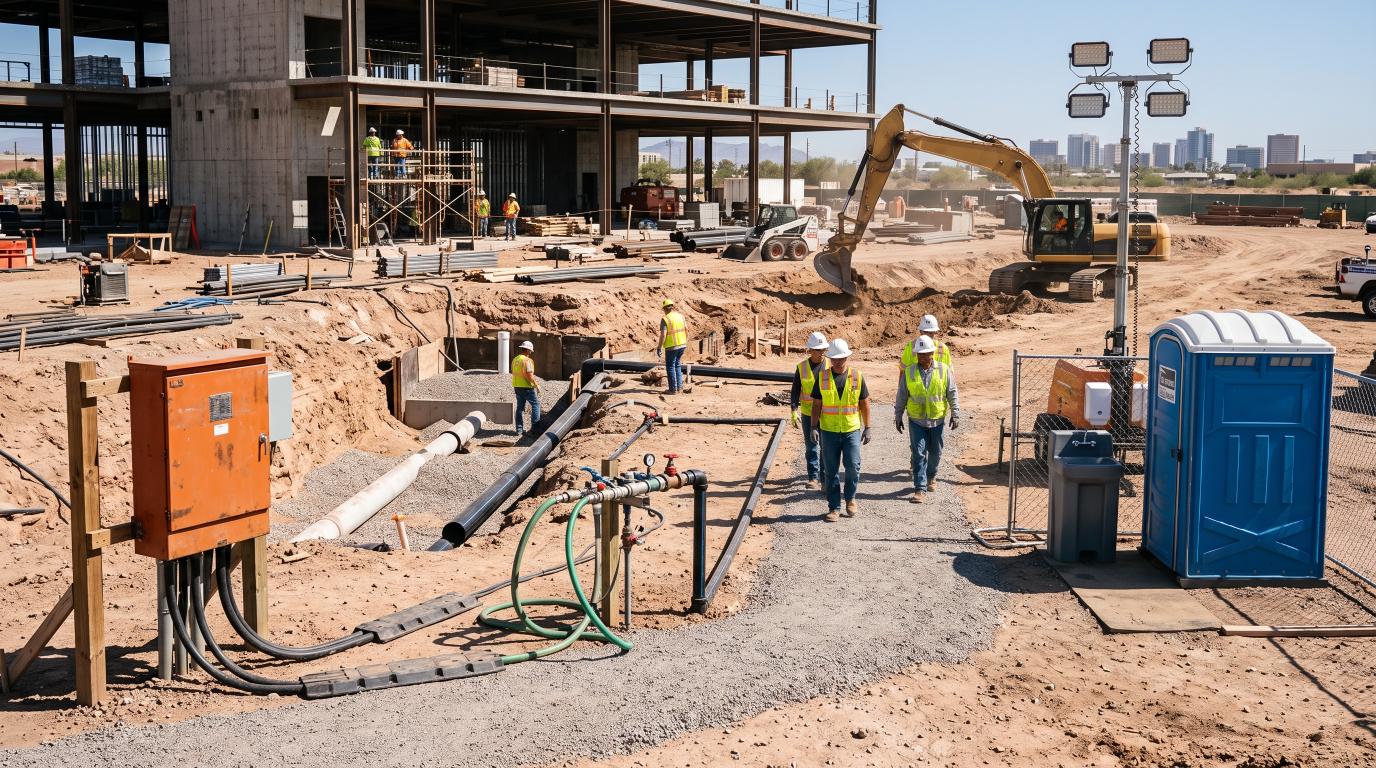
Every construction project has different requirements based on size, location, and type of work. However, most sites need several basic utility services.
Temporary Electrical Power
Electricity is one of the most important construction site utilities. Workers need power for tools, equipment, lighting, charging stations, and temporary office spaces. Temporary power can come from a utility connection or generators.
The right option depends on project needs, available connections, and construction timelines. Electrical systems must be installed correctly to prevent hazards. Temporary panels, cables, and outlets should be protected from damage, moisture, and heavy equipment traffic.
Temporary Water Supply
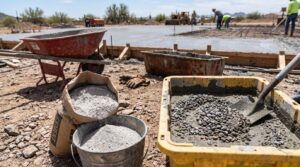
Construction sites need water for many activities, including concrete work, dust control, cleaning, and worker needs. Water may be supplied through existing municipal connections, temporary tanks, or other approved sources.
The water system should provide enough supply for daily construction demands. Proper planning helps ensure water lines are placed where crews need them without creating safety issues.
Sanitation and Portable Toilets
Sanitation facilities are required on most construction sites. Portable toilets provide workers with safe and accessible restroom options during the project. The number of units needed depends on the workforce size and local requirements. These facilities should be placed in convenient locations and maintained regularly.
Temporary Drainage and Wastewater
Drainage planning helps control water movement around the site. Without proper drainage, standing water can damage work areas, create muddy conditions, and delay construction. Temporary drainage systems help manage rainwater, runoff, and wastewater during construction activities.
How to Plan Construction Site Utilities Before Work Begins
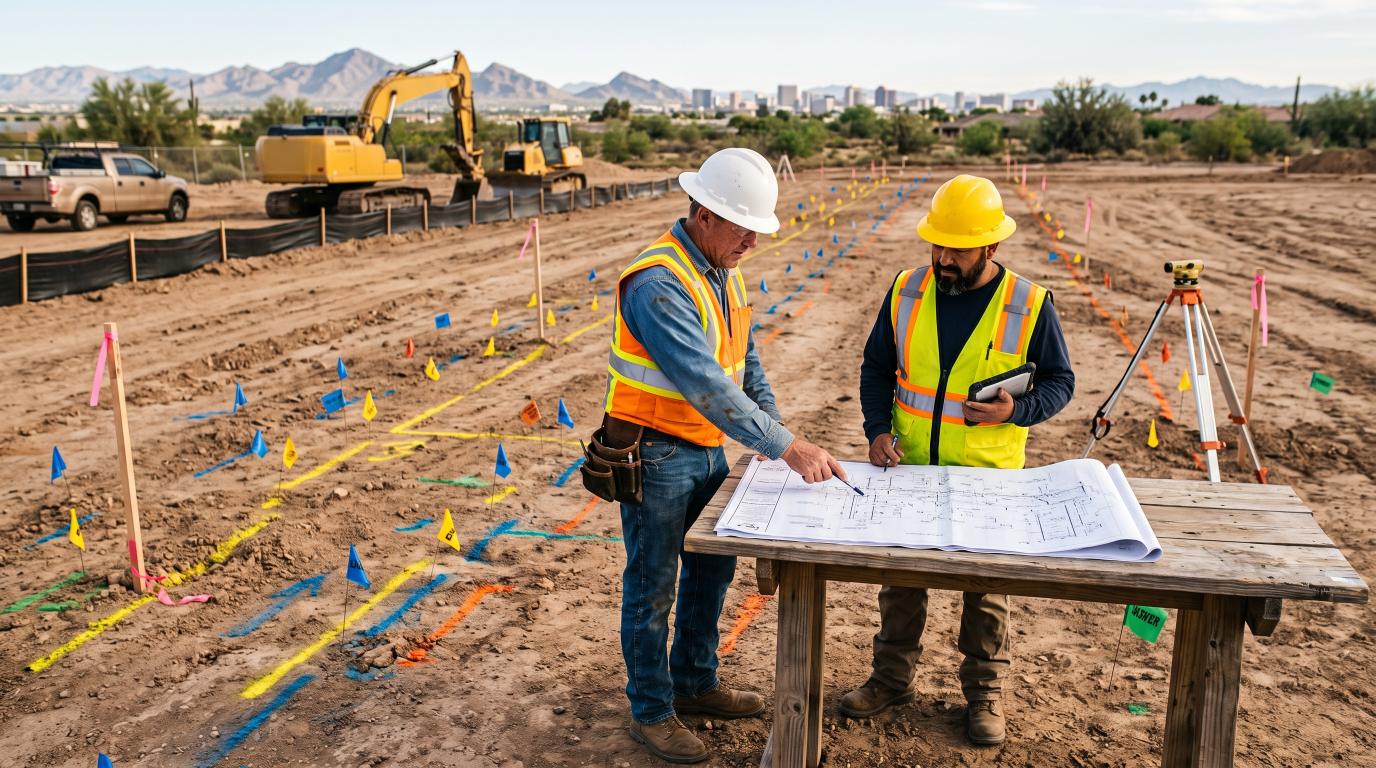
Utility planning should happen before construction activities start. Waiting until work is underway can lead to delays, redesigns, and increased project costs.
A complete utility plan considers the current site conditions, construction schedule, equipment needs, and future permanent systems.
Assess the Site and Project Requirements
The first step is reviewing the construction site and understanding project needs.
Contractors should consider:
- Project size
- Number of workers
- Equipment requirements
- Construction phases
- Expected utility demand
A clear understanding of these factors helps determine which temporary systems are required.
Identify Available Utility Connections
Before installing temporary utilities, contractors should identify available connections near the site. Existing electrical, water, sewer, and communication connections can influence the utility setup process.
Knowing what is available helps create a more efficient plan. If nearby connections are limited, contractors may need alternative solutions such as generators or temporary tanks.
Locate Existing Underground Utilities
Before excavation begins, existing underground utilities must be identified. Damaging underground lines can create safety hazards, costly repairs, and major project delays.
Utility locating services help identify existing electrical lines, water pipes, gas lines, and communication systems before digging begins. Proper utility marking allows crews to plan excavation activities safely and avoid unexpected issues.
Plan Utility Routes and Access
Temporary utility routes should be planned carefully to avoid interfering with construction operations. Power cables, water lines, and other temporary systems should not block equipment movement, material storage areas, or worker pathways. A good layout keeps the job site organized and makes future adjustments easier.
Check Local Codes and Permit Requirements
Construction utility installation must follow local regulations and safety requirements. Contractors should review permit requirements, inspection needs, and local standards before installing temporary systems. Following these requirements helps prevent compliance issues during construction.
Coordinate With Utility Providers and Contractors
Utility planning requires communication between contractors, utility providers, engineers, and project managers. Coordination ensures utilities are installed at the correct time and adjusted as construction progresses. Good communication reduces conflicts between different construction activities.
How to Set Up Temporary Power on a Construction Site
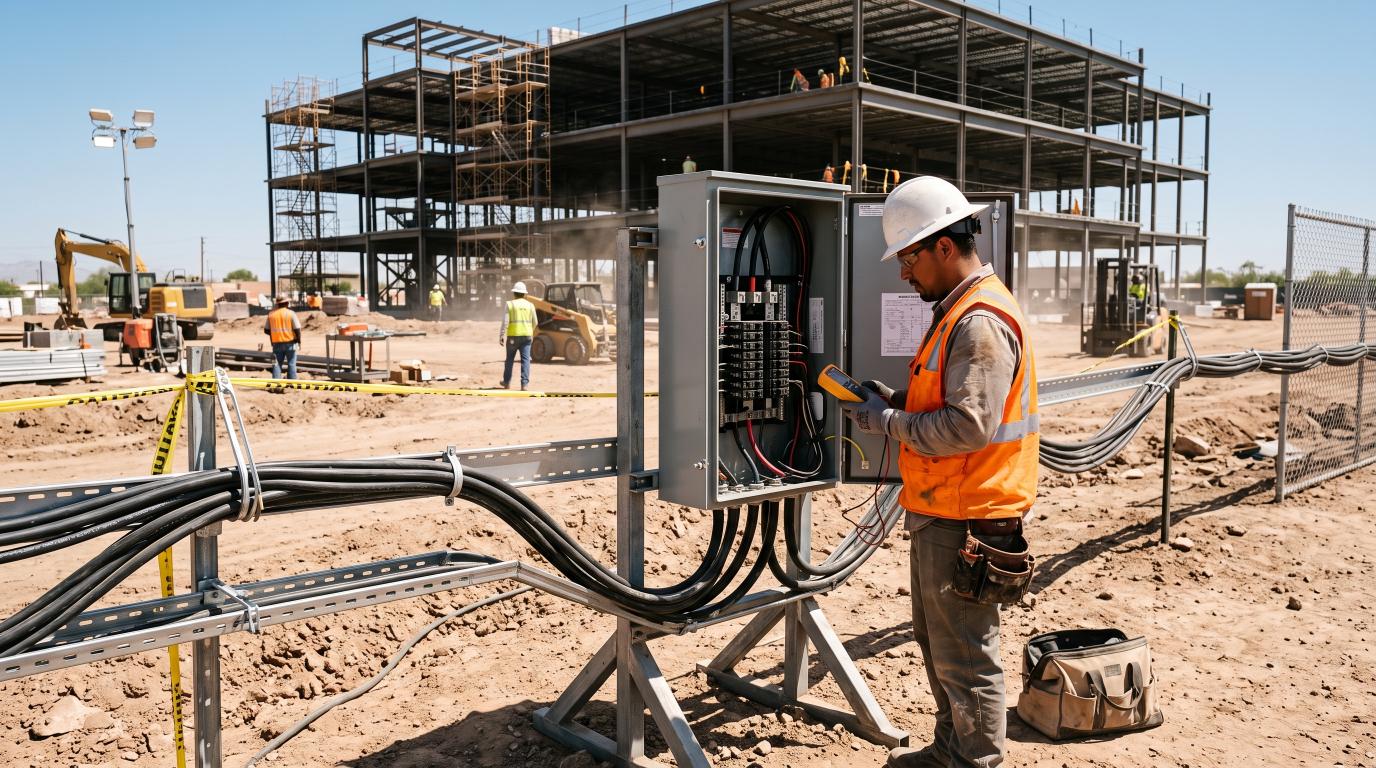
Temporary power is one of the first utilities needed on many construction sites because workers rely on electricity for tools, equipment, lighting, temporary offices, and daily operations. Setting up temporary power starts with evaluating the project’s electrical needs, available utility connections, and construction timeline.
Contractors must decide whether to use a temporary connection from the local power provider or a generator based on site conditions and expected power demand. Once the power source is selected, the system is installed with temporary electrical panels, distribution equipment, and protected wiring routes. Cords, panels, and connections should be placed away from water, heavy equipment traffic, and areas where they could become damaged.
Before workers begin using the system, temporary power should be inspected and tested to confirm it meets safety requirements and can support the construction activities. Regular checks throughout the project help prevent electrical issues and keep the job site operating safely.
How to Set Up Temporary Water on a Construction Site
Temporary water is an important utility that supports many construction activities, including concrete work, dust control, cleaning, equipment use, and worker needs. Setting up temporary water starts by identifying a reliable water source, such as an existing municipal connection or a temporary storage tank.
Contractors should evaluate the project requirements, water demand, and site layout to determine the best setup for the construction phase. After selecting the water source, temporary water lines are installed and routed through the site to provide easy access while avoiding equipment traffic and potential damage. Pipes and connections should be protected from weather, construction activity, and other hazards.
How to Set Up Sanitation and Waste Facilities
Sanitation planning is an important part of construction site preparation.
Determine the Number of Portable Toilets Needed The number of portable toilets depends on worker numbers and local requirements.
Choose Safe and Accessible Locations Facilities should be placed where workers can easily reach them without creating safety issues.
Arrange Regular Cleaning and Waste Removal Routine service keeps sanitation areas clean and usable throughout the project.
Follow Applicable Sanitation Requirements Construction sites must follow local health and safety rules for worker facilities.
What Is the Correct Construction Utility Installation Sequence?
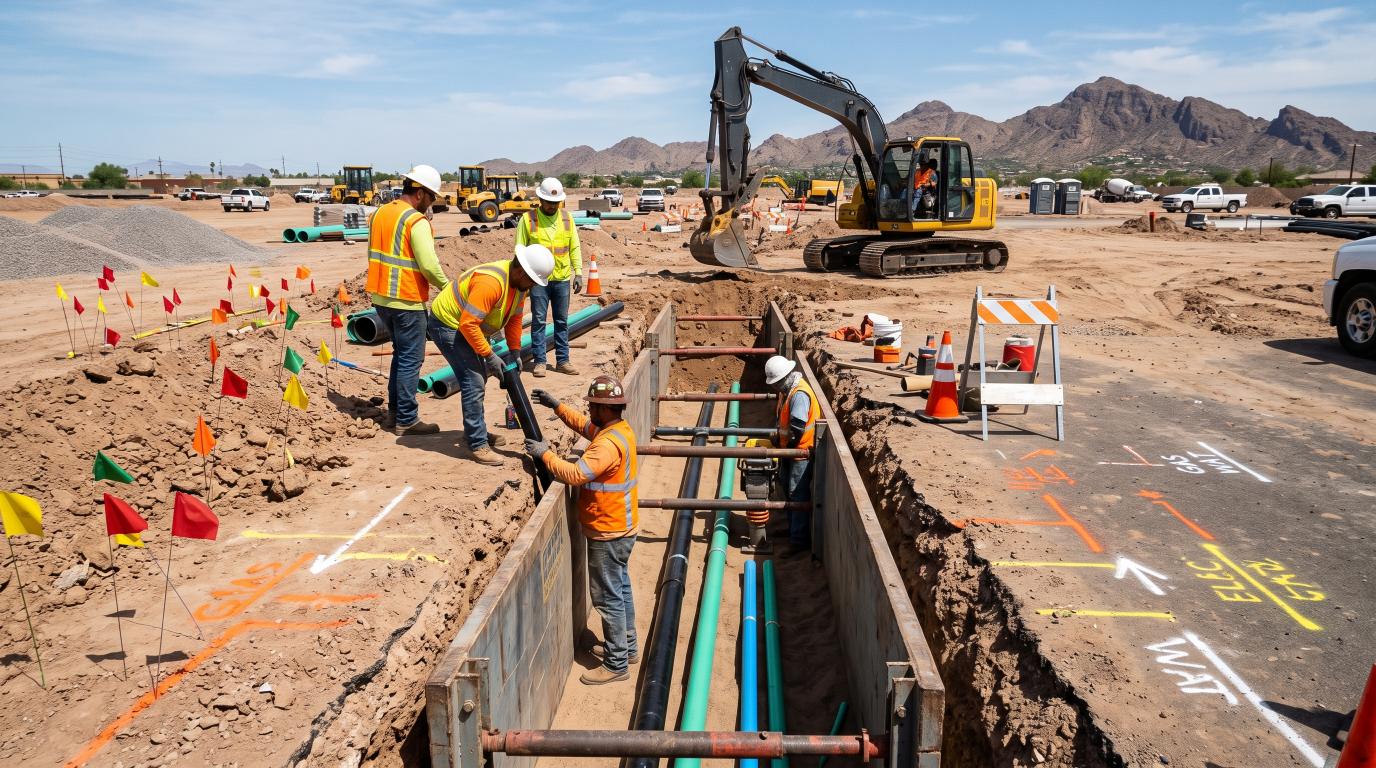
The correct construction utility installation sequence starts with careful planning, site surveying, and identifying existing underground utilities before any work begins. Contractors first review the site conditions, mark utility locations, and prepare the area through grading and site preparation. After the site is ready, underground utility lines such as water, electrical, drainage, and communication systems are installed according to the project plans.
Once utility lines are placed, connections are completed, and each system is inspected and tested to confirm proper operation. Trenches are then backfilled and compacted to protect the installed utilities and maintain site stability. Throughout the construction process, temporary utilities may need adjustments as work areas change. Proper coordination between contractors helps prevent conflicts, delays, and damage while keeping the project on schedule.
Construction Site Utility Safety Requirements
Construction site utility safety requirements help protect workers, equipment, and the project from avoidable risks. Temporary power, water lines, drainage systems, and underground utilities should be installed correctly and inspected regularly throughout the construction process. Proper planning, clear utility markings, and safe installation practices reduce the chance of electrical hazards, damaged utility lines, water issues, and work delays.
Workers should follow safety procedures when using temporary utility systems and keep utility areas organized and accessible. Electrical panels, cables, and connections should be protected from weather and equipment damage, while excavation work should be performed carefully around existing underground utilities. Regular inspections and quick repairs help maintain safe conditions and ensure construction site utilities continue supporting the project without interruptions.
Common Mistakes When Setting Up Construction Site Utilities
Poor utility planning can create delays and unnecessary costs.
Starting Utility Planning Too Late: Waiting too long can limit available options and slow construction.
Undersizing Temporary Power: Insufficient power can prevent equipment from operating properly.
Failing to Locate Existing Utilities: Missing underground utilities can create safety risks and expensive repairs.
Poor Utility Route Coordination: Incorrect placement can interfere with construction activities.
Installing Utilities Before Final Grades Are Known: Changes in grading can affect utility placement and installation.
Rushing Backfill and Compaction: Improper backfill can cause future problems with utility systems.
Poor Cord and Cable Management: Unsafe cable placement creates trip hazards and equipment risks.
Failing to Move Utilities as Construction Progresses: Temporary utilities may need relocation during different project phases.
How Much Does It Cost to Set Up Construction Site Utilities?
Temporary water costs depend on the source, installation requirements, and project duration. Sanitation costs depend on workforce size and service frequency. Drainage and wastewater costs depend on site conditions and water management needs.
Factors that affect total utility costs include:
- Project size
- Construction timeline
- Site conditions
- Local requirements
- Utility availability
- Equipment needs
How to Maintain Construction Site Utilities
Maintaining construction site utilities requires regular inspections, proper organization, and quick response to any issues. Temporary power systems, water lines, drainage systems, sanitation facilities, and communication services should be checked throughout the project to ensure they are working safely and efficiently.
Routine inspections help identify damaged equipment, leaks, blocked drainage, or electrical problems before they cause delays or safety risks. Construction teams should also keep utility routes clear, protect temporary systems from equipment damage, and update utility plans as the project moves through different stages.
Any damaged lines, connections, or equipment should be repaired promptly to avoid interruptions. Proper maintenance helps extend the life of temporary utility systems, keeps workers safe, and supports smoother construction operations from start to finish.
Construction Site Utility Setup Checklist
A proper utility setup checklist helps contractors organize each step, avoid delays, and ensure temporary systems are installed safely before and during construction. Use this checklist to review important utility planning, installation, and maintenance tasks.
|
Task |
Why It Matters |
|
Locate underground utilities |
Prevents damage during excavation and reduces safety risks |
|
Plan temporary power |
Ensures equipment and tools have reliable electricity |
|
Install temporary water supply |
Supports construction activities and worker needs |
|
Arrange sanitation facilities |
Maintains safe and comfortable working conditions |
|
Plan drainage and wastewater management |
Controls runoff and prevents standing water issues |
|
Obtain required permits and approvals |
Ensures utility work meets local requirements |
|
Protect utility lines and equipment |
Reduces damage from construction activities |
| Inspect and test utility systems |
Confirms systems are safe and working properly |
|
Monitor utilities throughout construction |
Helps identify issues before they cause delays |
Conclusion
Setting up construction site utilities starts before crews begin major sitework. Contractors should identify temporary and permanent utility needs, evaluate available services during site selection, locate existing underground lines, plan safe utility routes, obtain required approvals, and coordinate installation with the construction schedule. Temporary power, water, sanitation, drainage, lighting, and communications support daily operations until permanent building utilities become available.
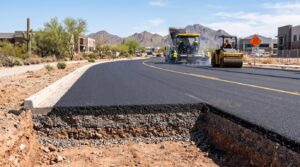
Utility installation also needs to follow the correct construction sequence. Underground water, sewer, drainage, irrigation, electrical, or communication routes may need to be installed after grading and before paving, concrete, or other finished site improvements. Installed systems should be inspected and tested as required before trenches are backfilled and compacted. Temporary utilities should then be monitored and relocated when construction phases or work areas change.
A successful utility system construction plan depends on early coordination, safe routing, accurate utility locating, proper installation, inspections, and communication between contractors and utility providers. Planning these details early helps reduce conflicts with excavation, paving, drainage, equipment access, and other construction activities while keeping the site ready for each phase of work.
Plan Your Construction Site Utilities With S&S Paving in Phoenix, AZ
S&S Paving & Construction provides underground utility installation, site preparation, and construction management support for civil and commercial projects in Phoenix, AZ. Our team can coordinate water, sewer, irrigation, storm drainage, trenching, backfill, and related sitework as part of a properly planned construction site utility system. Contact us today to discuss your project and request a free estimate for underground utility installation and related construction services in Phoenix.
Frequently Asked Questions
What utilities are needed on a construction site?
Most construction sites need temporary power, water, sanitation, drainage, lighting, and communication systems. The exact requirements depend on the project size, location, and construction activities. Proper planning ensures workers have the services needed to complete daily tasks safely.
How do you get temporary power to a construction site?
Temporary power is usually provided through an existing utility connection or a generator. Contractors first calculate electrical needs before selecting the best option. Proper installation and inspections help keep temporary electrical systems safe during construction.
How do you get water to a construction site?
Construction sites can receive water through municipal connections, temporary tanks, or approved water sources. The system should provide enough supply for construction work and worker needs. Temporary water lines must be protected from damage throughout the project.
Do construction sites need portable toilets?
Yes, most construction sites require portable toilets to provide proper sanitation for workers. The number of units depends on workforce size and local requirements. Regular cleaning and maintenance keep facilities safe and usable.
Who is responsible for setting up construction site utilities?
Responsibility depends on the construction agreement and project structure. General contractors, utility contractors, and project managers often coordinate utility planning and installation. Clear communication helps prevent delays and conflicts.
How early should construction utilities be arranged?
Construction utilities should be planned before major work begins. Early planning allows time for permits, inspections, utility connections, and installation. It also helps avoid delays during important construction phases.
Do temporary construction utilities require permits?
Many temporary utility systems require permits and inspections depending on local regulations. Contractors should check requirements before installation. Following local rules helps maintain safety and project compliance.
